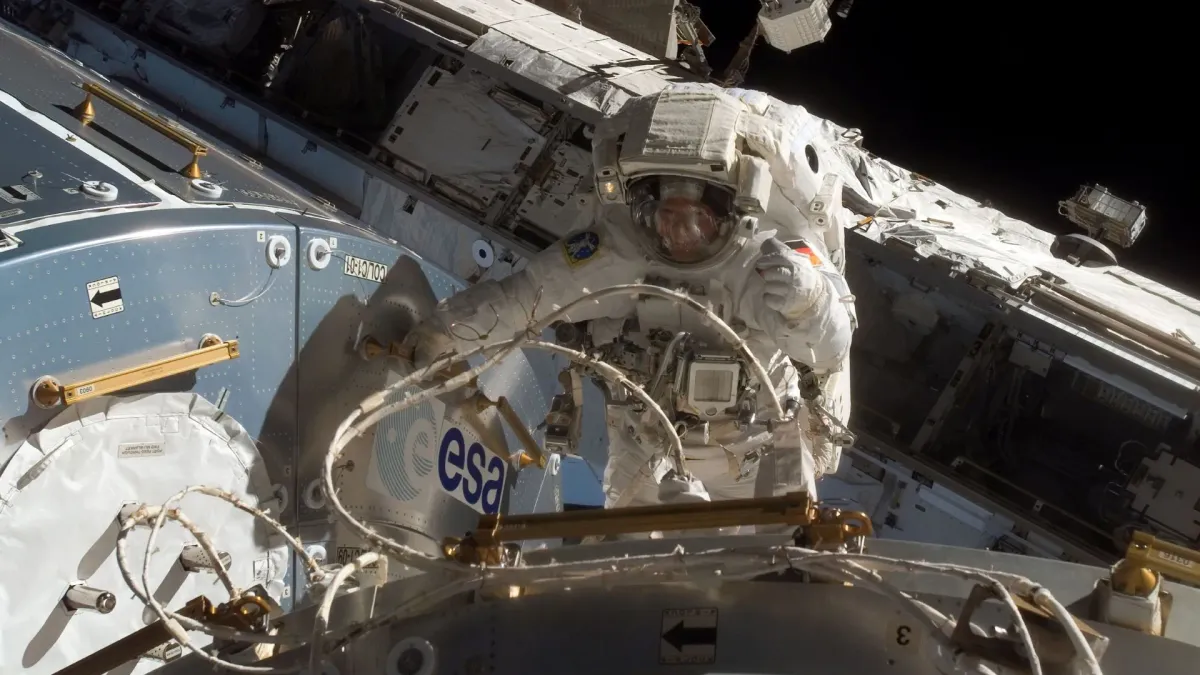
Scientists have created Europe's first simulator for galactic cosmic rays. These rays are a major radiation threat for deep-space travel.
An international team built the system. They had help from the European Space Agency. The facility is the GSI Helmholtz Centre for Heavy Ion Research in Darmstadt, Germany.
This system lets researchers recreate the radiation environment astronauts face outside Earth's magnetic field.
We're a new kind of news feed.
Regular news is designed to drain you. We're a non-profit built to restore you. Every story we publish is scored for impact, progress, and hope.
Start Your News DetoxScientists published their findings in two papers in the journal Life Sciences in Space Research. Before this, Europe could not reliably reproduce galactic cosmic radiation on Earth. The simulator now offers a controlled way to study these risks.
Deep-Space Radiation Threat
Astronauts traveling beyond Earth's magnetic field are constantly exposed to cosmic radiation. Deep-space missions face much higher levels than those in low Earth orbit.
Galactic cosmic rays come from outside our solar system. Explosive cosmic events, like supernovae, speed up these particles across the Milky Way.
These particles are mostly protons and helium nuclei. They also include heavier, high-charge, high-energy particles called HZE particles.
Scientists estimate that a proton passes through every cell in an astronaut's body every few days. Helium nuclei pass through cells every few weeks.
Heavier particles arrive about every few months. Radiation also interacts with spacecraft shielding. These interactions create neutrons and fragments, which increase radiation exposure.
Galactic cosmic rays pose serious long-term health risks. They can raise cancer risk, damage cells, and affect the central nervous system. This radiation can also disrupt spacecraft electronics.
Understanding these dangers is crucial for future missions to the Moon and Mars.
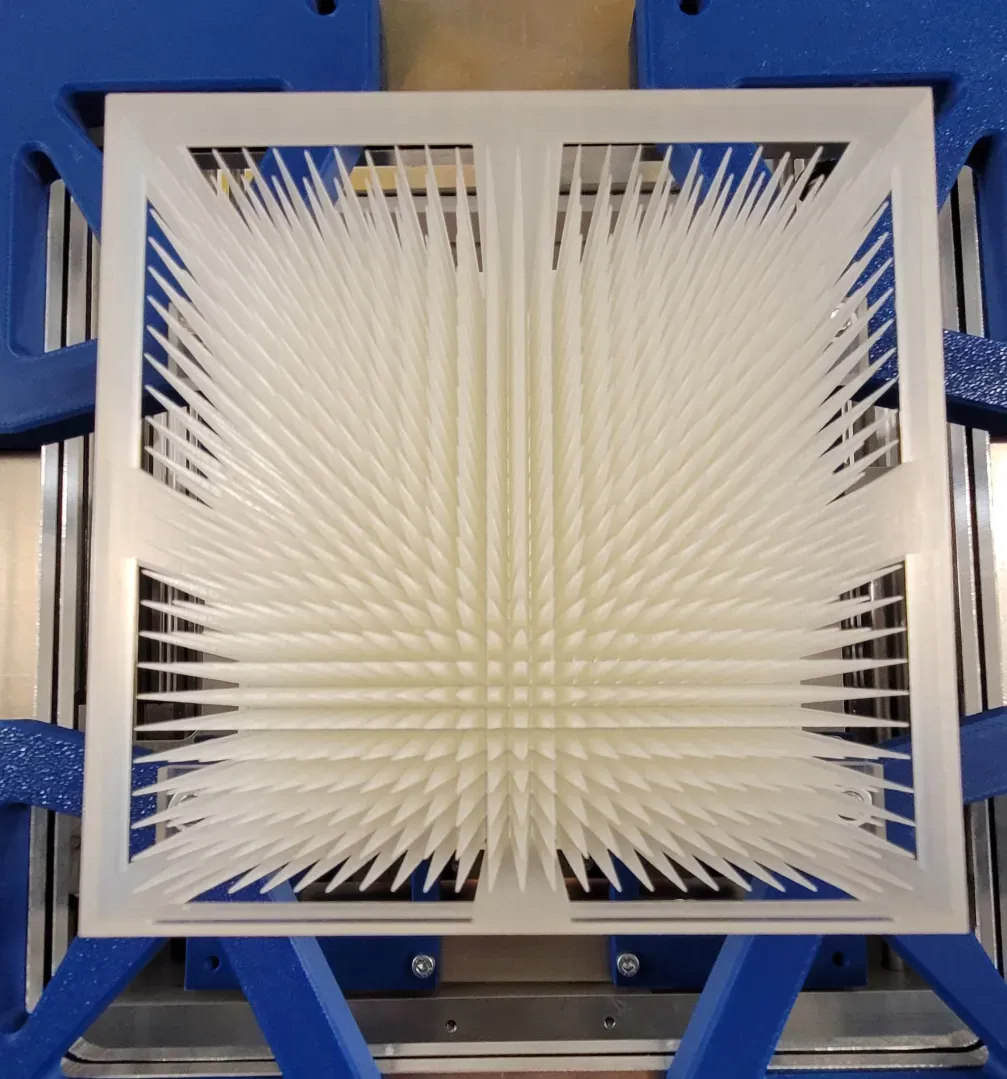
Europe’s First GCR Simulator
Researchers built the simulator using accelerators at the Facility for Antiproton and Ion Research complex in Darmstadt.
Marco Durante, a professor at the Technical University of Darmstadt, explained that there was no reliable way to simulate GCRs in Europe until now. He heads GSI/FAIR’s biophysics research department.
He noted that his team, with ESA's help, developed and started the GCR simulator at GSI/FAIR. This was part of the FAIR Phase 0 experiment program.
The system uses high-energy ion beams from GSI accelerators. Scientists start with a beam of iron ions. They vary its energy before sending it into special beam modulators.
Researchers fine-tuned these modulators to create radiation conditions similar to deep space.
The results match values known from space missions. This technique can create a mixed radiation field. It mimics GCR exposure in a lightly shielded habitat, like a spacecraft.
Future Space Mission Research
The simulator gives scientists another way to study cosmic radiation. Until now, the only similar system was at Brookhaven National Laboratory in the United States, supported by NASA.
Both systems currently produce ion beams with energies up to one gigaelectronvolt per nucleon.
Christoph Schuy from the GSI Biophysics department said they want to make the GCR simulator available for more space radiation research. He added that with this achievement, they are bringing the Universe to the lab.