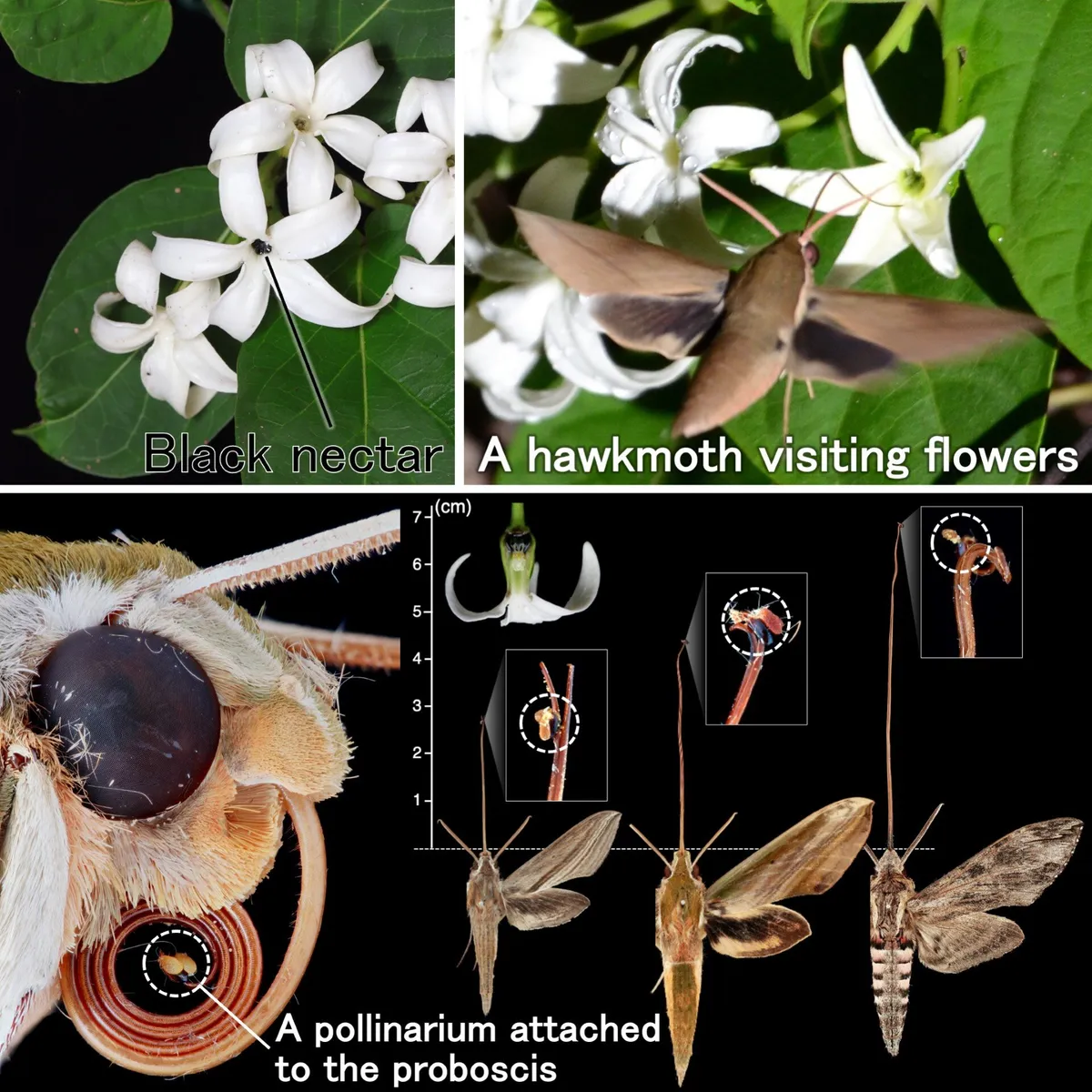
For years, scientists have been scratching their heads over Jasminanthes mucronata, a Japanese flower that secretes a mysterious black nectar. Most nectar is clear, and most studies on colorful nectars focus on the daytime crowd. But apparently, this plant prefers to do its important work after dark, with some surprisingly elegant partners.
Researchers at the University of Tokyo just confirmed that nocturnal hawkmoths are the main pollinators for these dark-nectared beauties. It's the first time anyone has definitively linked a colored-nectar flower to primarily nighttime insect pollinators. Which, if you think about it, opens up a whole new world of botanical intrigue.
Soma Chiyoda, the lead author, has always had a soft spot for moths and their underappreciated night shifts. When he heard about J. mucronata's white, fragrant blossoms—classic moth bait—he had a hunch. So, he and his team set up camp, literally, for 75 hours across several locations in southern Japan, watching and waiting. Day turned to night, and sure enough, the hawkmoths showed up.
We're a new kind of news feed.
Regular news is designed to drain you. We're a non-profit built to restore you. Every story we publish is scored for impact, progress, and hope.
Start Your News DetoxNow, catching a hawkmoth is not for the faint of heart. These aerial acrobats are notoriously difficult to net. But after many attempts, the team finally snagged one using a light trap. And there it was: pollen, clinging to the moth's proboscis. Chiyoda remembers sharing that triumphant moment in the mountains, under the vast night sky. Let that satisfying image sink in.

The study identified several hawkmoth species getting their midnight snack on, proving that colored nectar isn't just for the bees and butterflies. It's a whole new dimension to the plant-pollinator dance, one that's been happening in the shadows all along.
Of course, the biggest mystery remains: why black nectar? Is it a secret signal? A moth-specific delicacy? Chiyoda plans to keep digging, using J. mucronata to unravel the evolutionary puzzle of colored nectar, especially its role in the nocturnal world. Because apparently, even common plants are still holding out on their juiciest secrets until after sundown.