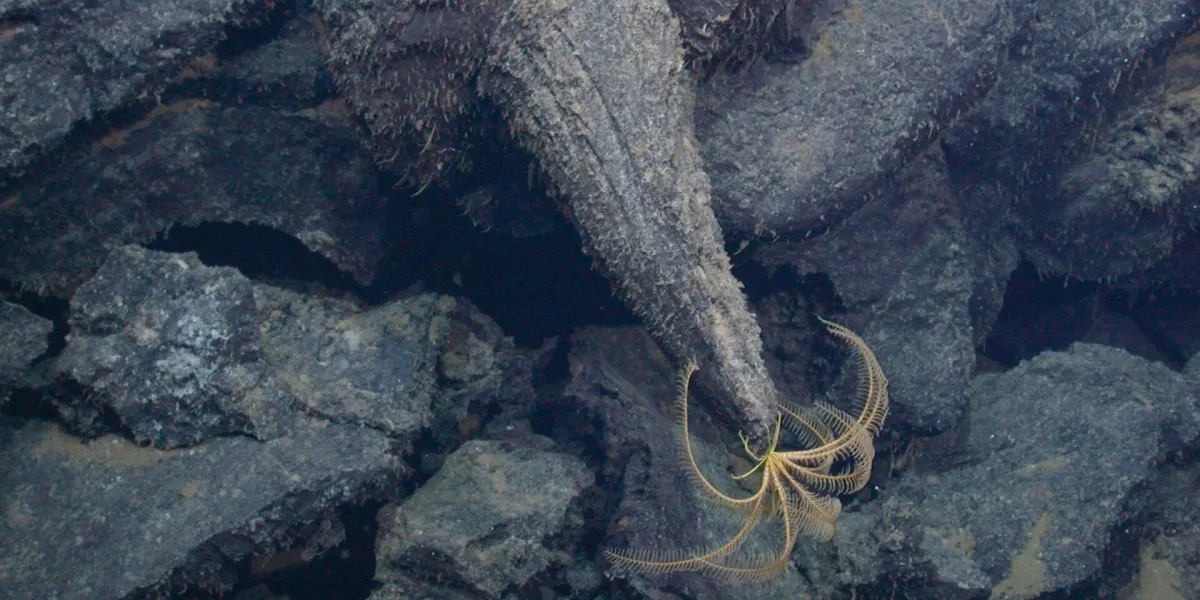
Turns out, the ocean floor is a lot more dramatic than we thought. Scientists have just pulled back the curtain on Axial Seamount, an active underwater volcano off the coasts of Oregon and Washington, revealing vast, ancient lava flows and collapsed lava ponds. Think of it as a subterranean Pompeii, but for molten rock.
Volcanic eruptions are generally bad news on land. Underwater, they're harder to spot but just as impactful, constantly reshaping the seabed and occasionally, you know, triggering tsunamis. So, understanding how these deep-sea behemoths operate is pretty crucial.
The Seamount’s Secret History
Axial Seamount sits on the Juan de Fuca Ridge, a 310-mile-long underwater mountain range. Since its discovery in the 1980s, it's been a busy spot, erupting multiple times. For over two decades, researchers from MBARI (Monterey Bay Aquarium Research Institute) have been basically stalking this volcano with autonomous underwater vehicles (AUVs) and remotely operated vehicles (ROVs), mapping its every move and collecting samples.
We're a new kind of news feed.
Regular news is designed to drain you. We're a non-profit built to restore you. Every story we publish is scored for impact, progress, and hope.
Start Your News DetoxTheir latest findings, just published, detail three absolutely massive lava flow fields. Each one stretches between 25 and 39 square miles — roughly the size of Manhattan. And they're thick, too, up to 427 feet deep. Inside these flows, they found deep, interconnected lava ponds, which, if you think about it, is both impressive and slightly terrifying.
These aren't your garden-variety lava flows. They first spread out, then inflated like a giant, molten balloon. This happened because the lava's forward motion slowed, but the liquid rock inside kept pushing, causing the surface to bulge and crack. When the hardened crust couldn't take it anymore, it collapsed, forming deep pits. Some ponds even stayed molten until a structural failure allowed the lava to drain away, leaving behind these strange, sunken features.
These colossal eruptions were quickly fed by dikes — essentially magma superhighways — connected directly to the volcano's summit. The evidence suggests that the most recent mega-event, about 1,200 years ago, might have been triggered by a dramatic collapse of the volcano's summit caldera. Because apparently, that's where we are now: volcanoes collapsing under their own weight. The older lava fields seem to have formed in similar, equally dramatic fashion.
So, next time you picture the quiet, dark ocean floor, remember that beneath the surface, there's a geological drama playing out, complete with collapsing roofs, subterranean highways, and lava fields big enough to swallow a major city. Makes your morning commute seem pretty tame, doesn't it?