Imagine pulling on a liquid, say, some oil or even water. What happens? It stretches, thins out, and eventually separates, right? That’s what every science class and common sense has taught us since forever.
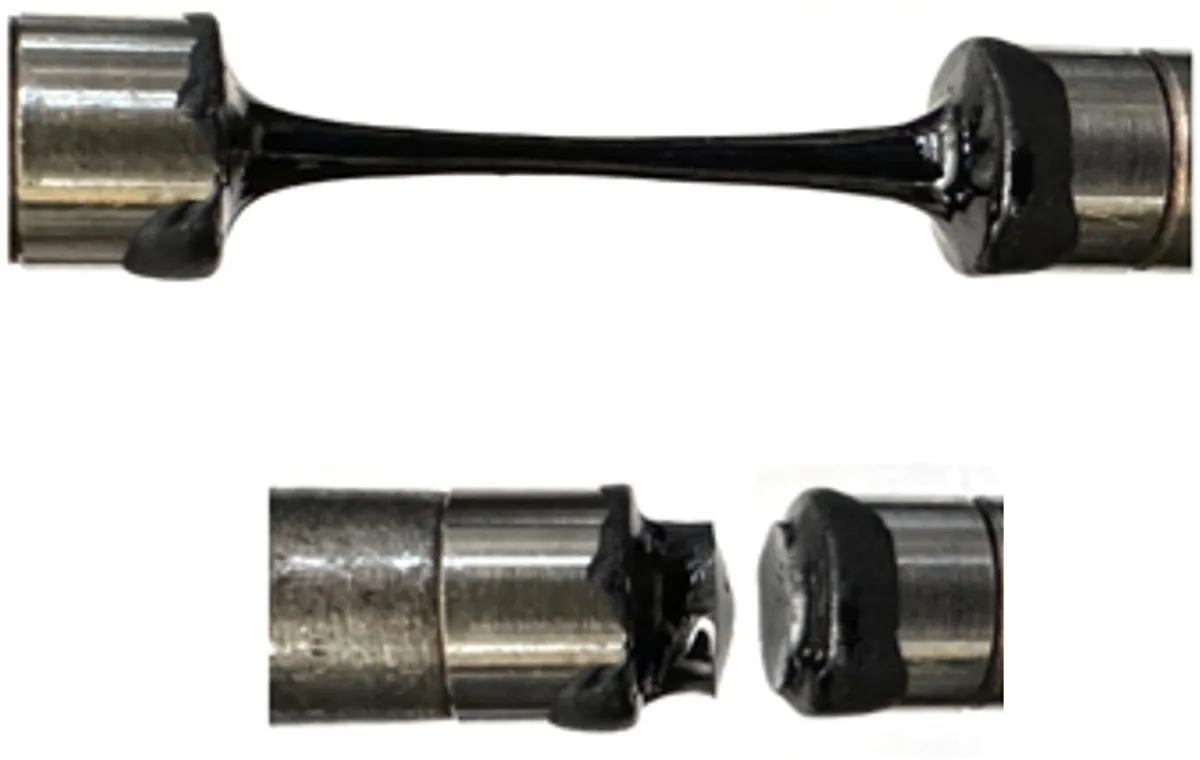
Well, apparently, forever just got an asterisk. Researchers at Drexel University just discovered that if you pull on a simple liquid hard enough, it doesn’t just stretch. It snaps. Like a solid. With an audible crack.
Let that sink in for a moment. Your morning coffee, under extreme duress, might just shatter.
We're a new kind of news feed.
Regular news is designed to drain you. We're a non-profit built to restore you. Every story we publish is scored for impact, progress, and hope.
Start Your News DetoxThe Accidental Breakthrough
The team, led by Professor Nicolas Alvarez, stumbled upon this mind-bending phenomenon while testing two tar-like liquids for ExxonMobil. They were using a rheometer, a device that measures how much force it takes to stretch a liquid. Instead of the usual thinning, they saw something entirely different.
“The observation was so unexpected we had to repeat the tests to confirm it,” Alvarez noted. Turns out, the liquids weren't just being dramatic; they were performing a brittle fracture, a type of break usually reserved for things like glass or ceramics. Thamires Lima, an assistant research professor, even reported a “loud snapping noise,” which, if you think about it, is both impressive and slightly terrifying coming from a liquid.
These initial hydrocarbon blends fractured at 2 megaPascals of stress. For context, that’s roughly the tension your fingernail would experience if a laundry bag containing ten bricks fell and snagged on it. Which is specific, yes, but also a deeply unsettling visual.
Viscosity: The Unsung Hero (or Villain)
To figure out what was going on, they experimented with styrene oligomer, another simple liquid with the same viscosity. Bingo. It fractured under the same conditions. This strongly suggested that viscosity — a liquid’s resistance to flow — is the main culprit behind this solid-like behavior.
Further tests involved changing the temperature to alter viscosity. Each time, they found a specific stretching speed that caused the liquid to fracture, consistently at that 2 megaPascal critical stress. So, it's not just a fluke; it's a rule.
This upends decades of conventional wisdom. Scientists always thought fracture was linked to elasticity, a material’s ability to store and resist stress. Simple liquids are, by definition, not elastic; they just flow. Fracture was also thought to only happen when liquids were cooled below their “glass transition” temperature, where they get all solid-like.
But this new research shows liquids can fracture even when they're fully, unequivocally liquid. While complex liquids (like Oobleck, everyone’s favorite cornstarch and water concoction) can show solid-like behavior, simple liquids were always expected to deform continuously. Clearly, simple liquids have been holding out on us.
The team is now diving deeper, suspecting the physics might involve cavitation — tiny vapor bubbles forming and collapsing, creating shockwaves. Regardless of the precise mechanism, this discovery opens up a whole new world of questions in fluid dynamics and could impact everything from hydraulics to fiber spinning, and even how we understand blood flow. Because apparently, even the most basic substances have secrets.