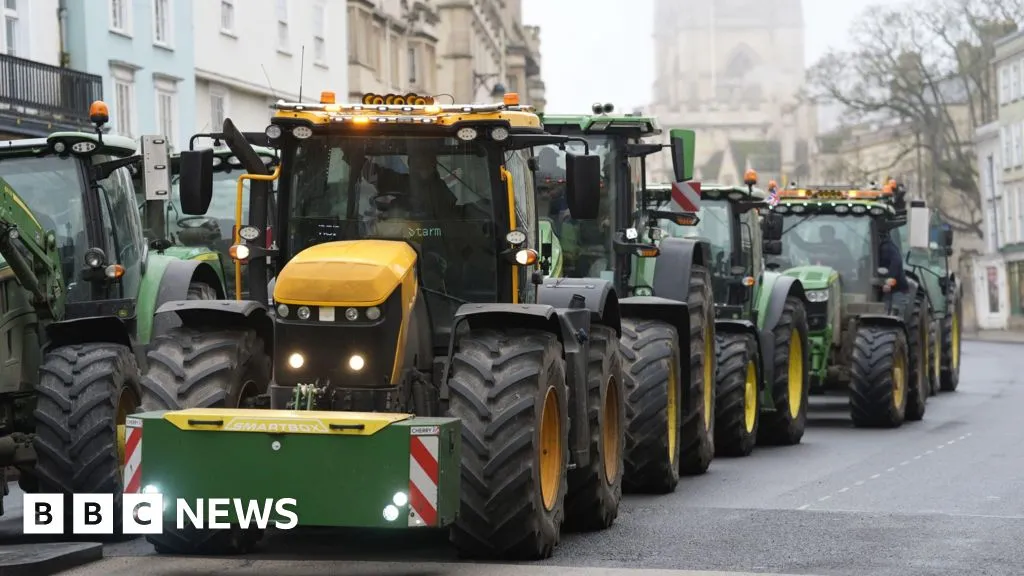
After tractors rolled into Oxford city center and months of sustained pressure from farming groups, the government has announced it won't push inheritance tax changes any further. Environment Secretary Emma Reynolds made clear at the Oxford Farming Conference this week: the threshold stays at £2.5 million, and that's final.

The original plan would have taxed inherited farmland worth over £1 million at 20%—half the standard inheritance tax rate—designed to stop wealthy investors using farmland as a tax shelter while protecting smaller operations. But in December, facing fierce opposition, the government already raised that threshold to £2.5 million. Now, paired with a spousal exemption, a farming couple can pass on up to £5 million in qualifying assets tax-free.
It's a partial victory that reveals the messy reality of policy-making. The National Farmers' Union called it "a huge relief for many farming families," acknowledging that the change removes the tax burden from a significant number of farms. But the Country Land and Business Association remains unconvinced, saying the policy is still "so dreadful for the rural economy" and vowing to push for full reversal. Reynolds' message to that room was pointed: "It is the people in this room who have engaged with us constructively and relatively quietly that have had an influence on this process, not the people sounding their horns."
We're a new kind of news feed.
Regular news is designed to drain you. We're a non-profit built to restore you. Every story we publish is scored for impact, progress, and hope.
Start Your News DetoxBeyond the inheritance question, Reynolds also signaled stability on another front that had rattled farmers. Last year's sudden closure of the Sustainable Farming Incentive—a flagship program that pays farmers for environmental work like insecticide-free crops and hedgerow management—was described by the NFU as "another shattering blow." Reynolds pledged there would be "no more sudden, unexpected closures" of farming payment schemes. The revamped SFI will reopen in June with a simpler application process, targeting small farms first, followed by a wider window in September.
What matters here is less about who "won" and more about what comes next. The Wildlife Trusts have flagged that none of this works without increasing the actual budget for environmental farming payments—the money that makes these schemes viable. The policy framework is settling, but the question of whether farmers can actually afford to be stewards of the land remains open.