A new study shows that a consumer AI model can help create new mathematical proofs. This suggests a change in how theoretical research might be done.
ChatGPT Solves a Geometry Problem
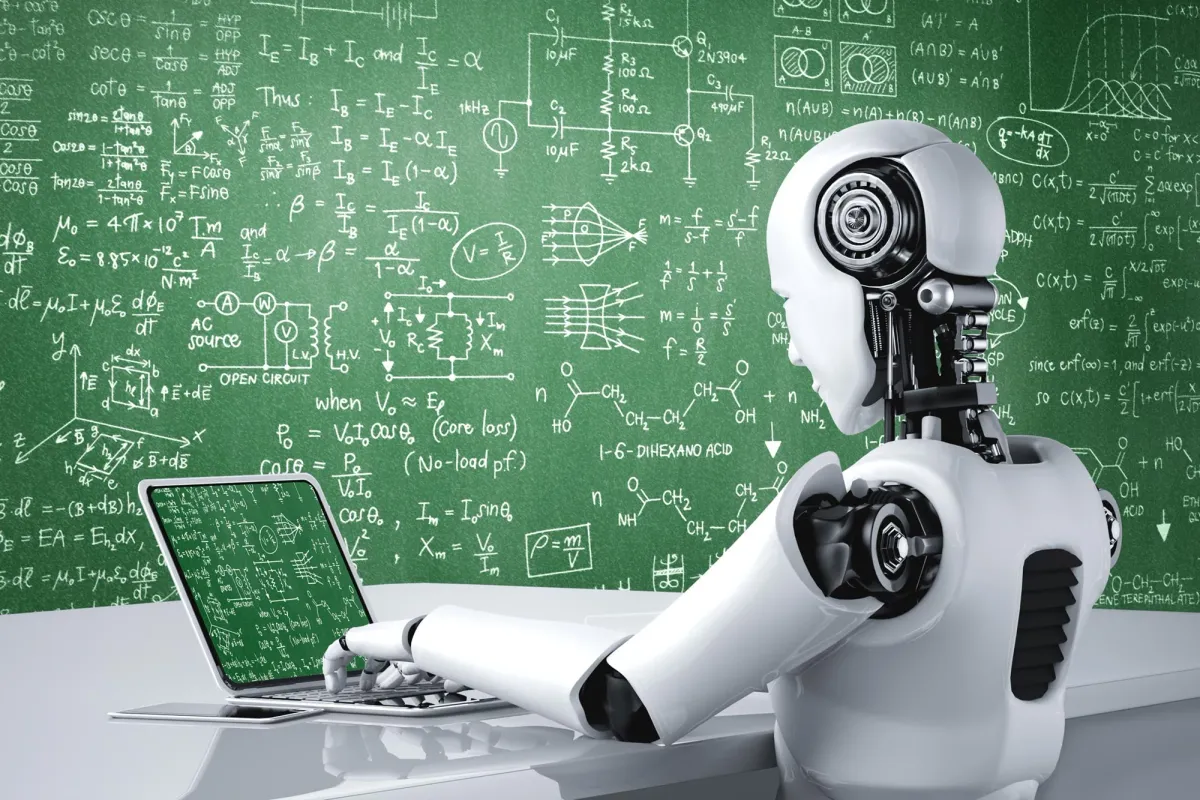
Researchers at VUB’s Data Analytics Lab found that commercial language models can create original mathematical proofs. Their study showed that OpenAI’s ChatGPT-5.2 (Thinking) solved a math problem on its own.
The problem involved proving a conjecture from 2024 by mathematicians Ran and Teng. A conjecture is a statement believed to be true, but it needs formal proof. Once proven, it becomes a theorem.
We're a new kind of news feed.
Regular news is designed to drain you. We're a non-profit built to restore you. Every story we publish is scored for impact, progress, and hope.
Start Your News DetoxThe final proof came from seven chat sessions with ChatGPT. It also involved four changing versions of the argument. The AI model helped explore possible solutions. Human researchers made sure the reasoning was correct and complete.
How AI Helps Mathematical Discovery
The researchers noted that ChatGPT-5.2 (Thinking) built most of the proof's structure with little human help. They said, "We are one of the first to show that a commercially available LLM can independently develop original mathematical proofs."
Brecht Verbeken, a postdoctoral researcher at VUB, said he suspected ChatGPT could help prove unsolved math problems. He was surprised by how efficient it was.
The team calls this approach "vibe-proving." Language models help organize and explore complex ideas. They wonder if this method could advance as fast as "vibe-coding," which is AI-assisted programming. Vibe-coding has gone from simple tools to almost automatic code generation.
VUB professor Vincent Ginis said their work helps dispel the idea that AI creativity is limited to just rephrasing its training data.
The Future of AI Research Needs Humans
Even with the AI's strong contribution, human involvement is still key. Humans are needed for final checks and to fill any gaps in the proof. This process shows where language models are most useful and where validation challenges still exist.
This work is a big step for AI in theoretical research. Language models can now contribute to new mathematical discoveries. This happens when they are paired with careful human oversight. VUB professor Andres Algaba noted that creating candidate proofs can be much faster now. The next challenge is human verification, which takes time. He believes language models will help with that too.