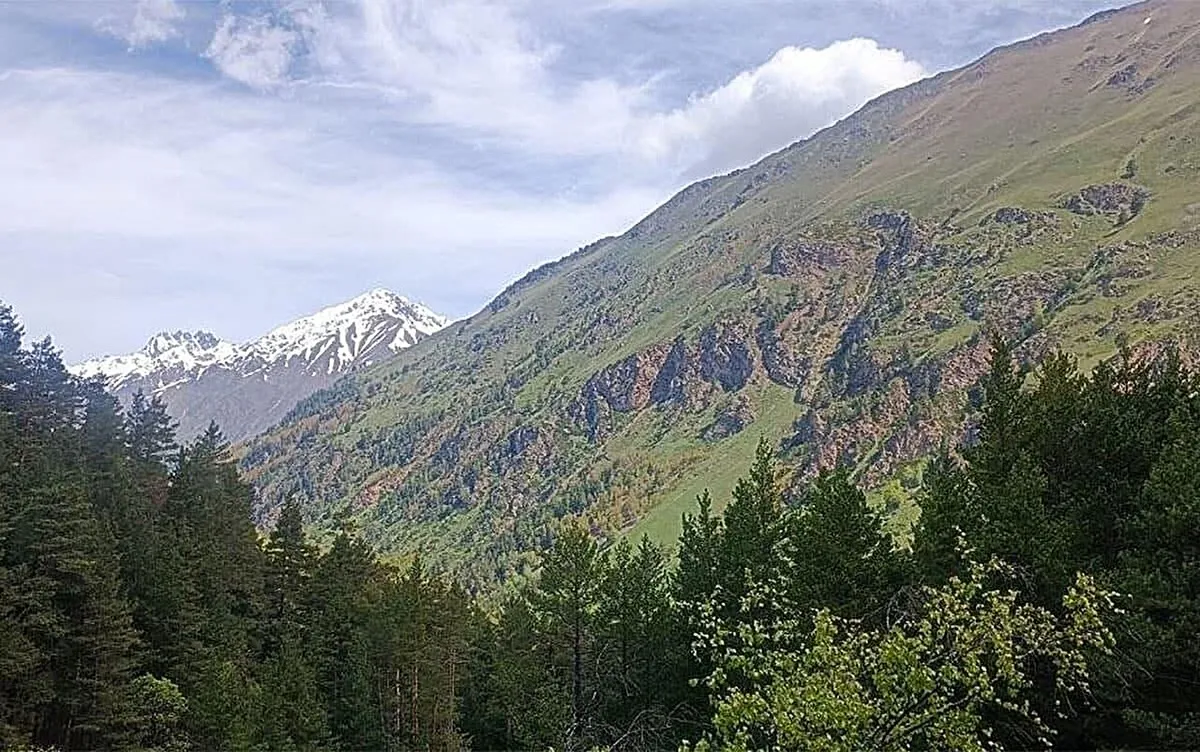
Northern Eurasia's forests are basically Earth's super-sized air filter, sucking up about a third of the world's land carbon emissions. We're talking 20% of all global forests, quietly doing the Lord's work. For years, the assumption has been simple: warmer climate equals happier, more carbon-hungry trees, especially in these chilly northern climes.
But a new study just threw a rather large wrench into that tidy theory. Turns out, it's not quite that straightforward.
Researchers, sifting through everything from satellite data to atmospheric models, discovered that these vast forests absorb a staggering 0.47 billion tonnes of carbon annually. Let that satisfying number sink in. However, the biggest carbon-chomping action isn't happening where the warming is most dramatic.
We're a new kind of news feed.
Regular news is designed to drain you. We're a non-profit built to restore you. Every story we publish is scored for impact, progress, and hope.
Start Your News DetoxThe Cold, Hard Truth About Warmth
Instead, the most effective carbon sinks are located in the western and southern parts of Northern Eurasia. As you move northeast, towards the truly frigid zones, the carbon absorption actually weakens. This is happening despite the fact that these colder regions are experiencing some of the fastest warming on the planet.
Which, if you think about it, is both impressive and slightly terrifying.
The problem? Much of that rapid warming in the far north happens in winter. And as anyone who's ever tried to plant a daffodil in January knows, frozen ground isn't exactly prime real estate for tree growth. It limits how much carbon trees can actually take in. Plus, these areas are more prone to things like wildfires, which, you know, release carbon rather than store it.
So, it's not just about the temperature reading; it's about what the trees can do with that temperature. The study, published in Global Biogeochemical Cycles, suggests that "forest productivity" or "site quality" is the real MVP here. Forests that are already robust and productive are the ones doing the heavy lifting, soaking up carbon like it's going out of style. Less productive forests, even with a little extra warmth, just don't get the memo.
It seems that when it comes to saving the planet, a forest's existing hustle matters more than a slightly less frosty winter. Because apparently, even trees need to be in a good mood to perform.