Imagine a time when humanity decided, collectively, to stop chasing dinner and start planting it. A subtle shift, perhaps, but one that completely rewrote our story. Now, archaeologists in Spain have found a rock shelter that basically has the whole transition recorded, like an ancient reality TV show.
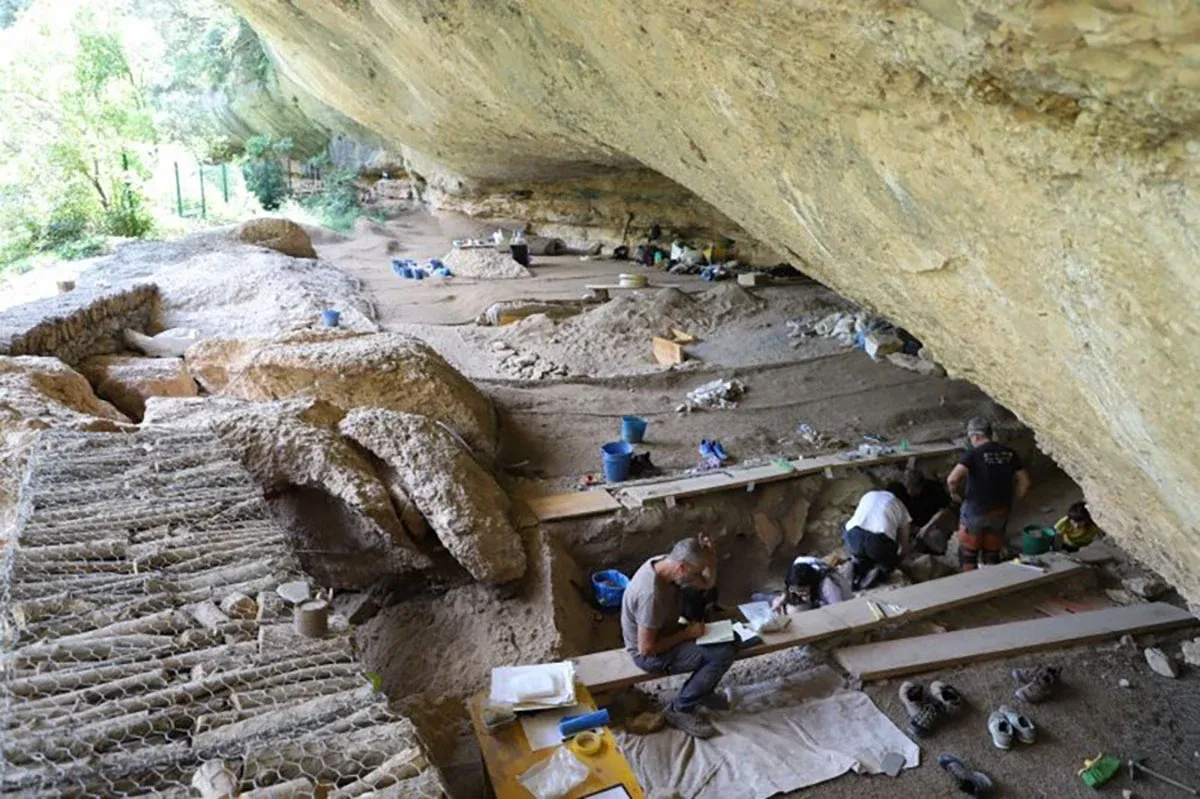
At Coves del Fem, tucked away in Spain's Serra de Montsant Natural Park, researchers have uncovered evidence of the precise moment humans swapped their spears for spades. It’s an 8,000-year-old time capsule showing how we went from hunter-gatherers to farmers, and it’s remarkably well-preserved.
The Great Human Pivot
What did this pivotal moment look like? Well, for starters, there were pits. Lots of pits. During a recent dig, archaeologists found eight of them, initially used for storage, then eventually filled with ancient garbage. Think of it as the original recycling program, only the items being recycled were broken pottery, flint tools, animal bones, and charred seeds. These humble discards paint a surprisingly detailed picture of the very first farming communities in the Montsant Valley: what they ate, how they lived, and probably what they complained about.
We're a new kind of news feed.
Regular news is designed to drain you. We're a non-profit built to restore you. Every story we publish is scored for impact, progress, and hope.
Start Your News DetoxFascinatingly, the digging of these farming pits actually disturbed even older layers beneath them. These older levels belonged to the Mesolithic hunter-gatherers who called the shelter home before the farming trend hit. It’s like finding a modern house built on top of an even older, more rustic cabin.
And those older layers? They’re just as revealing. Researchers found three hearths (presumably for cooking whatever they managed to hunt or gather), more flint tools, animal remains, and plant evidence. These discoveries are crucial for understanding the environment and daily routines of the last hunter-gatherer groups in the area, offering a direct comparison to their farming successors.
This continuous, remarkably well-preserved record of human activity — from roughly 6000 BC through 4500 BC, with hints of even older residents — is incredibly rare for sites in Catalonia. It makes Coves del Fem a sort of Rosetta Stone for understanding “Neolithization,” the fancy term for when we all decided agriculture was a pretty good idea.
So, while we’re busy debating the merits of organic kale versus free-range chicken, these ancient layers in Spain are quietly reminding us of the very first food debates. Which, if you think about it, is both impressive and slightly terrifying. Some things never change.