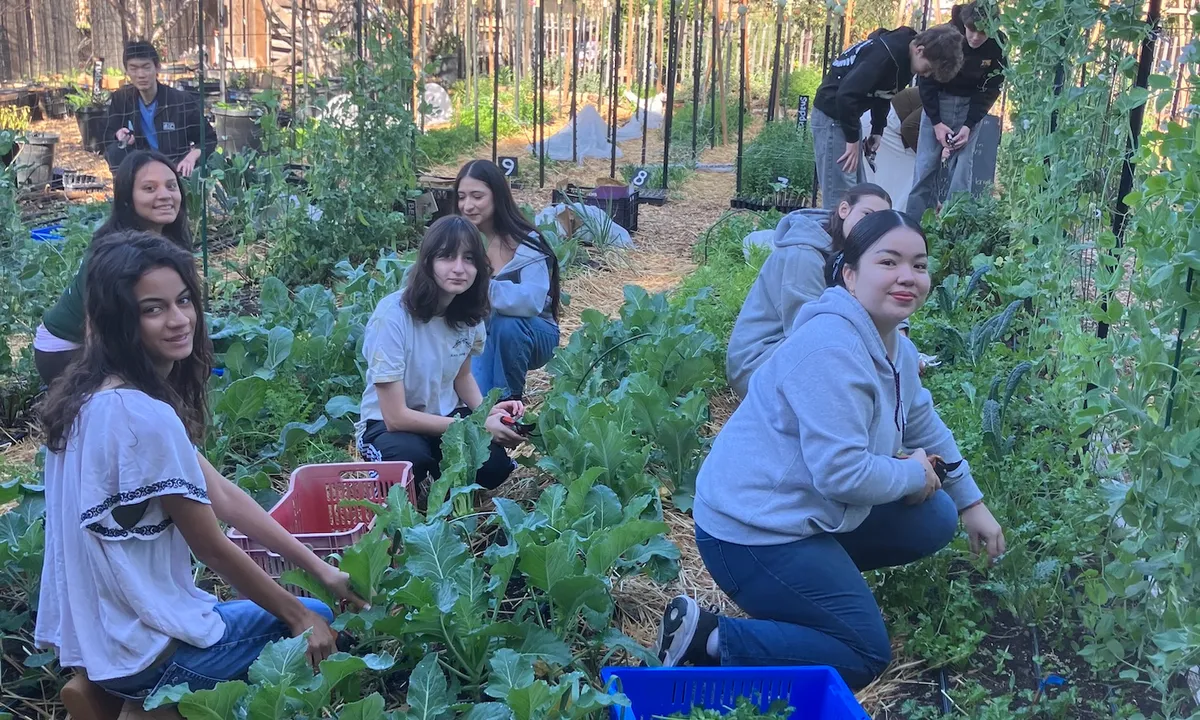
Turns out, getting a city plot to grow organic kale isn't the hardest part of being an urban farmer. It's everything else.
That's where the Los Angeles Food Policy Council (LAFPC) steps in with its delightfully named Cultivating Farmers program. Forget how-to guides on soil pH; this initiative focuses on the decidedly less glamorous, but infinitely more crucial, side of things: land acquisition, business growth, and not, you know, going bust.
Launched in 2024, Cultivating Farmers is less about green thumbs and more about greenbacks (or at least, the smart management of them). We're talking workshops on grant writing, marketing, sales strategies, and the kind of business planning that makes a spreadsheet sing. Because, as Nikhita Jain, a Senior Urban Agriculture Program Associate at LAFPC, points out, running a farm is a business first, a farm second.
We're a new kind of news feed.
Regular news is designed to drain you. We're a non-profit built to restore you. Every story we publish is scored for impact, progress, and hope.
Start Your News DetoxThe Wild West of Urban Land
One of the program's biggest battles? Land. Urban farmers in LA often find themselves in a bureaucratic maze, relying on handshake deals with schools or churches for space. Which, while charmingly old-school, means their entire livelihood can vanish faster than a forgotten lettuce head if a principal retires or the property gets sold.
Jain calls these arrangements "relationship-based," which is a polite way of saying your farm's future hinges on who's in office or who answers the phone. This makes long-term planning, like investing in proper irrigation or soil improvements, feel like a gamble. And good luck getting a grant when your "land tenure" is essentially a pinky promise.
Take Black Thumb Farm, a nonprofit in the San Fernando Valley. Founders Alexys Romo and Analisa Joh spent five years trying to secure a 2.3-acre public parcel. Five years. Not planting, not harvesting, but navigating the labyrinthine layers of city government. Jain notes there's no formal process for this; they just started cold-calling until someone, eventually, responded. Which, if you think about it, is both impressive and slightly terrifying.
Black Thumb Farm, by the way, focuses on BIPOC youth, grows culturally relevant food, and teaches job skills. So, the stakes are a bit higher than just a good tomato crop.
Through workshops and one-on-one advising, Cultivating Farmers is trying to make sure these vital green spaces—which do everything from creating jobs to strengthening community ties—don't get plowed under by paperwork. Because building a farm in the city is already hard enough. Figuring out how to keep it running shouldn't require a law degree and the patience of a saint.