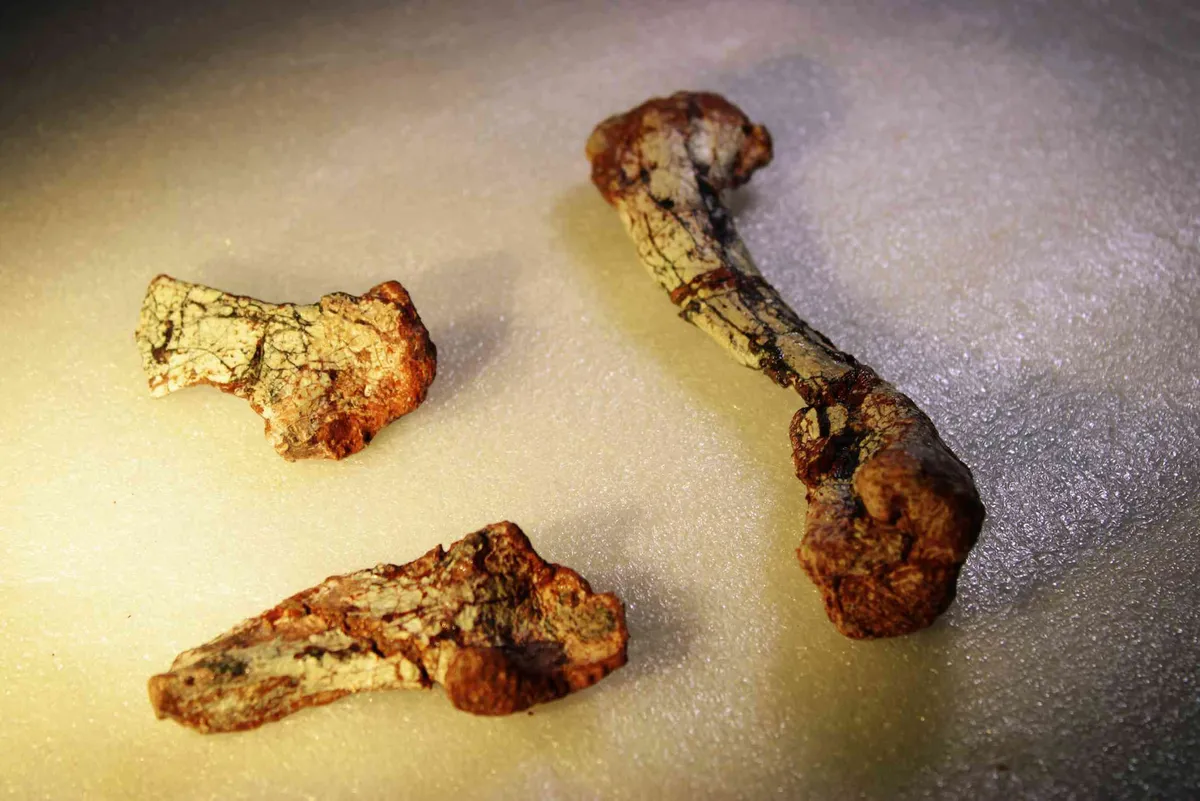
Fragmentary bones found in Brazil have revealed a new reptile species that lived 240 million years ago. This discovery helps scientists understand the early evolution of archosauriforms, a group that includes crocodiles and dinosaurs.
The fossil was accidentally lost for over two decades before its rediscovery allowed researchers to identify the new species.
A Small Predator After Mass Extinction
The new species is named Silescelida acristata. It lived during the Middle Triassic Period, after Earth's largest mass extinction event about 252 million years ago. This event cleared the way for new animal groups to emerge.
We're a new kind of news feed.
Regular news is designed to drain you. We're a non-profit built to restore you. Every story we publish is scored for impact, progress, and hope.
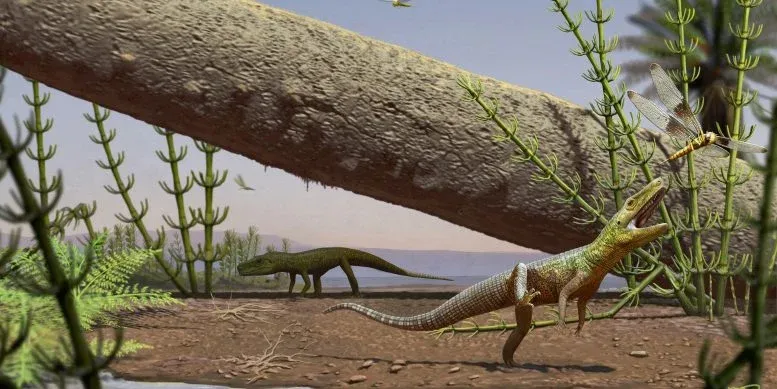
Start Your News DetoxSilescelida acristata was a relatively small, slender animal. It moved on all four limbs and was about the size of a small alligator. It was a small predator in the Triassic ecosystems of southern Brazil.
This reptile was not a dinosaur or a crocodile. However, it belonged to a lineage closely related to the ancestors of these groups.
Researchers from the Federal University of Santa Maria, the Federal University of Rio Grande do Sul, and the Pontifical Catholic University of Rio Grande do Sul published their findings in Scientific Reports.
Limb Bones Show Evolving Posture
The fossil mainly preserves parts of the limbs. These bones offer important clues about how the animal moved and its evolutionary relationships.
One key feature is its femur, or thigh bone. Silescelida acristata had legs in a more semi-erect position, closer to the body than to the side. This posture allowed for more efficient movement. This type of change was crucial for the later success of archosaurs.
The new fossil helps scientists understand the period before dinosaurs and crocodiles became dominant. During this time, their relatives were developing different body shapes, postures, and ways of moving.
A Rare Lineage in South America
Analysis suggests that Silescelida acristata might be related to Euparkeriidae. This is a rare group of archosauriforms that scientists still know little about.
Until now, fossils from this group were mostly found in Africa, Asia, and Europe. Finding a related form in South America shows that these reptiles were more widespread during the Triassic than previously thought. This highlights South America's importance in studying the origin of major land vertebrates.
A Lost Fragment Unlocks the Species
The discovery of Silescelida acristata has a unique story. Part of the fossil was accidentally lost for over two decades. This missing piece held vital information about its origin.
In 2022, researchers found the lost fragment in a scientific collection. This rediscovery allowed them to confirm the fossil's origin and formally describe it as a new species.
The name Silescelida reflects this history. It combines words for "silence" and "leg." "Silence" refers to the long time the fossil was forgotten, and "leg" refers to the preserved limb bones. The name acristata means "without a crest," because its femur lacks a bony protrusion found in most of its relatives.
This discovery shows that the evolutionary history of archosauriforms was more complex than thought. It also reinforces Rio Grande do Sul's importance for studying Triassic fauna. The region's rocks hold fossils from different stages of vertebrate evolution, including some of the oldest known dinosaurs.
Even incomplete fossils can reveal crucial evolutionary information. In this case, limb bones helped identify a new species, understand its movement, and expand the known distribution of a rare reptile group.
Deep Dive & References