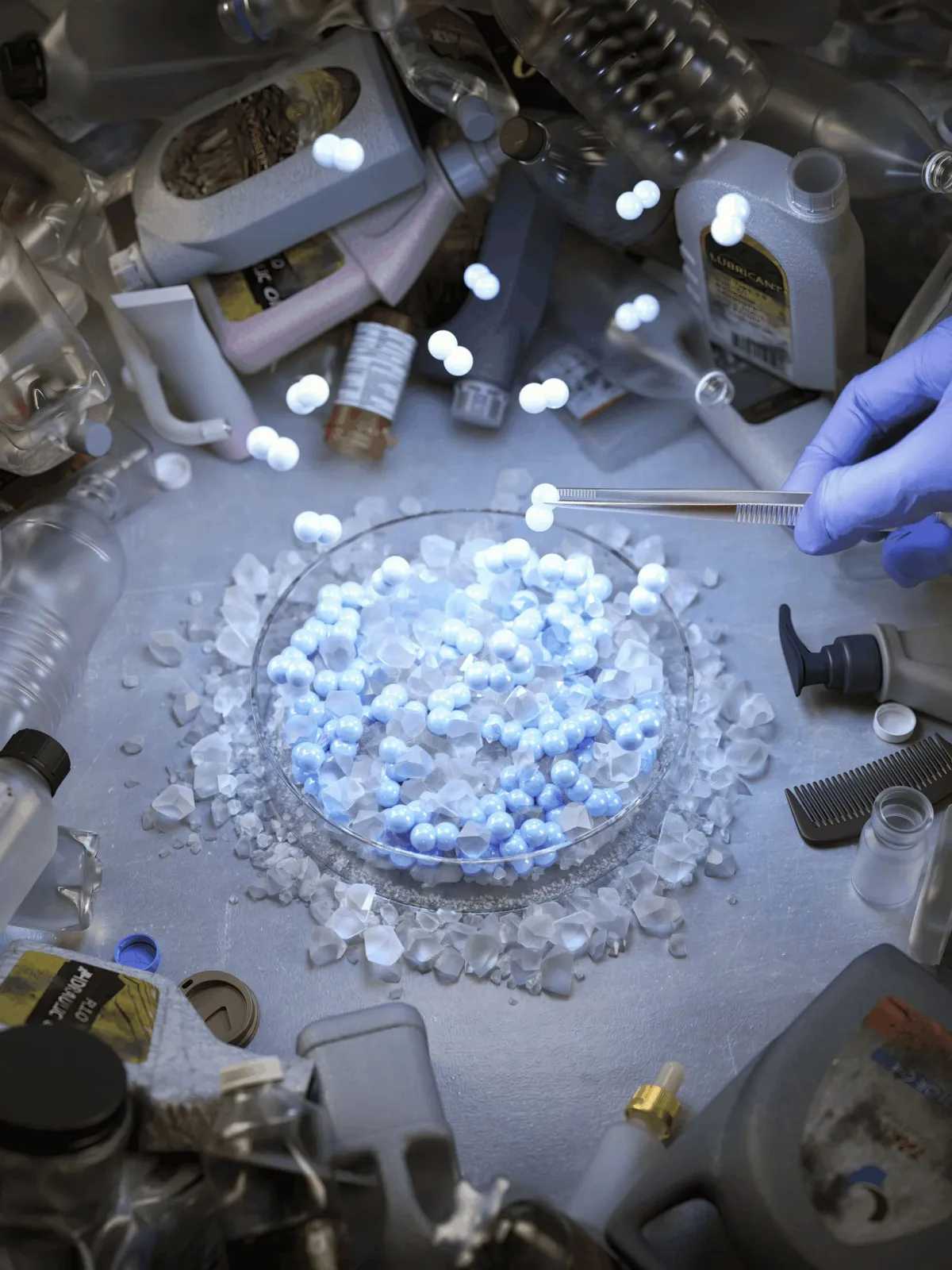
Imagine a world where your discarded plastic bottle doesn't just float in an ocean gyre for a thousand years or get incinerated into the atmosphere. Instead, it becomes... hydrogen. Clean, green hydrogen. Because apparently, that's where we are now.
A team from UCLA and Ewha Womans University in South Korea just dropped a scientific mic, announcing a new chemical process that can take a jumbled mess of mixed plastic waste and transform it into high-purity hydrogen fuel. And the best part? It locks away the carbon as a solid mineral, rather than letting it waft around as CO2.
The Alchemy of Alkaline Thermal Treatment
This isn't your grandma's recycling. The process, dubbed alkaline thermal treatment (ATT), uses superheated sodium hydroxide to essentially chemically dismantle the plastic. Think of it as a very aggressive, very hot bath that leaves behind pure hydrogen. And by pure, we're talking over 90% pure.
We're a new kind of news feed.
Regular news is designed to drain you. We're a non-profit built to restore you. Every story we publish is scored for impact, progress, and hope.
Start Your News DetoxWhat's truly wild is that this method doesn't need perfectly sorted plastics. It can handle a cocktail of polyethylene terephthalate (PET), polyethylene (PE), and polypropylene (PP) — the stuff that makes up everything from soda bottles to yogurt containers and plastic bags. No tedious sorting required, which, if you've ever stood at a recycling bin trying to decipher tiny arrows, you know is half the battle.
One of the lead researchers, Ah-Hyung “Alissa” Park, put it simply: this tech tackles two enormous problems at once. We're drowning in plastic, and we desperately need clean hydrogen to kick our carbon habit. It’s like finding a unicorn that also cleans your house.
Previously, getting hydrogen from plastics was either too hot, too CO2-heavy, or too picky about the type of plastic. This new ATT method runs at temperatures 300-400 degrees Celsius lower than traditional methods and manages to capture over 75% of the plastic's original carbon, turning it into stable sodium carbonate. That carbonate can then be converted into calcium carbonate, a mineral often used in industries that are usually big carbon emitters, essentially giving it a permanent time-out from the atmosphere.
Now, the scientists still have to fine-tune the process and figure out the economics for large-scale adoption. But the idea of turning our plastic problem into a clean energy solution, while also cleaning up the carbon, is a pretty compelling vision. Maybe those plastic bags will finally have a noble purpose after all.