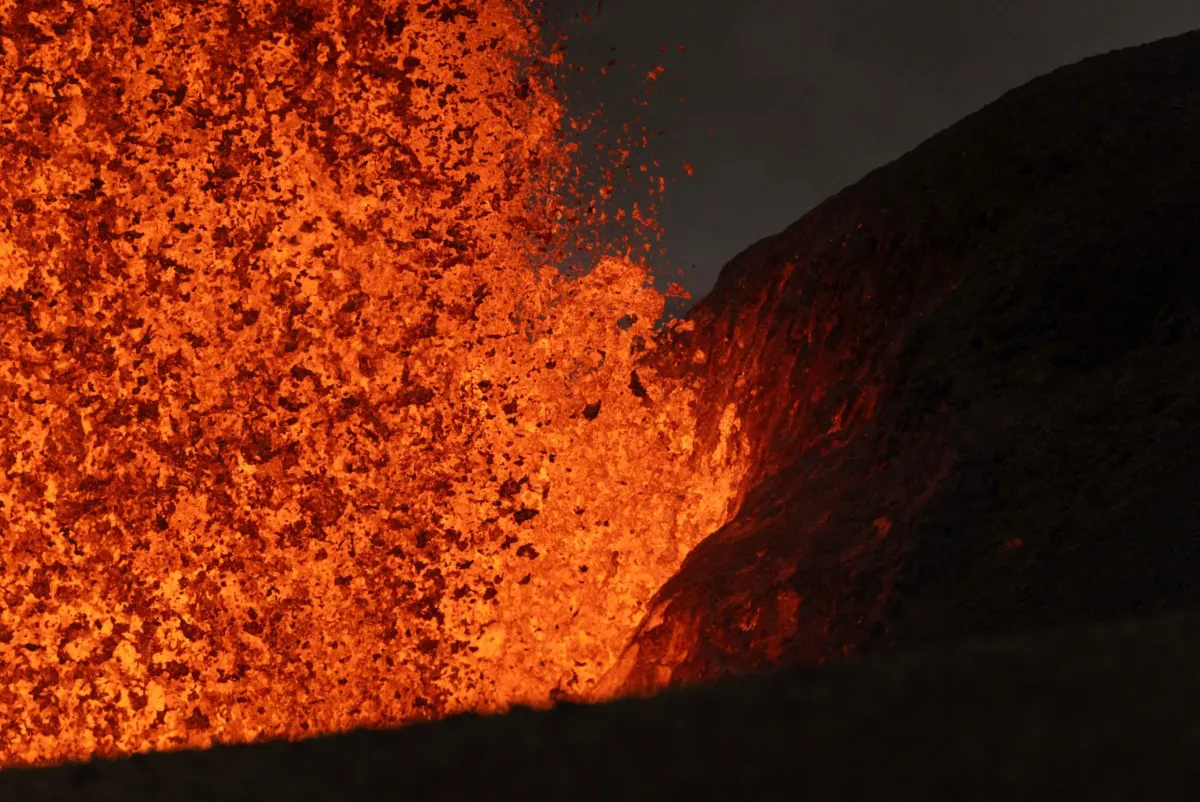
For decades, geologists had a pretty neat theory about Earth's hotspots: they started out fiery and then, like a forgotten cup of coffee, slowly cooled down. It made sense. Earth is old, things lose their heat.
Then Hawaii, ever the contrarian, decided to throw a wrench in the works. New research suggests the hotspot bubbling beneath the Aloha State isn't cooling down at all. In fact, it's been getting hotter for the last 47 million years — a scorching 480°F hotter, to be precise. Apparently, the Earth's mantle plume decided to turn up the thermostat.
The Plot Twist Beneath the Pacific
This isn't just a minor tweak to a textbook; it's a full-on geological plot twist. Scientists at the University of Hawai‘i at Mānoa discovered that the mantle plume feeding the 2,200-mile chain of Hawaiian volcanoes has been steadily warming. This challenges the long-held belief that these deep-earth heat sources are on a one-way trip to chill-ville.
We're a new kind of news feed.
Regular news is designed to drain you. We're a non-profit built to restore you. Every story we publish is scored for impact, progress, and hope.
Start Your News DetoxWhy does this matter? Well, the Hawaiian Ridge boasts 65 volcanoes, and their sizes vary wildly — sometimes by a factor of 100. This drastic difference has always been a head-scratcher. What makes one volcano a gentle hill and another a towering behemoth?
Emeritus Professor Michael Garcia and his team decided to investigate. They looked at everything from crust thickness to magma sources, but the real culprit turned out to be the temperature of the mantle plume itself. "It was a big surprise to find such a strong link," Garcia noted. Other ideas, apparently, just didn't cut the mustard.
The Ancient Thermometer
To crack this ancient heat mystery, the researchers had to invent a new "geothermometer." This clever tool estimates the original temperature of the lava when it first formed deep in the mantle. They then cross-referenced these ancient heat readings with updated volcano size measurements, thanks to some very detailed ocean floor surveys.
What they found was two distinct heat surges. The first, 14 to 20 million years ago, built Pūhāhonu — the largest and longest-lived shield volcano of the last 60 million years. (Yes, it's a mouthful to say, but imagine the Instagram potential.) The second surge, happening from 0 to 6 million years ago, is responsible for the iconic Hawaiian Islands we know and love today.
So, next time you're sipping a mai tai on a Hawaiian beach, remember: you're standing on the geological equivalent of a slow-cooker that keeps getting hotter. Which, if you think about it, is both impressive and slightly terrifying.