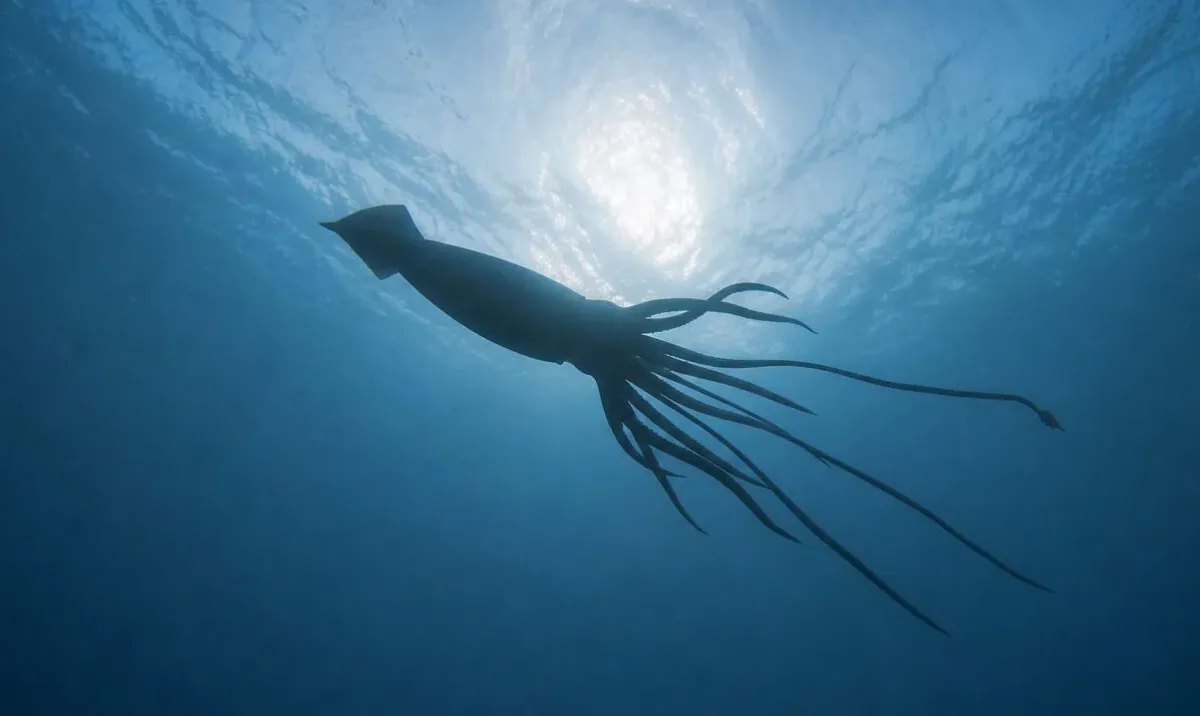
Imagine spending years trying to track down one of the ocean's most elusive giants, only to find it by sifting through its watery leftovers. That's essentially what happened off Western Australia, where scientists detected signs of the legendary giant squid — and a whole host of other deep-sea creatures — without ever needing a camera or a net.
This isn't some new magic trick. It's environmental DNA, or eDNA for short. Think of it as forensic science for the ocean. Animals shed tiny bits of themselves — skin cells, mucus, waste — into the water. Scientists collect water samples, extract the DNA, and then match it to known species. It's like finding a criminal by their discarded coffee cup, but for marine life.
The expedition, led by the Western Australian Museum, dove (metaphorically, mostly) into the Cape Range and Cloates submarine canyons, about 1,200 kilometers (745 miles) north of Perth. They collected over 1,000 samples from depths up to a truly breathtaking 4,510 meters (14,797 feet). Because, apparently, that's where we are now: exploring the deepest parts of the ocean with genetic sleuthing.
We're a new kind of news feed.
Regular news is designed to drain you. We're a non-profit built to restore you. Every story we publish is scored for impact, progress, and hope.
Start Your News DetoxThe Ghost of the Deep
The most exciting "find" was, of course, the giant squid (Architeuthis dux). Traces of this behemoth, which can grow up to 13 meters (43 feet) long with eyes the size of dinner plates, popped up in six different samples. This marks the first eDNA detection of a giant squid off Western Australia's coast and the northernmost record in the eastern Indian Ocean. Previously, only two physical records existed in the region. So, the squid is out there, just… very good at social distancing.
But the squid wasn't alone in its genomic reveal. The team identified 226 species from 11 major animal groups. This included deep-diving whales like the pygmy sperm whale and Cuvier’s beaked whale, plus dozens of species never before recorded in Western Australian waters, such as the sleeper shark and the aptly named faceless cusk eel. Which, if you think about it, is both impressive and slightly terrifying.
What We Don't Know
Dr. Georgia Nester, the lead author, highlighted how much we still don't know about Australia's deep-sea ecosystems. Many of the detected species didn't match anything currently known, hinting at a vast, undiscovered world thriving in the darkness. It’s a bit humbling, really, to realize how little we understand about the planet we live on.
eDNA is proving to be a game-changer for these fragile, fast-moving, or simply too-deep-to-see species. One water sample can unveil hundreds of residents, giving scientists a much clearer picture of these extreme environments. The research even showed that marine communities shift dramatically with depth, and even nearby canyons can host entirely different ecosystems.
Associate Professor Zoe Richards, a senior author, sums it up perfectly: "You can’t protect what you don’t know exists." As climate change, fishing, and resource extraction loom larger, eDNA offers a crucial way to build that foundational knowledge. Because who knows what else is lurking down there, waiting for its genetic calling card to be found?