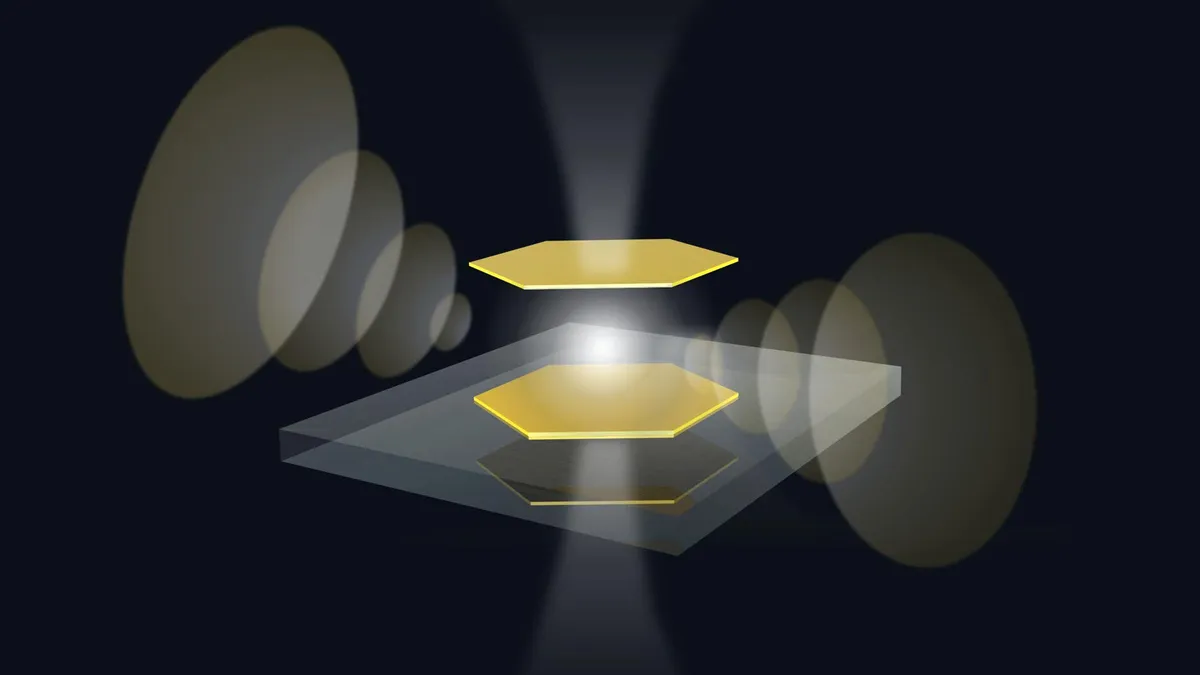
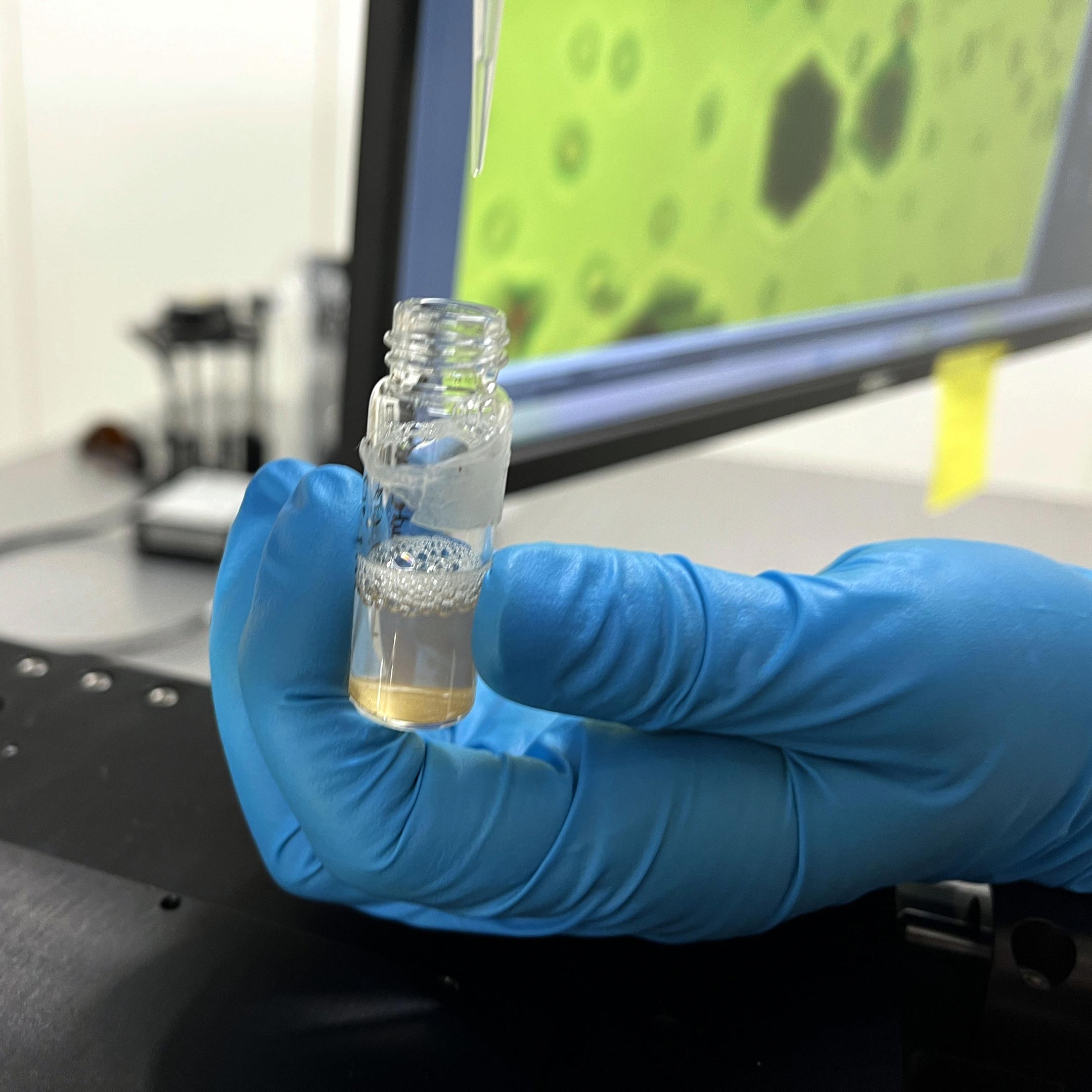
A doctoral student at Chalmers University holds up a small glass container. Inside: millions of gold flakes suspended in salt water, each one smaller than a grain of sand. She places a droplet under a microscope, and something unexpected happens. The flakes drift toward a golden surface but stop just short of touching it, leaving gaps so tiny they're measured in nanometers. Light bounces between these invisible spaces, and on the monitor, the flakes shimmer—red, green, yellow—as if they're alive.
They're not alive. They're revealing something far stranger: the fundamental forces that hold the universe together.
The Invisible Tug of War
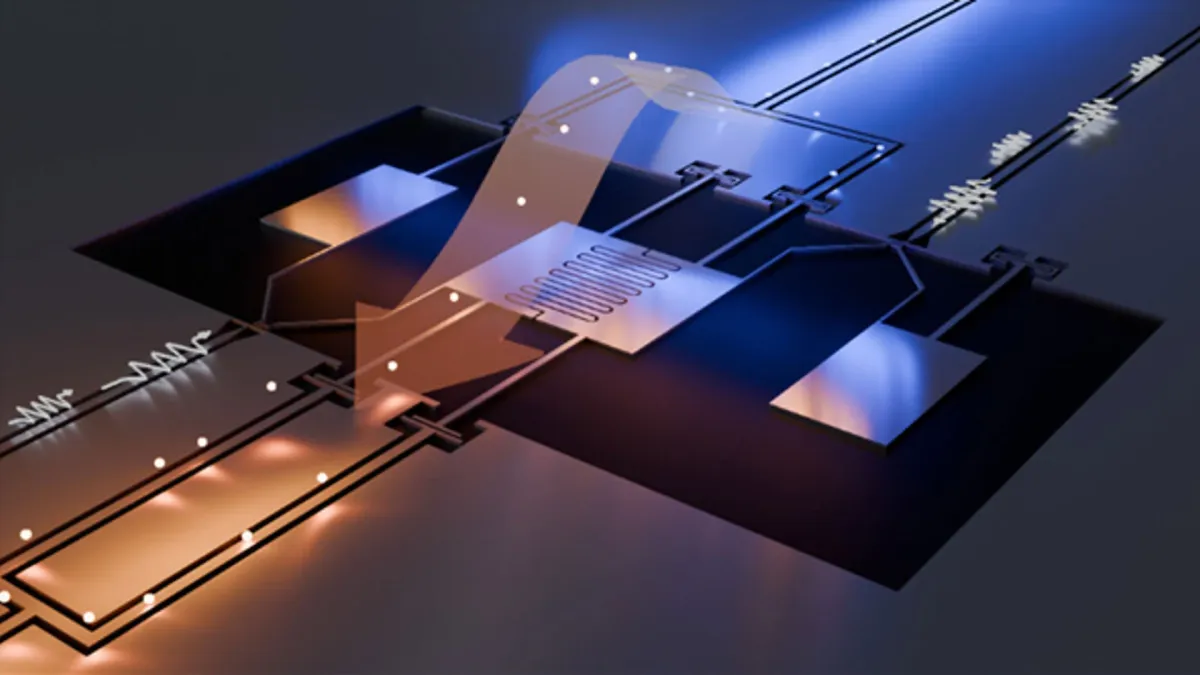
Michaela Hošková and her team at Chalmers have built something deceptively simple: a way to watch two opposing forces reach perfect balance. One force, called the Casimir effect, is a genuine quantum phenomenon—it pulls the gold flakes toward each other and toward the surface. The other is electrostatic repulsion, generated by charged ions in the salt solution, pushing back. When these forces equilibrate, they create the nanometer-sized cavities that make measurement possible.
We're a new kind of news feed.
Regular news is designed to drain you. We're a non-profit built to restore you. Every story we publish is scored for impact, progress, and hope.
Start Your News Detox"What we are seeing is how fundamental forces in nature interact with each other," Hošková explains. "We don't need to intervene in what is happening, we just observe the natural movements of the flakes."
The beauty of the method is that it works through light. A halogen lamp shines into the cavities, where light gets trapped and bounces back and forth. A spectrometer then breaks that reflected light into its component wavelengths—revealing which forces are at play, and how strong they are. The gold flakes become floating sensors, each one a tiny instrument reporting on the invisible world.
Why This Matters Beyond the Lab
For decades, physicists have struggled to measure forces at the nanoscale without destroying the very systems they're trying to study. Most methods require bulky equipment that can't zoom in to individual particles. This platform changes that. It's fast, it's elegant, and it works.
The implications ripple outward. Understanding how particles behave in liquids—whether they clump together or stay dispersed—could transform medicine, making drugs move through the body more effectively. Better biosensors could detect disease earlier. Water filtration could improve. Even cosmetics rely on preventing unwanted clumping, a problem this research touches directly.
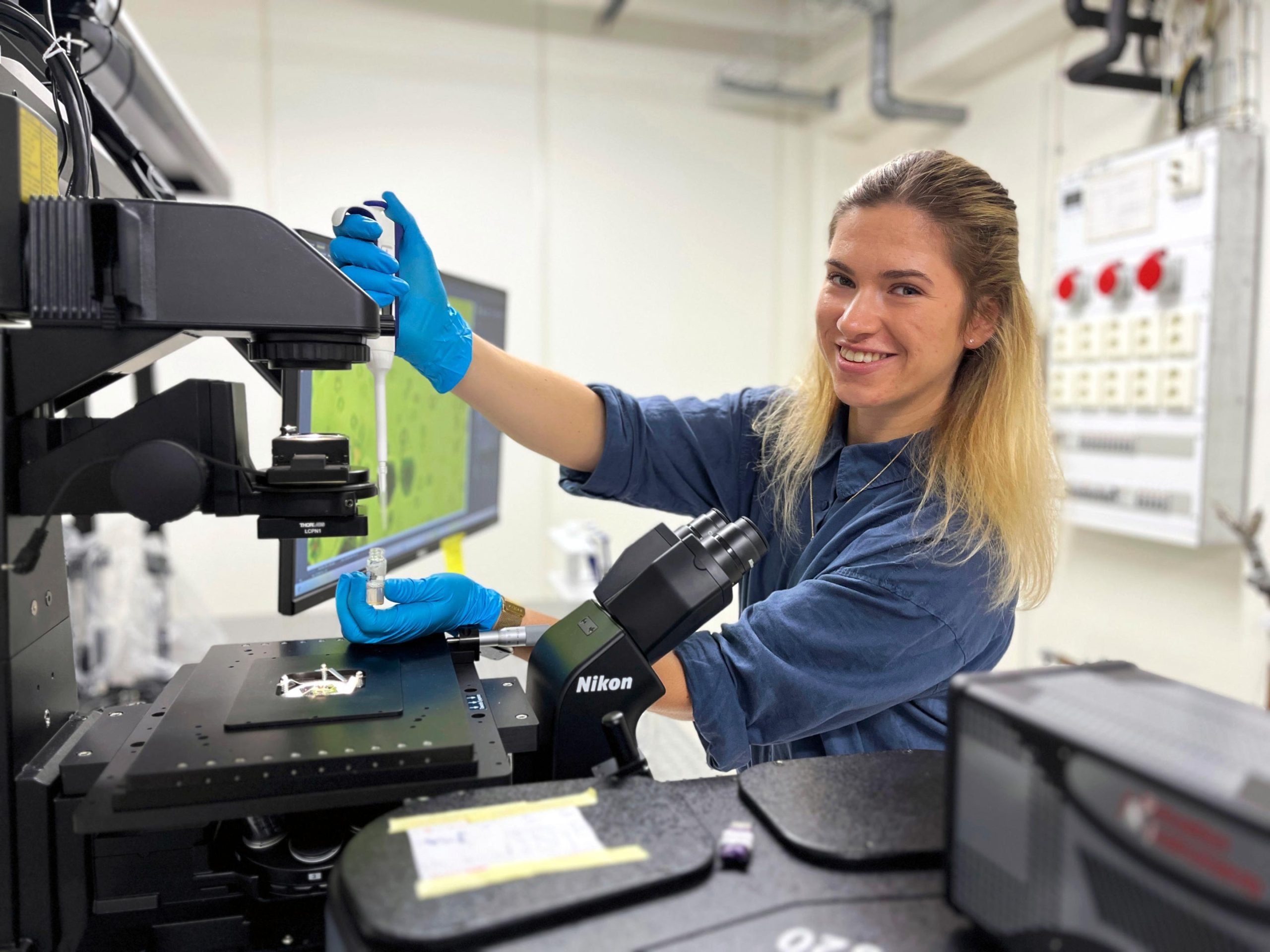
But there's a larger story here. The same principles that govern gold flakes in a drop of salt water also shape how galaxies form and how structures assemble across the cosmos. "If we fully understood them, we could learn to control self-assembly at the nanoscale," Hošková notes. "At the same time, we can gain insights into how the same principles govern nature on much larger scales."
This is fundamental physics doing what it does best: revealing hidden connections between the very small and the very large. The work builds on four years of research in Professor Timur Shegai's group, which first showed that a pair of gold flakes could form a self-assembled resonator. That discovery has now expanded into a broader platform for investigating the forces that bind matter together.

A Method So Simple It's Elegant
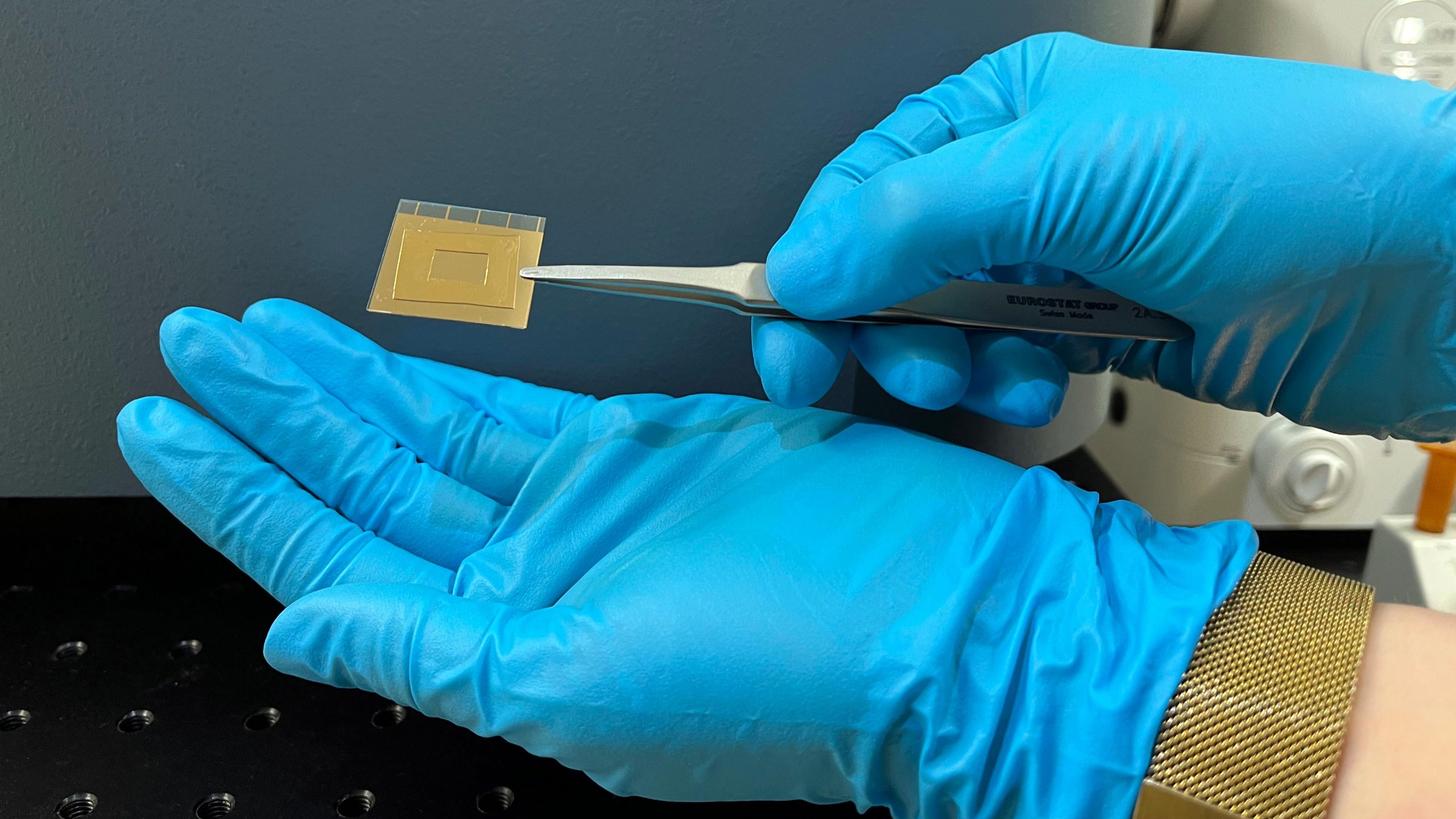
Hošková opens a small box containing a finished device. Two thin glass plates, gold flakes in salt solution, a halogen lamp, a microscope. That's the entire apparatus. "What I find most exciting is that the measurement itself is so beautiful and easy," she says. "The method is simple and fast, based only on the movement of gold flakes and the interaction between light and matter."
The research, published in the Proceedings of the National Academy of Sciences in 2025, represents the kind of progress that often goes unnoticed outside research circles. No headlines. No funding crises averted. Just a group of physicists building a better microscope for the quantum realm, one shimmer of reflected light at a time. What comes next is what researchers always hope for: other labs adopting the method, pushing it further, discovering what becomes possible when you can finally see the forces that have always been there.