Researchers at Harvard's John A. Paulson School of Engineering and Applied Sciences (SEAS) have made a breakthrough in quantum technology. For the first time, they showed a single unit of vibrational energy, called a phonon, interacting with a single atomic spin. This opens the door for quantum technologies that use sound to carry information, much like light or electricity.
Their findings were published in Nature.
Sound as a Quantum Information Carrier
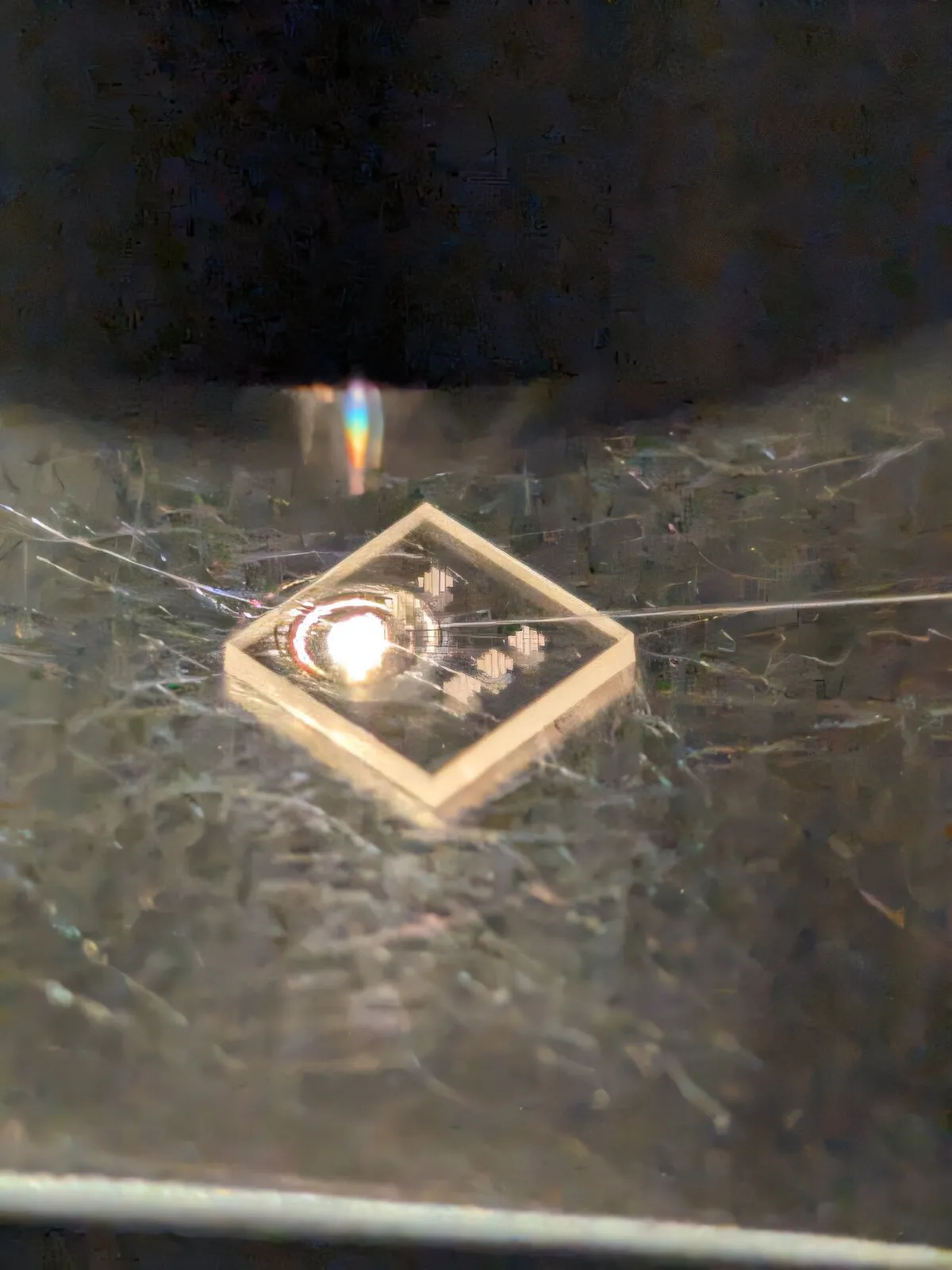
The team, led by Marko Lončar, engineered a tiny mechanical resonator around a single color-center spin qubit in diamond. These color centers are tiny flaws in the diamond's structure that can store quantum information. The new system allows for strong interactions between spin and phonons, which has been a major challenge until now.
Lončar explained that a phonon is the smallest unit of sound. While many phonons create the sound we hear, a single phonon can change a qubit's quantum state. It can excite the qubit or help it relax.
We're a new kind of news feed.
Regular news is designed to drain you. We're a non-profit built to restore you. Every story we publish is scored for impact, progress, and hope.
Start Your News DetoxMechanical vibrations, like those from a guitar string, can last a long time in a very small space. This combination makes phonons promising for carrying quantum information. They could also connect quantum memories, processors, and sensors on future quantum chips.
Graham Joe, the lead author and a former Harvard graduate student, noted that many quantum systems interact strongly with phonons. This includes superconducting qubits, quantum dots, and solid-state defects. He believes quantum acoustics could act as a "universal quantum bus," linking different quantum systems into hybrid setups.
New Sensing Capabilities
When a single phonon can change an atomic qubit's state, the spin becomes a very sensitive tool for its mechanical surroundings. This means the spin could measure tiny forces, stresses, or temperature changes by "listening" to the quantum noise of the device. This could lead to highly precise sensors and other applications.
These results show new ways to control quantum defects in solids. They bring spin-mechanical interactions closer to full quantum coherence, which is the ability of a fragile quantum system to stay stable.
Joe stated that this experiment demonstrated new tools for sensing a single atom's environment. It also represents a significant step toward practical quantum acoustic devices.
Deep Dive & References
Purcell-enhanced spin–phonon coupling with a single colour centre - Nature, 2026