You know the drill: an itch starts, you scratch it, and poof, relief. It's one of life's simpler pleasures. But what if that 'poof' never quite arrived? Scientists have just pinpointed a crucial part of your body's internal system that tells your brain, "Okay, that's enough scratching. You can stop now."
This discovery sheds light on how your nervous system naturally puts the brakes on an itch, and, perhaps more importantly, why that whole system goes haywire for people with chronic itch. Because apparently, some people just can't quit.
Researchers from the University of Louvain in Brussels, led by Roberta Gualdani, were initially poking around a molecule called TRPV4 for its role in pain. But then they noticed something peculiar: it clearly wasn't about the pain. It was about controlling the scratching itself. Which, if you think about it, is both impressive and slightly terrifying.
We're a new kind of news feed.
Regular news is designed to drain you. We're a non-profit built to restore you. Every story we publish is scored for impact, progress, and hope.
Start Your News DetoxThe Tiny Gatekeepers of Your Nerves
TRPV4 is part of a family of 'ion channels' — basically, tiny gates on your nerve cells that open and close to let charged particles (ions) in and out. This cellular traffic control helps your nervous system sense all sorts of things, from temperature to pressure to that weird feeling when you accidentally sit on your phone.
While scientists had long suspected TRPV4 played a role in sensing physical touch, its specific job in the grand, itchy scheme of things remained a bit of a mystery. Especially when it came to those stubborn, long-lasting itches.
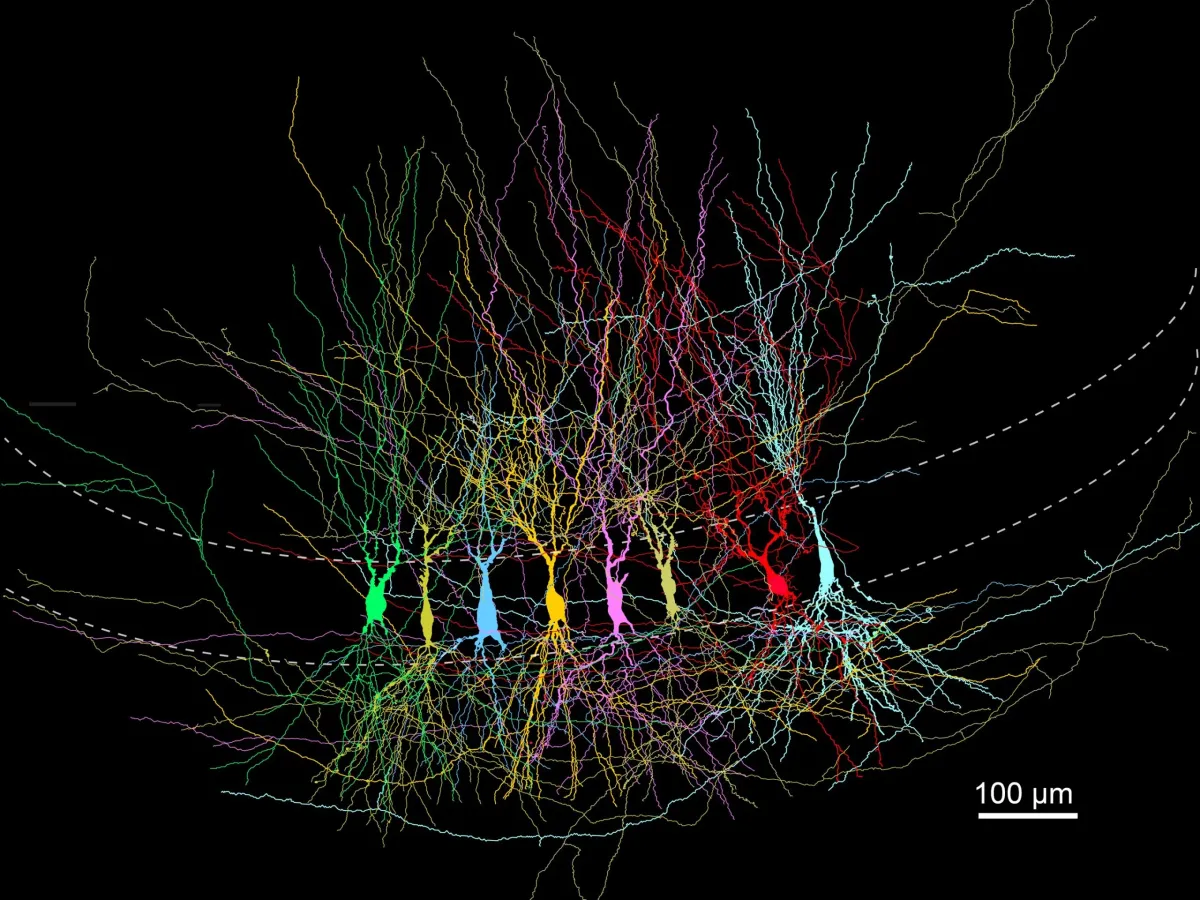
To crack the code, Gualdani's team engineered some mice where TRPV4 was only removed from their sensory neurons. Previous studies had just yanked the molecule from the entire body, which, as you can imagine, made it hard to tell what was actually doing what. With this more targeted approach, they found TRPV4 chilling out in touch-sensitive neurons, specifically a type called Aβ low-threshold mechanoreceptors. (Say that five times fast.)
When the Scratching Just Won't Stop
Then came the real test. The team gave the mice a chronic itch, much like eczema. The results were, well, itchy. Mice without TRPV4 in their sensory neurons actually scratched less often overall. But when they did scratch, each session lasted significantly longer than usual. Like a DJ who just can't find the fade-out button.
Gualdani admitted it seemed counterintuitive at first. Less scratching, but longer scratching? But then the lightbulb went off. It revealed something fundamental about itch control.
The study suggests TRPV4 isn't just creating the itch; it's activating a signal in those mechanosensory neurons that tells your spinal cord and brain, "Alright, mission accomplished. The itch is gone. You can stand down." Without that crucial feedback loop, the satisfaction from scratching is weakened, so the scratching just… continues. Indefinitely. It seems TRPV4 is the nervous system's internal "enough already!" mechanism.
Millions worldwide grapple with chronic itch from conditions like eczema and psoriasis, and treatment options are surprisingly limited. Understanding this subtle biological off-switch could open up entirely new avenues for relief. Because sometimes, you just need to know when to quit.
And if that's not enough to make you scratch your head, consider this: in skin cells, TRPV4 might start the itch, but in neurons, it seems to stop the scratching. A molecule playing both sides of the fence, depending on where it’s hanging out. Talk about a complex character. Which means simply blocking TRPV4 everywhere might not be the answer. Future treatments might need to be surgical, acting only in the skin without messing with the brain's internal 'all clear' signal. Because nobody wants to scratch forever.