Many pregnant women report memory issues and brain fog, often called "mommy brain." However, new research suggests these changes are not deficits. Instead, they show how a mother's brain adapts to prepare for a child.
During and after pregnancy, hormones cause major changes in the brain's structure and function. These adaptations help mothers connect with and understand their babies. Neuroscientist Susana Carmona notes that brain imaging now clearly shows how motherhood changes a woman completely.
A Rewiring of the Brain
The brain continues to grow and change even after adolescence. This ability, called neuroplasticity, allows the brain to reorganize itself throughout adulthood.
We're a new kind of news feed.
Regular news is designed to drain you. We're a non-profit built to restore you. Every story we publish is scored for impact, progress, and hope.
Start Your News DetoxDuring pregnancy, a woman's brain undergoes significant structural changes. This includes a decrease in gray matter, which processes information, and a drop in cortical volume, linked to memory and cognitive ability. There can also be less production of new neurons in the hippocampus, which affects learning and memory.
These changes are not a shrinking of the brain but a rewiring. Emily Jacobs, a neuroscientist at the University of California, Santa Barbara, compares it to adolescence. The brain transforms, driven by hormone changes, allowing it to take on new behaviors it didn't have before.
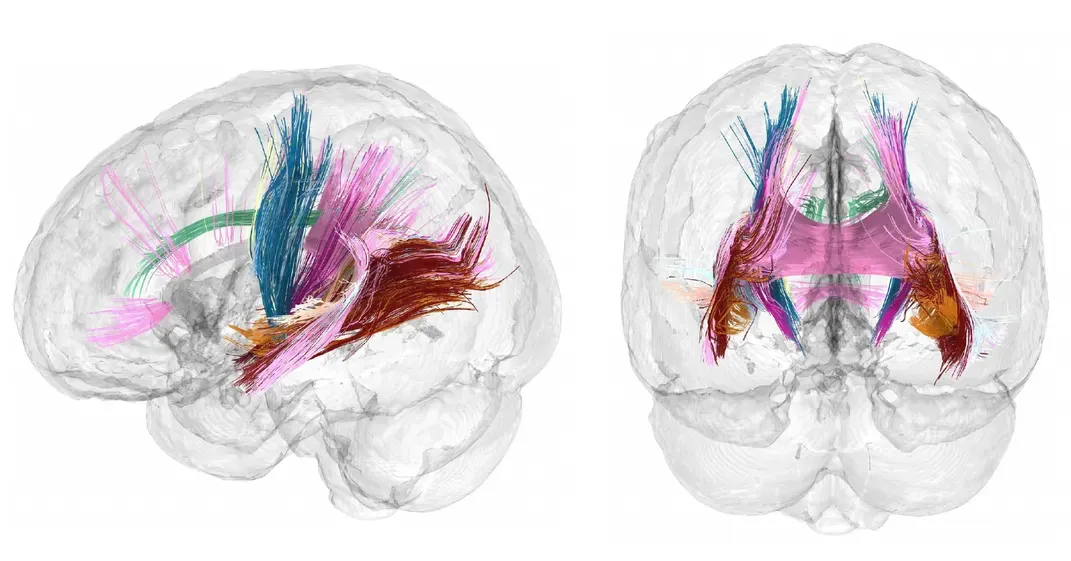
Jacobs' 2024 study showed dynamic changes in a human brain during pregnancy, including reduced gray matter and cortical volume. Her team also found improved microstructural integrity of white matter, which helps communication between emotional and visual processing areas.
These brain adjustments serve a purpose. A partial return of gray matter volume after birth is thought to help mother-infant bonding. A 2025 study by Carmona found that women with the most brain remodeling also had the strongest attachment to their infants.
Pregnant women may also become better at reading facial expressions, especially fearful, angry, or sad ones. The Default Mode Network, which handles self-thought and social cognition, shows increased connectivity during and after pregnancy.
Some evidence suggests improved memory after childbirth in both humans and rats. In humans, brains can even appear younger after birth than before pregnancy.
Helena Rutherford, a Yale University psychologist, says parenthood can be a form of cognitive enrichment, showing potential for growth. She notes that these positive gains are rarely discussed.
These changes can also be long-lasting. Some adaptations, like reduced gray matter, can last six years or more. Functional changes, such as the Default Mode Network's operation, return to near pre-pregnancy levels within the first year postpartum. Women who breastfeed longer may keep these functional changes for a longer time.

In second pregnancies, these adaptations become more refined. Brain networks for attention and sensory responses show more significant changes, according to a study by Elseline Hoekzema.
Hoekzema, head of the Pregnancy Brain Lab, says these changes are consistent across women and studies in different countries. She emphasizes that while a woman's brain changes, it normalizes and serves a good purpose.
The Role of Hormones
Chelsea Conaboy, author of Mother Brain, felt unprepared for new motherhood despite reading books and taking classes. She experienced worry and anxiety, which are common responses to major life changes and increased cortisol during pregnancy.
Doctors often discuss hormones for fetal development but rarely mention their role in brain modifications for the mother. Conaboy believes expectant parents should receive this information to understand their brain's transition.

Pregnancy causes a 100- to 1,000-fold increase in hormone production. These hormones sculpt the brain, making it super-efficient and attuned to this new life stage, according to Jacobs. Her 2020 report showed that memory and mind-wandering circuits are enhanced when estrogen levels peak during the menstrual cycle, which may relate to pregnancy.
Most research on these hormone-driven adaptations in humans is recent, though animal studies have shown these trends for longer. They suggest that gestational hormones create caregiving behaviors and stronger mother-baby connections.
A 2023 study, for example, found that hypothalamic neurons in pregnant mice remodeled to prompt maternal behaviors. Another study last year showed that the pre-pregnancy estrous cycle in female mice shaped the structure and function of hippocampus neurons.
This research highlights how much pregnancy changes the brain. Jacobs calls it one of the biggest effects she has seen in neuroscience, due to the magnitude of change in such a short time.
Many Questions Remain
The brain fog and memory issues some women experience after birth may not directly result from these brain changes. Researchers are still investigating how brain alterations during pregnancy correlate with behavior or reported declines in cognitive performance.
Sasha Davies, a psychologist, notes that while imaging differences are seen, their behavioral meaning is unclear. Day-to-day impact on cognitive functioning is also not fully understood. Some issues might stem from lifestyle changes like lack of sleep and the mental load of parenting.
Researchers are conducting long-term studies to answer these questions and explore effects of age, race, and other demographics. Past research has often lacked racial diversity.
Studying "mommy brain" could also help understand postpartum depression, which affects one in eight women in the U.S. About half of mothers with symptoms are undiagnosed. The U.S. has the highest maternal mortality rate among developed nations, with suicide being a leading cause of postpartum deaths.
Yale psychologist Rutherford emphasizes that supporting parents is crucial, as struggles can impact child development across generations. Neuroscientist Carmona adds that this work is urgent because it affects the baby's development and the entire family system.