Ancient Scottish rocks reveal Earth's climate was never fully frozen

A frozen Earth with no seasons—that's what scientists thought happened 700 million years ago. New evidence suggests otherwise.

1 min read
United Kingdom
9 views✓ Verified Source
Share

Why it matters: Understanding how Earth's climate system functioned during its most extreme conditions—even when largely frozen—provides crucial insights into climate sensitivity and resilience. This discovery challenges a decades-old model and suggests the climate system maintains responsiveness to external forces even under extreme stress, offering perspective on how modern climate disruptions might unfold and what recovery mechanisms could be at play.

Seven hundred million years ago, Earth was supposed to be completely locked in ice. The "snowball Earth" theory suggested our planet had frozen solid—no seasons, no thaw, just a dead globe wrapped in white. Scientists have believed this for decades.

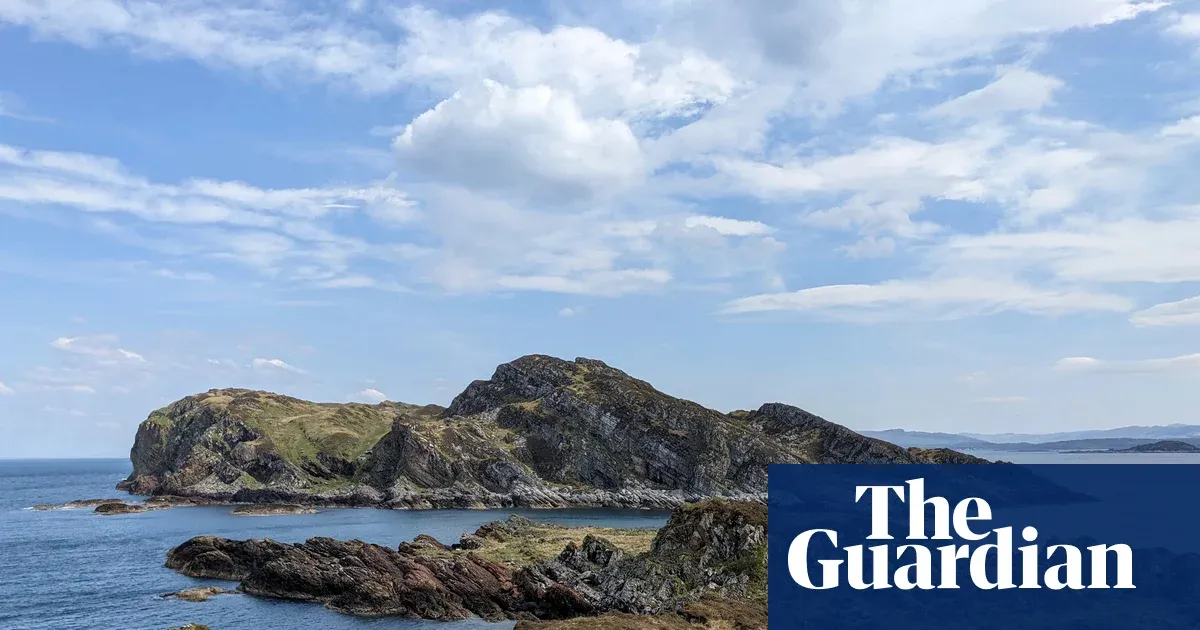
But rocks from a remote Scottish island are telling a different story.

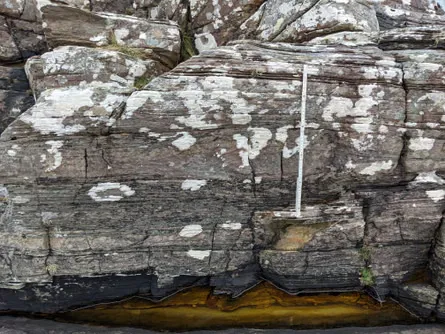
Thomas Gernon and Chloe Griffin from the University of Southampton examined 2,600 exquisitely preserved layers in ancient rocks from the Garvellachs islands, off Scotland's west coast. These layers formed during the snowball Earth period, and under a microscope, they revealed something unexpected: climate cycles. The thickness of each layer captured year-by-year changes in climate—patterns that looked remarkably like the solar cycles and El Niño oscillations we see today.
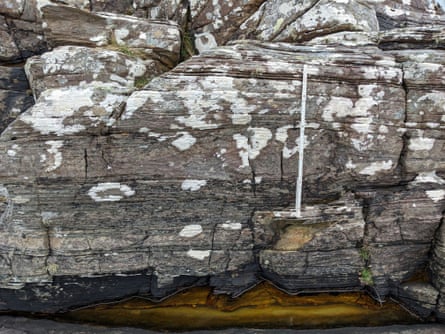
Rock showing layers including a measure

Rock showing layers including a measure

Another closeup view of varves. By analysing thousands of these layers, the researchers identified climate cycles operating during Earth's deep-freeze period. Photograph: Prof Thomas Gernon/University of Southampton

Wait—What is Brightcast?

We're a new kind of news feed.

Regular news is designed to drain you. We're a non-profit built to restore you. Every story we publish is scored for impact, progress, and hope.

Start Your News Detox

The rocks revealed a slushy interlude—a few thousand years when a small fraction of ocean thawed and the climate briefly woke up. It wasn't a full escape from the ice age, but it was something: proof that even during Earth's deepest freeze, the climate system never completely shut down.

This matters because it changes how we understand Earth's climate sensitivity. The discovery, published in Earth and Planetary Science Letters, suggests that climate fluctuations during snowball Earth were rarer than previously thought, but they happened. And that tells us something crucial about how responsive our climate system is to disturbances—both ancient and modern. Understanding how Earth's climate bounced back then offers clues about how it might respond to the major disruptions we're causing now.

74
SignificantMajor proven impact

Brightcast Impact Score

This article celebrates a genuine scientific discovery—researchers overturned a major theory about 'snowball Earth' by analyzing 2,600 preserved rock layers from Scotland, revealing climate cycles during Earth's deep-freeze period. The work represents notable innovation in paleoclimate research with peer-reviewed publication, though the impact is primarily academic rather than immediately transformative for society. The discovery advances human understanding and opens new research directions, making it inspiring to science-minded readers.

29

Hope

Strong

21

Reach

Strong

24

Verified

Strong

Wall of Hope

0/50

Be the first to share how this story made you feel

How does this make you feel?

1
2
3
4
5
6
7
8
9
10
11
12
13
14
15
16
17
18
19
20
21
22
23
24
25
26
27
28
29
30
31
32
33
34
35
36
37
38
39
40
41
42
43
44
45
46
47
48
49
50

Connected Progress

Drop in your group chat

Apparently Scottish rocks just disproved the "snowball Earth" theory—turns out the planet thawed periodically 700 million years ago. www.brightcast.news

Share

Originally reported by The Guardian Science · Verified by Brightcast

Get weekly positive news in your inbox

No spam. Unsubscribe anytime. Join thousands who start their week with hope.

More stories that restore faith in humanity