You scratch an itch, and then something tells you to stop. That moment of relief—when the urge to keep going finally fades—isn't random. Researchers at the University of Louvain in Brussels have identified the specific ion channel responsible for that internal "enough" signal, a discovery that could reshape how we treat chronic itch conditions affecting millions of people.
The research, presented at the Biophysical Society Annual Meeting in San Francisco, focused on TRPV4, an ion channel embedded in sensory neurons. Ion channels are essentially molecular gates that let charged atoms flow in and out of nerve cells in response to touch, temperature, and other stimuli. Scientists had suspected TRPV4 played a role in itch for years, but they didn't understand how.
The Unexpected Discovery
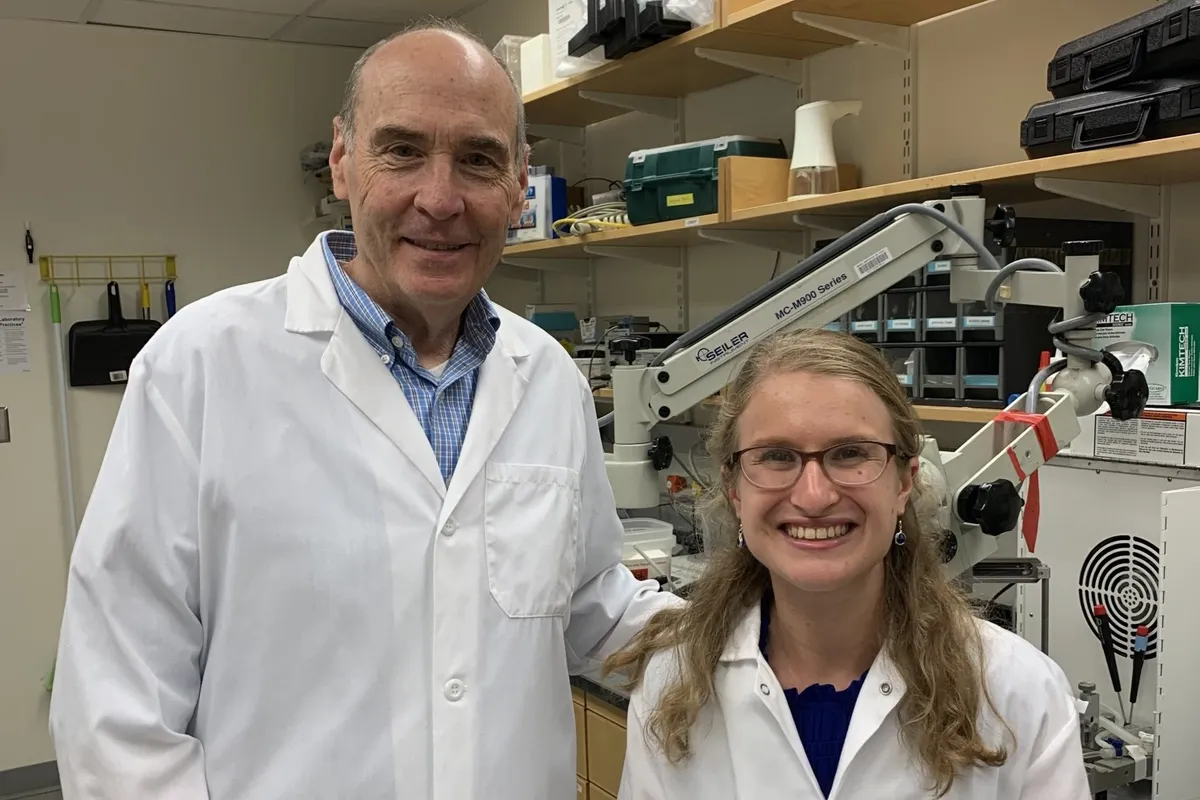
Roberta Gualdani, a molecular biologist on the team, was initially studying TRPV4 in the context of pain when something unexpected happened. "Instead of a pain phenotype, what emerged very clearly was a disruption of itch, specifically, how scratching behavior is regulated," she recalls.
We're a new kind of news feed.
Regular news is designed to drain you. We're a non-profit built to restore you. Every story we publish is scored for impact, progress, and hope.
Start Your News DetoxTo isolate TRPV4's role, the researchers genetically engineered mice with the channel deleted only in sensory neurons—not throughout their entire bodies. This precision mattered. When they induced a chronic itch condition resembling atopic dermatitis (eczema), a striking pattern emerged: mice without TRPV4 scratched less frequently, but when they did scratch, the sessions lasted far longer than normal.
It seemed backwards at first. But the data revealed something crucial: TRPV4 isn't generating the itch itself. Instead, it triggers a negative feedback signal—essentially a "you're satisfied now" message—that tells the spinal cord and brain to stop. Without this signal, the relief never comes. The mice kept scratching because their nervous system never told them to quit.
"When we scratch an itch, at some point we stop because there's a negative feedback signal that tells us we're satisfied," Gualdani explained. "Without TRPV4, the mice don't feel this feedback, so they continue scratching much longer than normal."
The implications matter most for people with eczema, psoriasis, and kidney disease—conditions where chronic itch becomes debilitating. Current treatments often aim to block itch signals entirely, but that's blunt. A more targeted approach, one that preserves the body's natural stop signal while reducing the itch itself, could offer relief without the side effects of broad neurological interference.
"Future therapies may need to be much more targeted—perhaps acting only in the skin, without interfering with the neuronal mechanisms that tell us when to stop scratching," Gualdani noted. The next phase involves testing whether enhancing TRPV4's function specifically in skin tissue could restore that crucial feedback loop in people whose systems have gone haywire.