Researchers at MIT have identified a brain wave signature that appears consistently in both humans and mice with fragile X syndrome—a discovery that could finally bridge the gap between promising lab results and actual treatments that work for patients.
This matters because it happens all the time: a drug seems to fix something in mice, researchers get hopeful, then it fails in humans. The disconnect has stalled progress on fragile X and countless other neurological conditions. Now there's a way to check, before investing years in human trials, whether a treatment is actually doing what it should.
The Pattern That Connects Species
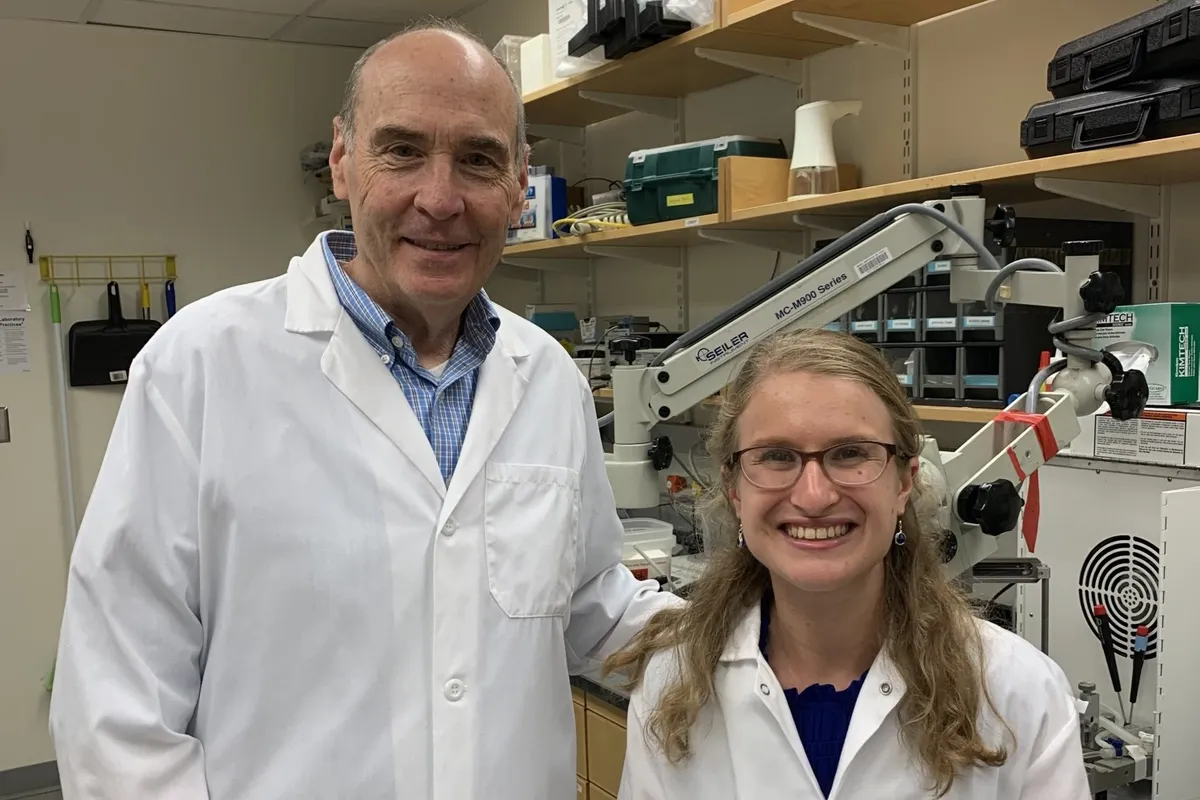
Led by postdoc Sara Kornfeld-Sylla and MIT's Mark Bear, the team measured brain waves from boys and men with fragile X, then compared them to male mice carrying the genetic change that models the disorder. The key was how they analyzed the data. Instead of forcing brain waves into traditional categories (delta, theta, alpha, beta, gamma), Kornfeld-Sylla looked only at the regular, repeating patterns in wave power at each frequency. This flexibility mattered: the signature appeared in a different frequency band in mice than in humans, yet the underlying biological signal was identical.
We're a new kind of news feed.
Regular news is designed to drain you. We're a non-profit built to restore you. Every story we publish is scored for impact, progress, and hope.
Start Your News Detox"The cross-species connection really makes this paper exciting," Kornfeld-Sylla said. "We found the connection between the brain wave activity happening in fragile X humans and in the fragile X mouse model."
In adults with fragile X, low-frequency brain waves shift to a slower speed than in neurotypical people. In children and juvenile mice, the pattern is slightly different—the peak doesn't shift as much, but its power drops noticeably. The researchers discovered this peak actually contains two distinct subpeaks, and the lower-frequency one varies specifically with fragile X.
From Pattern to Target
To understand what was driving these changes, the team manipulated two types of inhibitory neurons in mice: somatostatin-expressing and parvalbumin-expressing interneurons. When they turned off somatostatin neurons, it affected the lower-frequency subpeak containing the biomarker. This pointed toward a possible treatment angle: somatostatin neurons work through GABA, a neurotransmitter that fragile X syndrome disrupts.
They tested arbaclofen, a drug that enhances GABA activity. Even at low doses, it changed brain waves in normal mice. Fragile X mice needed a higher dose, but once given it, the power of the key subpeak increased significantly, reducing the deficit seen in juvenile mice.
"This is a proof of concept that a drug treatment could move this phenotype in a direction that makes it closer to normal," Bear said. "We have readouts that can be sensitive to drug treatments."
The breakthrough is practical. Because researchers can now measure this biomarker non-invasively in both mice and humans, they can ask a new question: If a drug changes this signature in a mouse at dose X, at what dose does that same drug change the same signature in a human. That's a direct translation path—physiology to physiology, not guesswork.
Beyond Fragile X
Kornfeld-Sylla noted that low-frequency brain wave disruptions appear across many neurological disorders. "Identifying this biomarker could broadly impact future translational neuroscience research," she said. The same approach might reveal signatures in mouse models of autism, schizophrenia, and other conditions where animal studies have promised more than they've delivered.
The study, published in Nature Communications, involved collaborators at Boston Children's Hospital, Cincinnati Children's Hospital, the University of Oklahoma, and King's College London. The next phase is testing whether this biomarker can actually predict which fragile X treatments will work in humans—turning a pattern in the data into a shortcut for better drugs.