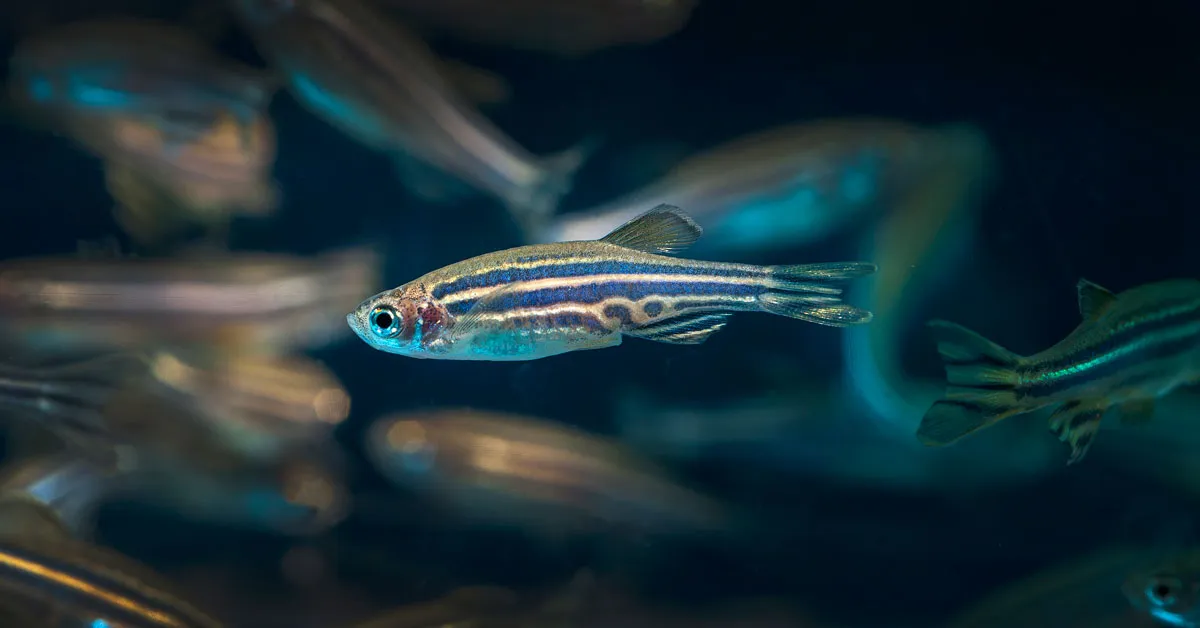
A small fish is teaching scientists something they've long wanted to know: how to fix a broken spine.
Zebrafish can fully regenerate their spinal cords after serious injury. When damage occurs, their neurons don't die — they transform. They shift into a protective mode that keeps them alive through the initial trauma, then rewire themselves to function in new ways. In humans, the same injury typically kills those neurons, leaving little hope for recovery.
Researchers at Washington University School of Medicine have now identified which genes orchestrate this regenerative process in zebrafish. The finding matters because those same genes exist in human DNA, possibly lying dormant.
We're a new kind of news feed.
Regular news is designed to drain you. We're a non-profit built to restore you. Every story we publish is scored for impact, progress, and hope.
Start Your News Detox"Most, if not all, aspects of neural repair that we're trying to achieve in people occur naturally in zebrafish," said Mayssa Mokalled, who led the study. "Our study has identified genetic targets that will help us promote this type of plasticity in the cells of people and other mammals."
The discovery hinges on a shift in how researchers think about spinal cord injury. Instead of trying to rebuild damaged tissue from scratch, the focus could turn to preventing the cascade of cell death that follows injury in the first place. If neurons survive that initial wave, they might do what zebrafish neurons do naturally: adapt and reconnect.
The Bridge Between Fish and Mammals
Recent work from Vanderbilt University has pushed this question further: if young mammals can regenerate spinal cord tissue, why can't adults? A team led by pharmacology professor Valentine Cigliola compared regeneration in zebrafish with neonatal mice — the first direct comparison of its kind. The research points to epigenetic mechanisms, the chemical switches that turn genes on and off, as a key difference between animals that heal and those that don't.
The implications extend beyond spinal cord injury. Understanding how to reactivate these dormant regenerative pathways could inform treatment strategies for neurodegenerative diseases like ALS, multiple sclerosis, and spinal muscular atrophy — conditions where neurons gradually die and the body loses function.
No one is suggesting humans will suddenly sprout new spinal cords. The path from zebrafish genetics to human therapy involves years of careful research, testing in animal models, and eventual clinical trials. But the direction is clear: the capacity for regeneration isn't unique to fish. It's written into mammalian DNA. The challenge now is learning how to read that code and turn it back on.