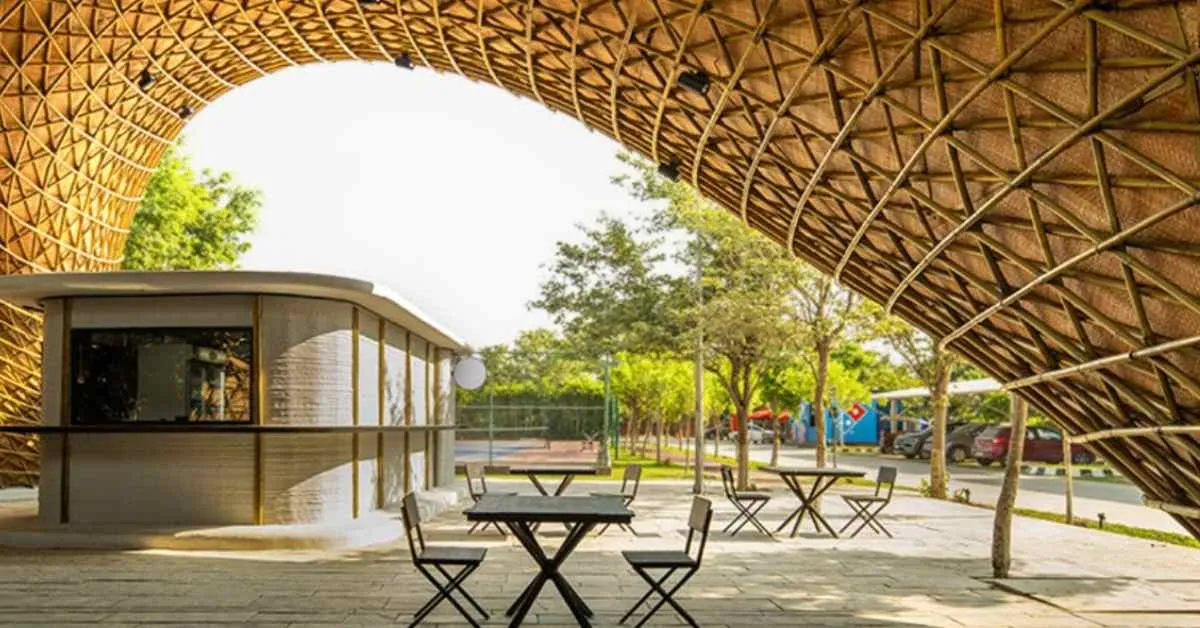
A barren patch of trees on the Ashoka University campus in Haryana has become something unexpected: a place where architecture and sustainability quietly solve a real problem.
Architect Apoorva Shroff designed "The Hungry Caterpillar," a 650-square-meter arching bamboo structure that winds around 3D-printed kitchen stalls and recycled furniture. The canopy integrates the existing trees, creating shade and shelter for students to eat, study, and linger between classes.
Image via Lyth Design
The design choices matter as much as the structure itself. Shroff studied bamboo architecture in Bali before founding Lyth Design in 2022, and it shows. The woven bamboo doesn't just look elegant—it sequestered 350 tons of carbon dioxide. The tables and chairs are molded from recycled plastic. The modular kitchens were 3D-printed from concrete, reducing waste compared to traditional construction.
We're a new kind of news feed.
Regular news is designed to drain you. We're a non-profit built to restore you. Every story we publish is scored for impact, progress, and hope.
Start Your News DetoxWhat makes this work isn't the individual innovations, but how they fit together. Students don't need to think about sustainability to benefit from it. They just sit down, eat lunch, and exist in a space designed for them to "pause, interact, and reflect," in Shroff's words. The structure became functional the moment it was finished.
Image via Lyth Design
The project earned the Sustainable Design of the Year award at the Architect and Interiors India Aces of Space Design Awards 2025. Shroff describes it as emerging "from a vivid image" that captures "learning, harmony with nature, and continuous growth." It's the kind of design that works because it doesn't announce itself—it simply exists, serves its purpose, and quietly demonstrates what's possible when someone thinks beyond the default.
Image via Lyth Design
Image via Lyth Design
Image via Lyth Design
As universities and public spaces across India and beyond search for ways to feed and shelter students sustainably, projects like this offer a blueprint: combine available materials, think about the full lifecycle, and design for the people who'll actually use the space.