For the first time, astronomers have watched a planetary system shed its baby fat in real time. TOI-2076, a four-planet system orbiting a young star 210 light-years away, sits right in that messy teenage phase — when planets lose their thick atmospheres and drift out of their tight orbital formations. It's a rare snapshot of something astronomers have long theorized but never directly observed.
The discovery matters because it fills a gap in our understanding. We know how planetary systems are born (crowded, chaotic, locked in gravitational rhythms). We know how they end up as adults (spread out, stable, predictable). But that awkward middle period — the few hundred million years when things reshape themselves — has mostly stayed hidden.
Catching the Moment Between Order and Chaos
TOI-2076 contains four sub-Neptune worlds, each between 1.4 and 3.5 times Earth's size. These are strange to us because our solar system has no planets this size. What makes them interesting right now is their spacing. The planets sit almost in perfect resonance — a gravitational dance where they tug on each other in stable, repeating patterns. Almost, but not quite. They're drifting, like dancers who just stepped out of rhythm.
We're a new kind of news feed.
Regular news is designed to drain you. We're a non-profit built to restore you. Every story we publish is scored for impact, progress, and hope.
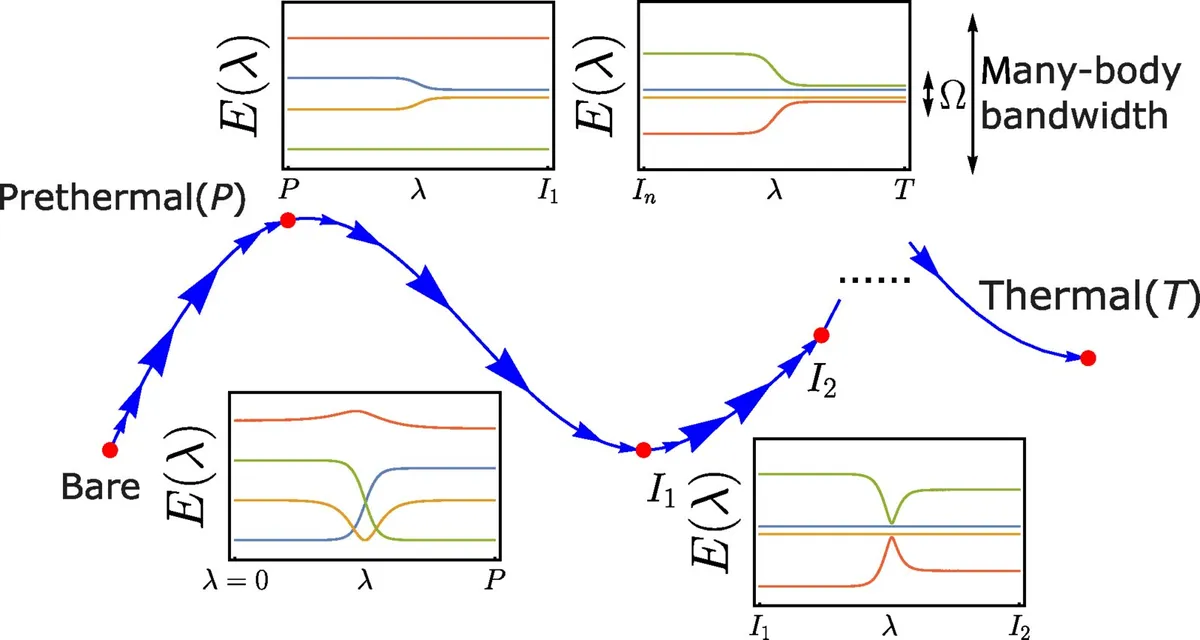
Start Your News DetoxUsing NASA's TESS satellite and ground-based telescopes, researchers measured each planet's size and orbit. The data told a clear story: these worlds were once locked tight in resonance. Today, they're only near resonance. They're slowly drifting apart, and the team found evidence for why.
The culprit is radiation. Young stars blast their nearby planets with intense heat. This radiation strips away atmospheres — a process called photoevaporation. The pattern in TOI-2076 is stark: the innermost planet has lost its hydrogen and helium atmosphere entirely and is now just bare rock. The next three planets outward retain about one percent, five percent, and five percent of their original gas, respectively.
The closer to the star, the less atmosphere remains. Computer models confirmed this explanation. When researchers simulated all four planets starting with identical rock-to-gas compositions, then let stellar radiation erode them over 200 million years, the results matched the real observations. As planets lose mass, their gravitational interactions weaken slightly, pushing them out of exact resonance and spacing them further apart.
Why This Moment Matters
Catching a system at this stage is rare because the adolescent phase is brief compared to a star's billions of years of life. Most systems we observe are either very young or already settled. TOI-2076 bridges that gap, offering the first direct evidence that orbital reshaping and atmospheric loss happen together and begin early.
This gives astronomers something concrete to test their models against. But it's one system. Researchers now plan to search for other young systems showing similar signs of active transformation, to see whether this pathway is common across the galaxy or an exception. The study appears in Nature Astronomy.