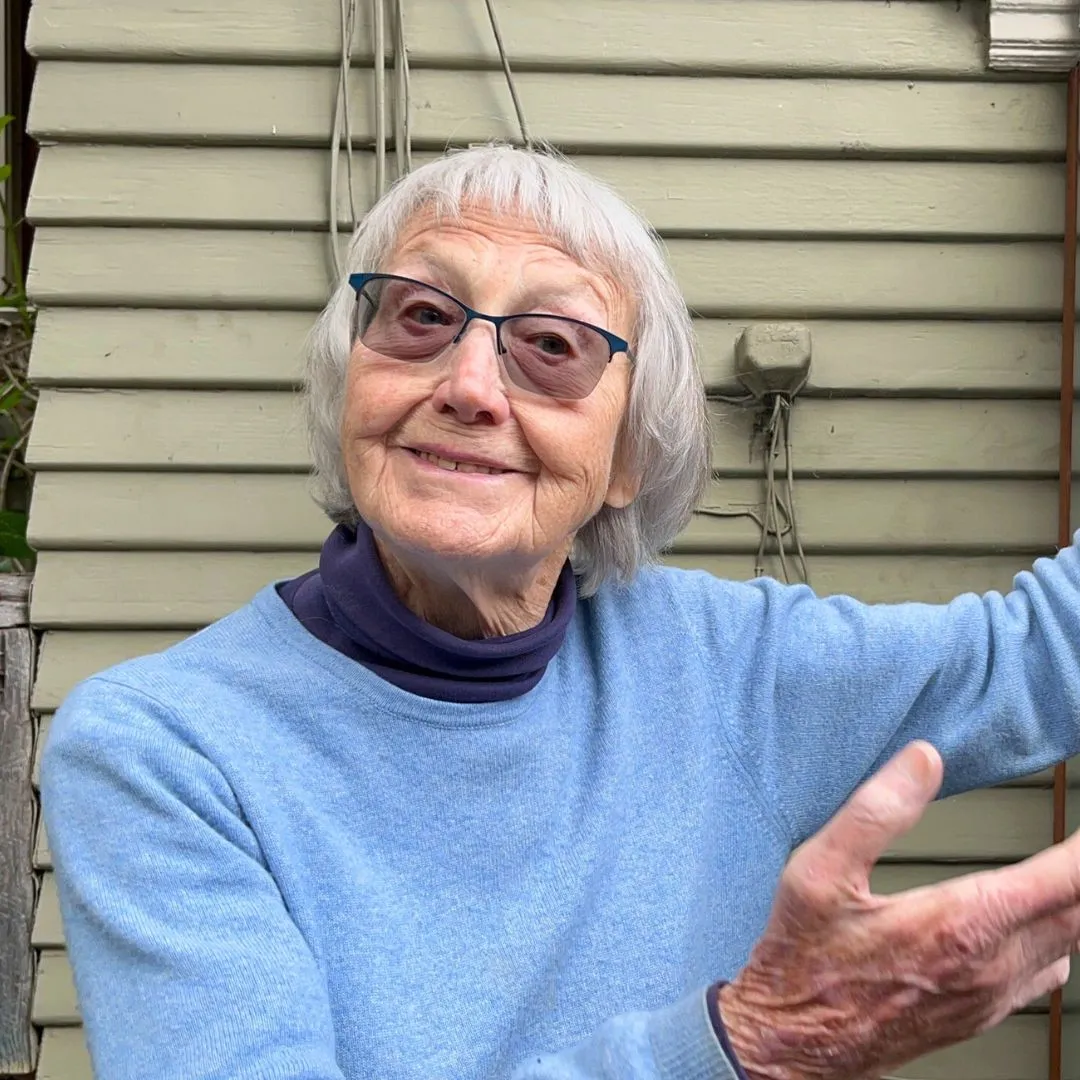
Clare Cooper Marcus died on January 18, 2026, at 91. By then, her fingerprints were everywhere—in hospital gardens designed to calm patients, in the way architects now ask "who will actually use this space?" before they draw a line, in a curriculum at UC Berkeley that still teaches students to listen to how people live.
She was a translator. Not of languages, but of something harder: the gap between what researchers discover about human behavior and what architects actually build. In the 1960s and 70s, when most design schools treated buildings as objects first and human experience as an afterthought, Marcus and a small group of colleagues at UC Berkeley's College of Environmental Design did something radical. They brought social scientists into the studio. They asked architects to read sociology. They insisted that how a space felt to the people inside it mattered as much as how it looked.
From London to Berkeley, Building a New Kind of Design Practice
Marcus arrived in the United States on a Fulbright scholarship in 1956, a young geographer from London with a specific curiosity: why do people relate to places the way they do? She studied urban geography in Nebraska, returned to the U.K. for a few years, then—as she put it with characteristic plainness—"worked in New York City long enough to afford the Greyhound bus cross-country to Berkeley." She earned her Master of City Planning from UC Berkeley in 1965 and joined the landscape architecture faculty four years later.
We're a new kind of news feed.
Regular news is designed to drain you. We're a non-profit built to restore you. Every story we publish is scored for impact, progress, and hope.
Start Your News DetoxWith architect Roslyn Lindheim and sociologist William Ellis, Marcus helped pioneer what became known as post-occupancy evaluation—the practice of actually studying how people use a building after it's finished, then feeding that knowledge back into the next design. It sounds obvious now. In 1970, it was revolutionary. The studios she taught weren't lectures about social science; they were workshops where researchers and architects sat side by side, translating data into decisions. Her course on social and psychological factors in open space design became so influential it's still taught at UC Berkeley today.

A Personal Garden, A Professional Legacy
After stepping back from full-time teaching in 1994, Marcus turned toward therapeutic landscapes—the design of gardens and outdoor spaces in hospitals and senior living centers meant to help people heal. She'd carried a love of gardening since childhood, when her family evacuated to the English countryside during World War II. Over nearly 50 years, she transformed her small lot in Berkeley's Elmwood neighborhood into something between a working farm and a sanctuary: fruit trees, vegetable beds, a shade garden, bird feeders, compost bins, a greenhouse. She co-authored two definitive books on healing gardens, consulted on dozens of projects, and published papers that became standard references in healthcare design.
The work was personal and rigorous at once—the way her whole career had been. She was finishing a memoir when she died, titled Groundbreaking: My Unmapped Path as an Academic, Mother, and Gardener. It's due out in May 2026.
What Marcus proved, over a career spanning nearly 60 years, was that good design doesn't start with aesthetics or ego. It starts with a question: who will be here, and what do they need? That question, now embedded in how architects think, is her lasting contribution.