A desert plant has changed Masapalli Venkatesh's life. His 10-acre farm in Kandukur, on India's Deccan Plateau, usually grows tomatoes, peanuts, and corn.
In 2010, traders approached him for a different crop: the agave americana cactus. For Venkatesh and other farmers, agave was just a "stubborn, valueless weed" used for fencing.
However, this plant is part of the agave family that fuels the $15 billion global market for tequila and mezcal. In Mexico, blue agave is farmed in Jalisco for tequila.
We're a new kind of news feed.
Regular news is designed to drain you. We're a non-profit built to restore you. Every story we publish is scored for impact, progress, and hope.
Start Your News DetoxUnlike Mexico, where large plantations exist, India doesn't yet grow agave commercially. Instead, Indian farmers collect wild agave. For some, like Venkatesh, it's a new source of income, earning it the nickname "blue gold."
Harvesting "Blue Gold"
Venkatesh now coordinates villagers and farmers across a 100km area. He combines yields from many farms to ensure a steady supply for distilleries.
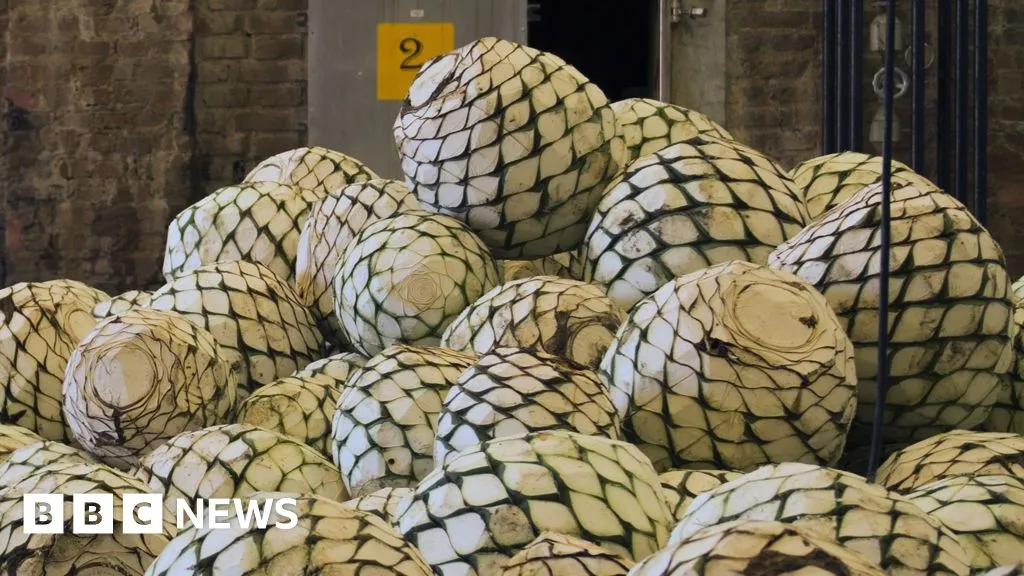
Harvesting agave is a skilled job. The most important part is the heart, called the piña, which looks like a giant pineapple. Workers chop off the spiky leaves to reveal it.
Timing the harvest is crucial. If the plant blooms, its sugar reserves move into the stalk and are depleted, making the piña useless for alcohol.
Rakshay Dhariwal, founder of Maya Pistola Agavepura distillery, explains that gatherers must find the exact pre-blooming window. This ensures the plant has its peak sugar content.
Once harvested, the piñas must reach a pressure cooker within 24 hours to extract the sugars. Dhariwal warns that any delay can ruin the batch. If it takes longer, the sugars rot, destroying the flavor needed for premium spirits.
Transportation is difficult because agave suppliers are spread across states like Karnataka, Maharashtra, Rajasthan, and Andhra Pradesh. Brands rely on local aggregators to find and harvest wild agave patches.
This effort meets a growing demand for agave spirits. Dhariwal notes the Indian market is growing at 31%. Vikram Achanta, co-founder of 30 Best Bars India, says India has "caught the tequila bug." Consumers are more open to new spirits.
While agave drinks won't replace whisky, India's favorite spirit, they are creating a new market. New brands are experimenting with wild agave from the Deccan Plateau, shaping an "Indian agave identity."
India's Agave Future
Desmond Nazareth, a pioneer in Indian agave spirits, launched India's first homegrown agave spirit in 2011 with his company, Agave India. His work began with kitchen experiments and led to India's first craft agave distillery after 12 years of research.
Nazareth is now using a scientific approach. His team uses satellite images of areas where agave grows well. They match these patterns to find more suitable land. This is important because agave grows for 9 to 13 years. Planting in the wrong area means losing a decade.
Agricultural expert Miguel Braganza believes India's wild agave supply won't be depleted for at least five years, possibly longer. India's domestic industry is still small, with only one processing plant belonging to Nazareth's Agave India.
Wild agave is also very good at propagating itself. A mother agave sends out long root-runners underground, creating mini-clones every few feet. These baby plants grow their own roots, forming large agave colonies without human help.
However, India's wild agave supply has challenges. Entrepreneur Sree Harsha Vadlamudi points out that wild plants are "genetically inconsistent." This means sugar yields and alcohol output fluctuate, making standardization difficult. Mexico solved this through decades of selective breeding.
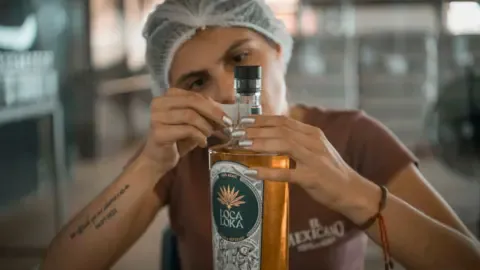
Vadlamudi co-founded Loca Loka, a tequila brand that uses Mexican blue agave from Jalisco. He says Jalisco's iron-heavy red soil, from ancient volcanic eruptions, gives the agave a distinct flavor that cannot be replicated in Indian soil.
Mexico's large, organized agave farms contrast sharply with India's informal system. Mexican farms use high-tech methods, including drones and AI, to monitor crops. Drones scan thousands of hectares to count plants, assess health, spot diseases, and predict the perfect harvest time.
Such investment is still far off for Indian producers. Nazareth acknowledges that building a significant agave spirit industry will take time. However, he is confident. He believes the Deccan Plateau alone has millions of acres suitable for cultivation. With long-term vision and patience, India could potentially rival Mexico in agave production.