In 1994, Rwanda plunged into a nightmare. A plane crash killed the president, and over the next 100 days, an estimated 800,000 Tutsi people were massacred by the Hutu majority, who blamed them for the leader's death. It was a horror almost beyond comprehension.
Fast forward to today, and Rwanda is trying something extraordinary. Faced with a society shattered by violence, the new government embarked on a radical path: justice and reconciliation. The audacious goal? For everyone to live peacefully, side by side. This led to the creation of "Reconciliation Villages" — places where the unthinkable happens.
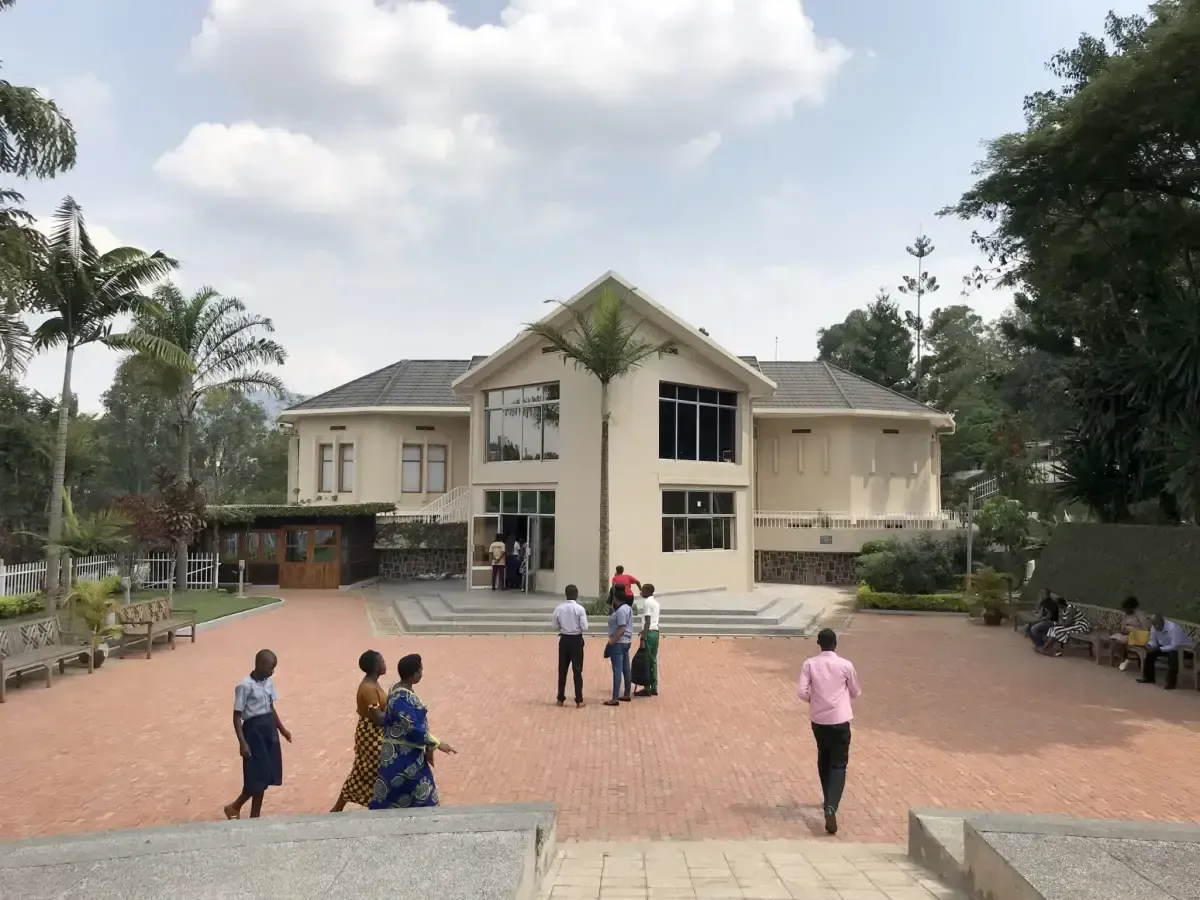
Take Rweru Reconciliation Village. Here, survivors of the genocide live alongside the very people who perpetrated the violence. They farm together, build homes together, and attend gatherings. It’s a real-time experiment in rebuilding a community's social fabric from the ashes. Because, apparently, that’s what it takes.
We're a new kind of news feed.
Regular news is designed to drain you. We're a non-profit built to restore you. Every story we publish is scored for impact, progress, and hope.
Start Your News DetoxForgiveness in Rwanda isn't some quick fix. It's a deep, personal journey, shaped by culture and belief. For the residents of Rweru, it doesn't mean excusing the past. It means breaking the cycle of hate. Rwanda, in its quiet, determined way, is showing the world that even after the most terrible events, communities can unite, forgive, and rebuild.
It’s one thing to forgive a single person. It's an entirely different beast to forge peace between groups that have committed atrocities against each other. So, what does this kind of societal forgiveness actually look like? And can it truly change a nation? Researchers at the Stanford University Forgiveness Project are calling Rwanda a model for "political forgiveness" — a concept they believe is crucial for a more peaceful planet.
What Exactly Is Political Forgiveness?
Political philosopher Hannah Arendt once pointed out that without forgiveness, humanity would be trapped in an endless loop of past actions. Forgiveness, she argued, is the key to moving beyond them. Psychologists generally agree: it's a conscious choice to let go of the anger and resentment, even if the person who caused the harm doesn't seem to deserve it. It's about releasing that deep, soul-crushing rage.
Over the past few decades, psychologists have actually developed methods to promote forgiveness. The Stanford Forgiveness Project, for instance, has shown that specific psychoeducation helps people forgive others, themselves, and even find what they call "existential forgiveness." These aren't just feel-good theories; they've been tested across all sorts of offenses and offer real hope for resolving political and civil conflicts.
The latest idea? Combine Stanford's secular model with a dialogue method from Colombia to create this new process: "political forgiveness." It blends personal and self-forgiveness with structured dialogue, helping communities heal from violence and unrest. The aim is to repair broken relationships between individuals, nations, or groups, restoring trust and fostering positive dialogue. It’s a powerful way to heal from actions that, on their own, might seem irreversible.
Forgiveness in Rweru Village, Up Close
So, how does political forgiveness play out in real life? Meet Maria Izagiriza and Philbert Ntezirizaza, neighbors in Rweru Reconciliation Village. Philbert is a former perpetrator. Maria is a survivor. He killed some of her family members.
Maria's story is heartbreaking. After the president's plane went down, she was warned of danger. Her neighbor at the time told her she'd pay for the president’s death. The next morning, militia descended, killing her livestock, burning her home, and beating her husband. Her children were spared, for a moment. Maria hid until nightfall, then returned to find her husband and children. Her husband was "so badly wounded and bleeding from all parts of his body." Her children were terrified but safe.
They dragged her husband to a hiding place. It was then Maria realized a supposed friend had delivered her family to the killers. She escaped again, this time with her four-month-old baby. No one else survived. "That was the last time I saw my family alive," she recalled. She ended up at a barricade where young men were killing people. Among them was 18-year-old Ntezirizaza, full of hate, responsible for killing some of her family.
Ntezirizaza’s own recollection is chilling: "In 1994, I was a teenager, my body full of youthful vigor and my mind filled with a terrible ideology, fed to me since I was in elementary school. . . . Our mindset at that time was more lethal than the machetes we carried." He paused, adding, "We hacked her husband and eldest son to death and threw the remaining two children in a deep pit, alive. We knew they wouldn’t survive."
After the genocide, Ntezirizaza went to prison, carrying the weight of his actions. He wanted to make amends through Rwanda’s reconciliation process, knowing he had to face Maria. He wasn't just seeking to ease his own guilt; he understood that asking for forgiveness was a step toward restoring their community.
Maria struggled. How do you forgive the man who killed your loved ones? But through the village’s reconciliation program, she came to understand the context of Ntezirizaza’s actions. Her journey to forgiveness brought her a profound peace. She told Vice Magazine, "When one’s heart is burdened, you don’t see anything good at all. But when you forgive from your heart, you see many good things coming your way. And forgiveness is an important thing, as it makes your heart relieved and you gain new ideas of self-development, and life continues as normal.”
Ntezirizaza, for his part, understood the gravity of what he’d done. "After getting released from jail, I would feel guilty that I committed crimes against Maria, and I would feel fearful and ashamed of myself. . . . I asked her to forgive me. She forgave me, and I felt relief in my heart.”
Today, Maria Izagiriza and Philbert Ntezirizaza work together in the village fields, growing food to support their community. They are, quite literally, building a new life, together.
From Experiments to Examples
Political forgiveness starts with all sides agreeing to come together. The process involves meeting separately with the conflicting groups, teaching them basic forgiveness skills, and showing them how others have healed. The goal is a shared understanding of what forgiveness is (and isn't).
This model is currently being tested, drawing lessons from Colombia, a country that suffered decades of violence between the government, militias, and crime syndicates. After years of failed peace efforts, President Juan Manuel Santos initiated peace talks in 2012, leading to the "Commission for the Clarification of Truth, Co-existence and Non-repetition" (CEV). Its focus: victims and their right to the truth.
The CEV created safe spaces for dialogue among deeply divided factions of Colombian society. A process called "logics of truth," developed by Father Leonel Narváez, helped emotional healing by acknowledging that "truth" isn't just about facts, but has different layers. This framework, inspired by political forgiveness, helped reduce hostilities. Participants learned to separate objective events from the meaning they assigned to them.
This dialogue begins with each side sharing their perspective — what happened, why, and its significance. Then they discuss how to move forward, acknowledging the painful consequences and intense feelings. Finally, the conversation expands to how the group can work toward societal reconciliation and prevent future violence. It's a structured approach to something deeply unstructured: human pain.
This model is now being tested with Palestinians and Israelis in the United States, in an ongoing effort to build peace. Researchers know forgiveness is both a decision and an ongoing process, often the only path to lessening profound pain. It’s a choice that can be taught. And practiced. Because, sometimes, the only way forward is through the hardest conversation imaginable.