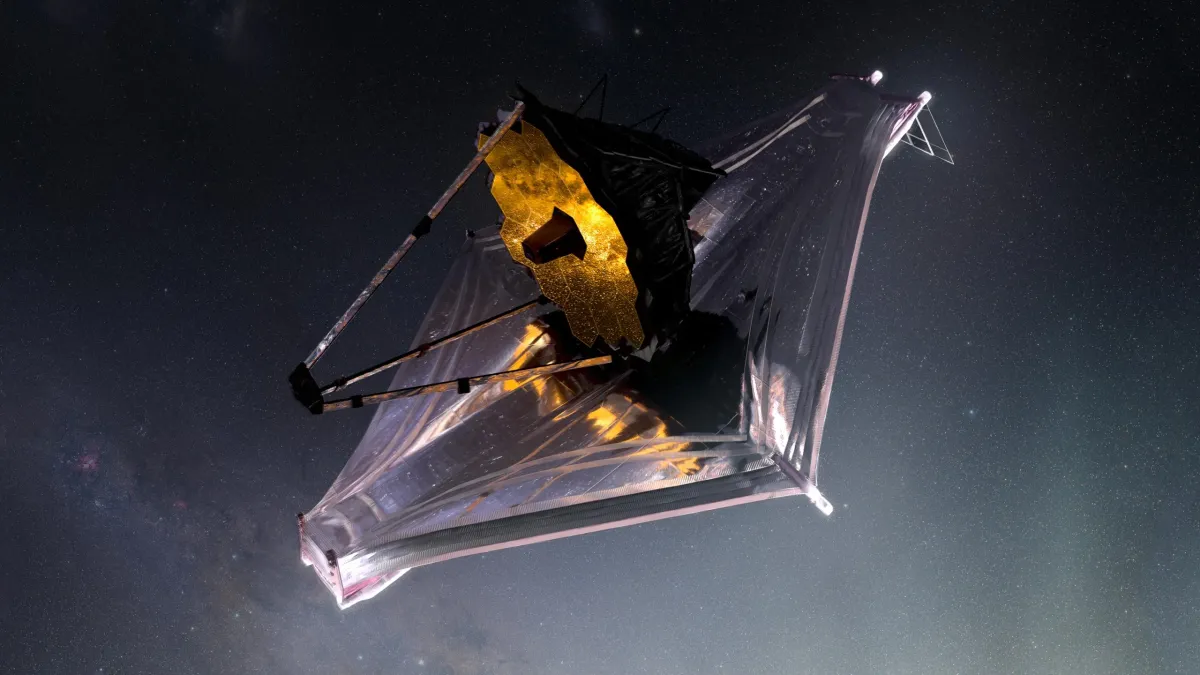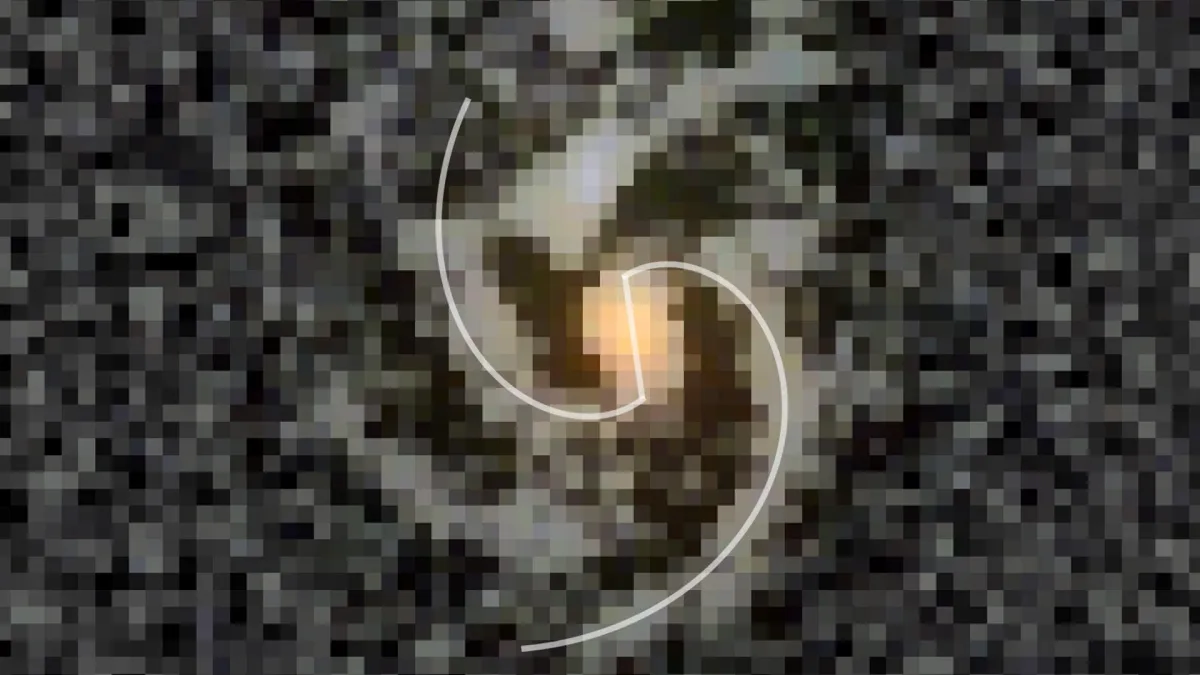
The James Webb Space Telescope has spotted something that shouldn't exist yet—at least, not this early. A galaxy called COSMOS-74706, dating back 11.5 billion years, contains a stellar bar: a bright, linear band of stars and gas cutting straight through its center, just like the structure in our own Milky Way. The catch: according to our models of how galaxies form, this kind of organized architecture shouldn't have had time to develop.
A research team led by Daniel Ivanov, a physics and astronomy graduate student at the University of Pittsburgh, confirmed the discovery using spectroscopy—a precise measurement technique that reads the galaxy's light like a fingerprint. This matters because earlier candidates for ancient barred galaxies relied on fuzzier distance measurements, and some were distorted by gravitational lensing (when light bends around massive objects). COSMOS-74706 is different: it's the highest-redshift, spectroscopically confirmed, unlensed barred spiral galaxy we've ever found.
Why Bars Matter
A stellar bar isn't just a pretty feature. These structures actively reshape galaxies over billions of years. As the bar rotates, it channels gas from the outer edges inward, like a cosmic conveyor belt. That gas can feed the supermassive black hole lurking at the galaxy's core and, paradoxically, slow down star formation across the wider disk. Understanding when and how bars form tells us something fundamental about how galaxies mature.
We're a new kind of news feed.
Regular news is designed to drain you. We're a non-profit built to restore you. Every story we publish is scored for impact, progress, and hope.
Start Your News DetoxComputer simulations have predicted that bars could theoretically start forming around 12.5 billion years ago (what astronomers call redshift 5). But they're not supposed to be common that early—the universe was still young, messier, less settled. Finding one this well-developed this soon suggests either that bars form faster than we thought, or that the conditions for them existed earlier than expected.
The discovery, presented at the 247th meeting of the American Astronomical Society, doesn't overturn our understanding of galaxy evolution. Instead, it tightens the constraints on the timeline. Each observation like this—precise, unlensed, spectroscopically confirmed—helps astronomers refine when and how the universe's largest structures took shape.
As James Webb continues scanning the early cosmos, more of these ancient, surprisingly mature galaxies will likely emerge. The universe, it turns out, was building complexity faster than we realized.