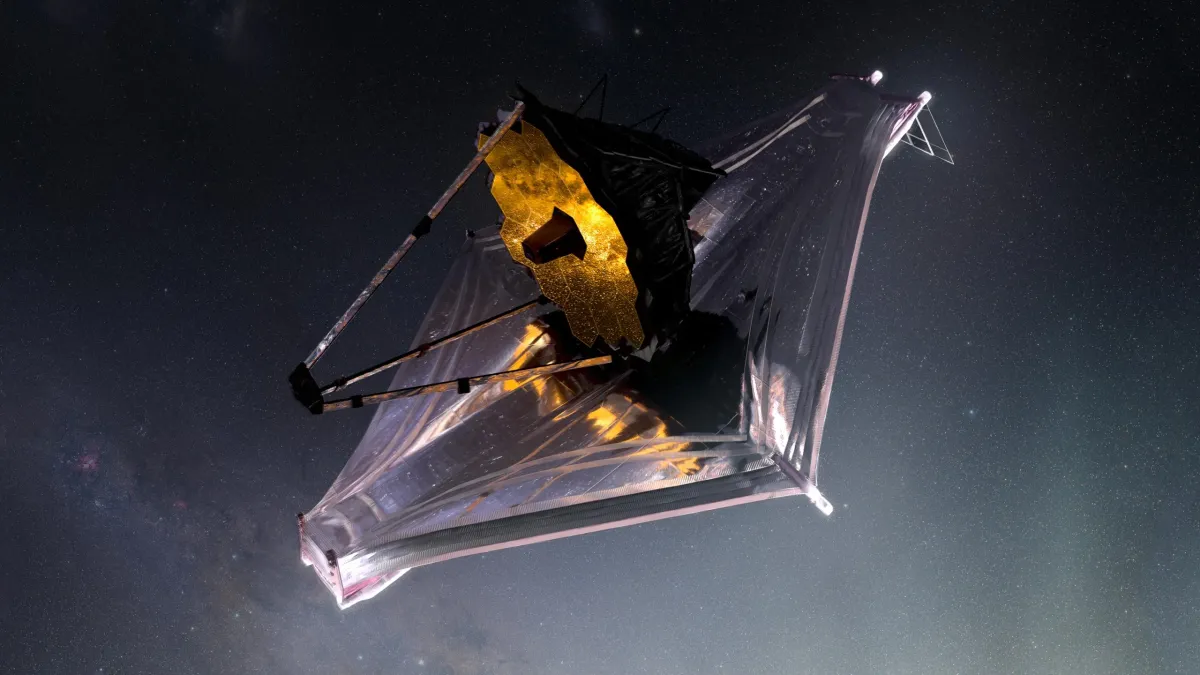
The James Webb Space Telescope has spotted something unexpected in the dust-choked heart of a distant galaxy: a thriving chemical ecosystem far more complex than astronomers predicted.
Deep inside IRAS 07251–0248, an ultraluminous infrared galaxy about 430 million light-years away, researchers found an exceptional concentration of small organic molecules — benzene, methane, acetylene, and others — crowded into a region so dense and obscured by gas and dust that traditional telescopes can't see through it. The abundance of these compounds exceeded theoretical models by a wide margin, suggesting that galactic nuclei aren't just hostile wastelands but active factories for organic chemistry.
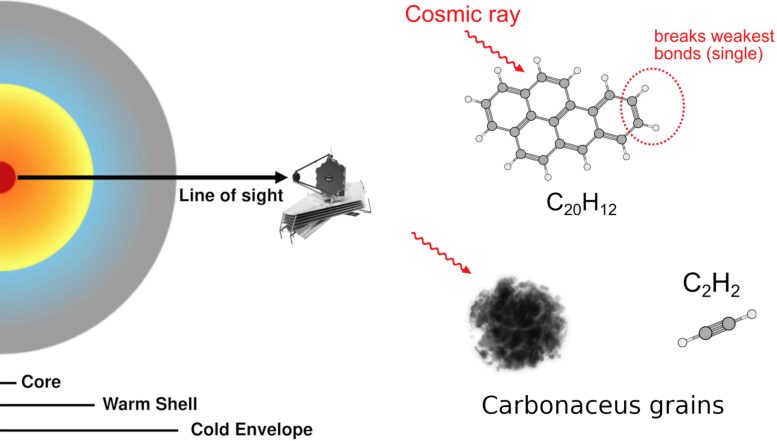
The discovery, published in Nature Astronomy and led by researchers at the Center for Astrobiology in Spain with support from the University of Oxford, reveals how carbon-based molecules transform under some of the harshest conditions in space. Infrared light can penetrate the thick dust veils that block visible light, allowing Webb's infrared instruments to detect the chemical fingerprints of molecules hidden from view. By analyzing spectroscopic data across wavelengths between three and 28 microns, the team identified not just gases but also solid materials — carbon-rich grains and water ices — all coexisting in this extreme environment.
We're a new kind of news feed.
Regular news is designed to drain you. We're a non-profit built to restore you. Every story we publish is scored for impact, progress, and hope.
Start Your News Detox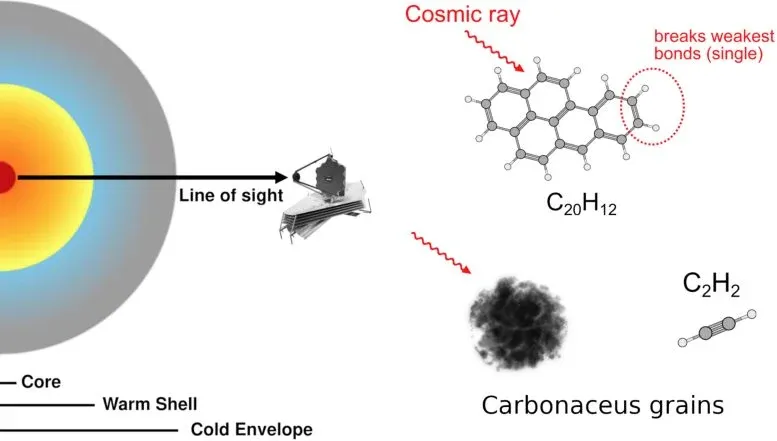
What's driving all this chemical activity isn't heat or turbulent gas alone. The researchers found that cosmic rays — high-energy particles abundant in galactic cores — are colliding with carbon-rich dust grains and fragmenting them into smaller organic molecules. These impacts release the smaller compounds into the surrounding gas, creating a continuous chemical production line. The evidence is compelling: a strong correlation exists between hydrocarbon abundance and cosmic-ray ionization levels across multiple galaxies.
"We found an unexpected chemical complexity, with abundances far higher than predicted by current theoretical models," said lead author Dr. Ismael García Bernete. "This indicates that there must be a continuous source of carbon in these galactic nuclei fueling this rich chemical network."
These small organic molecules aren't alive, but they're building blocks for more advanced chemistry. They represent a step toward amino acids and nucleotides — the molecules that underpin life as we know it. While we don't yet know if life exists elsewhere in the universe, understanding how organic chemistry flourishes even in extreme galactic environments suggests that the chemical ingredients for life may be far more widespread than previously thought.
The discovery also demonstrates Webb's unprecedented ability to see into regions of the universe that were completely opaque to earlier telescopes. As the mission continues, it will likely reveal more hidden chemical ecosystems and reshape our understanding of how galaxies evolve and how organic matter spreads across the cosmos.