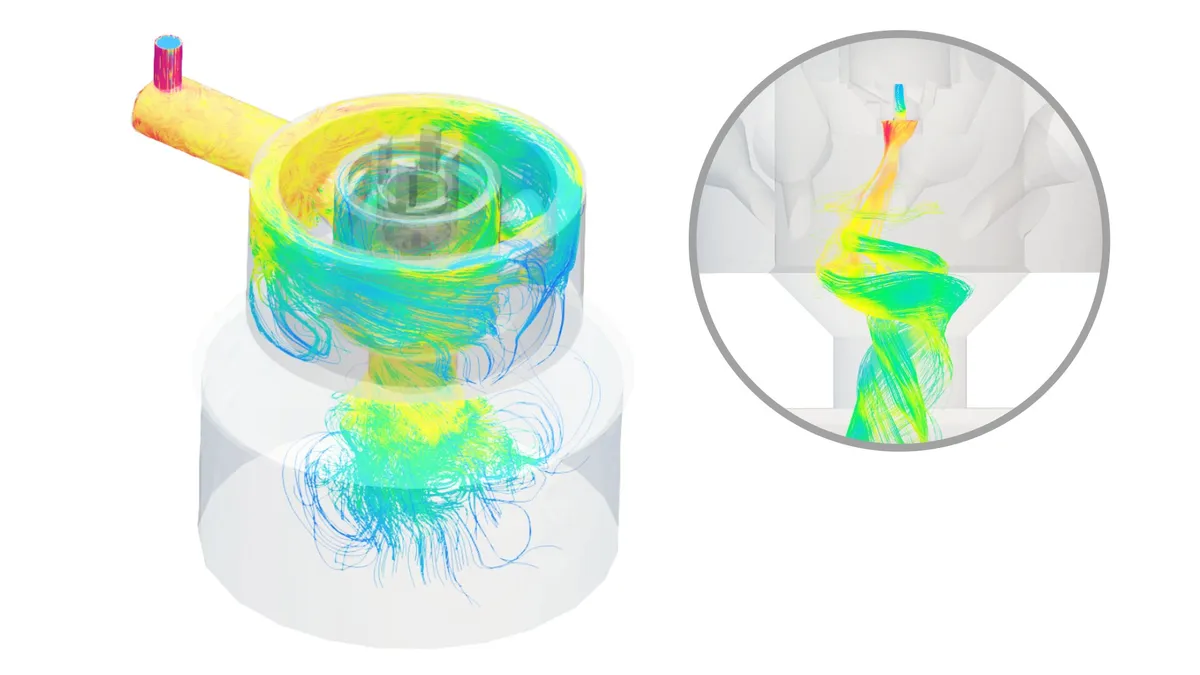
Researchers at the University of Maine and Oak Ridge National Laboratory have figured out how to dry cellulose nanofibers—the building blocks of a potential plastic replacement—using something that sounds like it belongs in a superhero origin story: counter-rotating vortices of heated compressed air spinning at three times the speed of sound.
The technique works by feeding a wet cellulose slurry into these miniature tornadoes, which shear the droplets apart and dry them in seconds. It's faster, uses less energy, and produces better results than the freeze-drying and spray-drying methods currently used.
From Plant Fibers to Stronger Materials
Cellulose is the fibrous stuff that gives plants their structure. When broken down to the nanoscale—imagine fibers thinner than a human hair with fuzzy ends that split into even tinier branches—these nanofibers become genuinely useful. They can bond to each other without glue or chemicals, which means they could replace plastic in everything from concrete reinforcement to bone implants to food packaging that actually biodegrades.
We're a new kind of news feed.
Regular news is designed to drain you. We're a non-profit built to restore you. Every story we publish is scored for impact, progress, and hope.
Start Your News DetoxUniversity of Maine professor David J. Neivandt developed the patent-pending process after lab prototypes proved the concept worked. But moving from "works in the lab" to "works in a factory" required help. He reached out to Oak Ridge National Laboratory, where research scientist Kevin Doetsch used computational modeling to understand exactly what was happening inside those spinning air columns.
The modeling revealed how the high-speed air creates shear forces that essentially tear apart the cellulose droplets, enabling them to dry rapidly and uniformly. "We can see why the nanomaterials are drying the way they are, and we can prove it computationally," Doetsch said. That's the kind of insight that turns a clever prototype into something scalable.
The collaboration has already accelerated the timeline from academic curiosity to potential industrial use. The next phase involves designing a system that produces the same effect at much higher flow rates—generating hundreds of times more dried nanofibers per batch. If that works, cellulose nanofiber products could move from research papers to store shelves within the next few years.