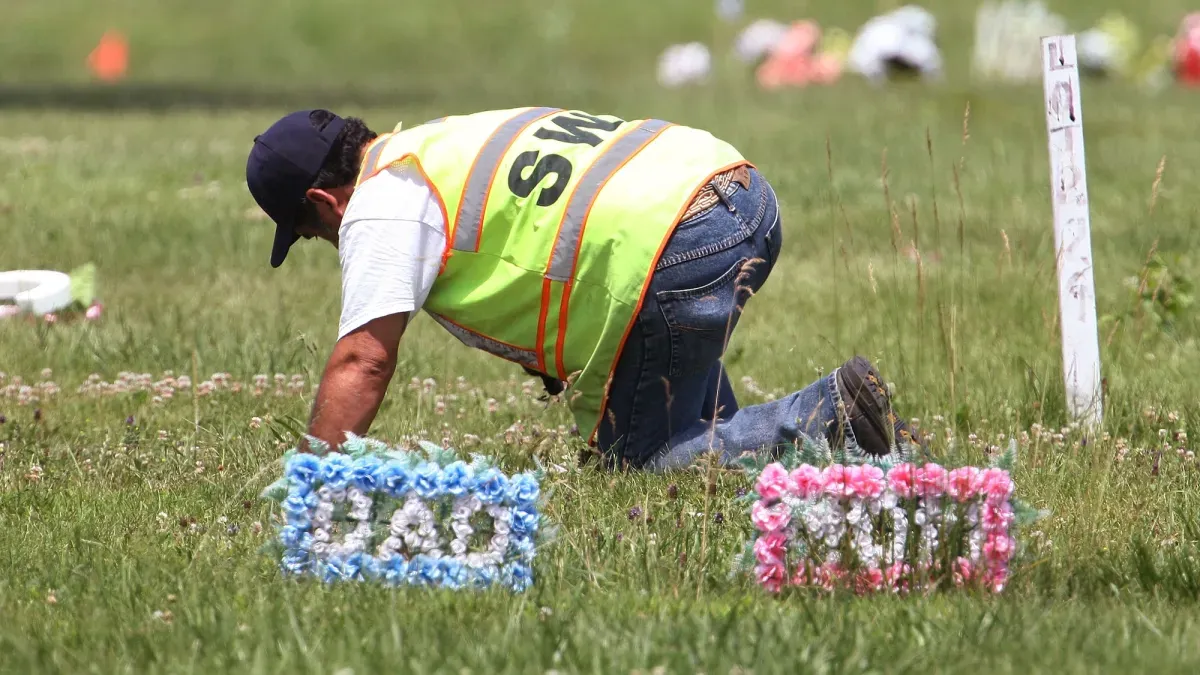
In 2009, employees at Burr Oak Cemetery in Illinois were caught doing something almost unthinkable: digging up old graves, scattering the remains, and reselling the burial plots to new families. The cemetery, a historic Black burial ground that holds the graves of Emmett Till and Michelle Obama's father, became the center of a national scandal. But closing the case required help from an unlikely source: a botanist studying moss.
When FBI investigators couldn't establish exactly when the graves had been disturbed, they reached out to Matt von Konrat, head of botany collections at Chicago's Field Museum. The question was simple but urgent: could moss tell them anything about the timeline of the crime.
The Moss Evidence
Von Konrat's team found Fissidens taxifolius—common pocket moss—buried about eight inches below the topsoil near the reburied remains. The species itself was the first clue. "When I surveyed the rest of the cemetery, we found a huge colony of that species of moss growing in the same area where the investigator suspected the bones had been dug up from," von Konrat explained. But the moss growing elsewhere in the cemetery was different, suggesting this sample had been moved.
We're a new kind of news feed.
Regular news is designed to drain you. We're a non-profit built to restore you. Every story we publish is scored for impact, progress, and hope.
Start Your News DetoxThe real breakthrough came from measuring the moss's age. Moss has an unusual property: even when dead and dried, a few of its cells remain metabolically active. By comparing the chlorophyll levels in the cemetery sample against museum specimens of known ages, von Konrat's team could pinpoint when the moss had been disturbed. The results showed it was only one or two years old—placing the disturbance squarely during the accused employees' time at the cemetery.
The defendants claimed other workers had committed the crimes before they arrived. The moss made that defense impossible. In 2015, they were convicted of desecrating human remains.
What makes this case remarkable is how overlooked this tool remains. Moss has been part of human history for millennia—Indigenous cultures used it for insulation, Ötzi the Iceman wore it in his boots 5,000 years ago, and peat moss still powers the whisky industry. Yet its forensic potential is barely recognized. Von Konrat's 2023 review of 150 years of criminal cases worldwide showed moss has helped solve crimes across continents, yet most investigators don't think to ask a botanist.
The Burr Oak case wasn't just about identifying a plant species or measuring decay. It was about giving voice to the desecrated dead at a cemetery that had already faced centuries of systemic neglect. A tiny clipping of moss made that possible.