A Japanese research team just proved that life—at least the microscopic kind—can handle the vacuum of space far better than we can.
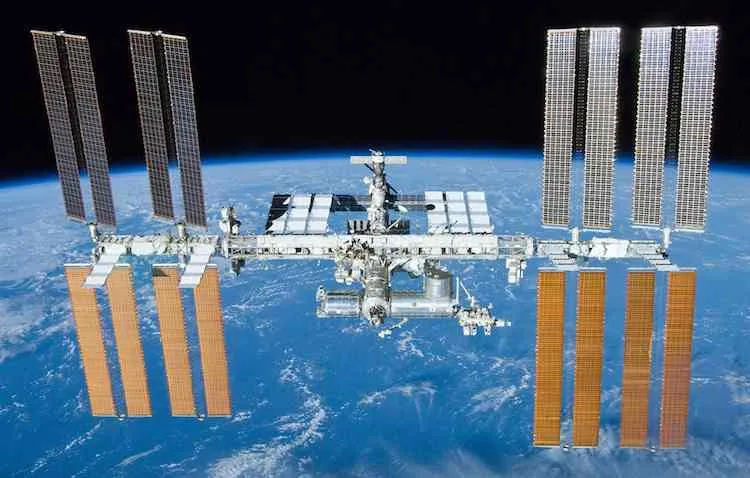
Scientists from Hokkaido University sent spores from Physcomitrella patens, a common moss, to the exterior of the International Space Station aboard a cargo spacecraft. For nine months, these spores sat exposed to the kind of conditions that would kill a human in 15 seconds: hard vacuum, extreme cold, and unfiltered ultraviolet radiation. When the samples returned to Earth and were rehydrated, 86% of the spores germinated successfully—only slightly lower than the 97% germination rate for identical samples that never left the lab.
The resilience wasn't a complete surprise. Before sending the spores to orbit, the researchers had already stress-tested them in laboratory conditions mimicking space. But watching them survive in the actual environment proved something fundamental: certain organisms can endure the journey between worlds.
We're a new kind of news feed.
Regular news is designed to drain you. We're a non-profit built to restore you. Every story we publish is scored for impact, progress, and hope.
Start Your News DetoxWhy this matters for space settlement
Moss doesn't sound like the foundation of future colonies, but it could be. Unlike humans, plants don't need to be fed or entertained—they just need the right conditions to grow. Mosses are particularly useful because they're efficient: they generate oxygen, regulate humidity, and help break down minerals into soil. In a closed habitat on Mars or the Moon, where every resource has to be recycled, that kind of multi-purpose organism becomes invaluable.
Dr. Tomomichi Fujita, the lead author, framed it plainly: "If such spores can endure long-term exposure during interplanetary travel and then successfully revive upon rehydration and warming, they could one day contribute to establishing basic ecosystems beyond Earth." This isn't about moss for its own sake. It's about whether we can bootstrap life-support systems that don't require constant resupply missions from Earth.
The finding slots into a growing body of evidence that hardy organisms—seeds, spores, certain microbes—can survive the journey through space. Each study narrows the gap between "theoretically possible" and "practically achievable." We're not at Mars gardens yet, but we're learning which tools might actually work when we get there.