How Insects Became Social Masters Through Genetic Subtraction
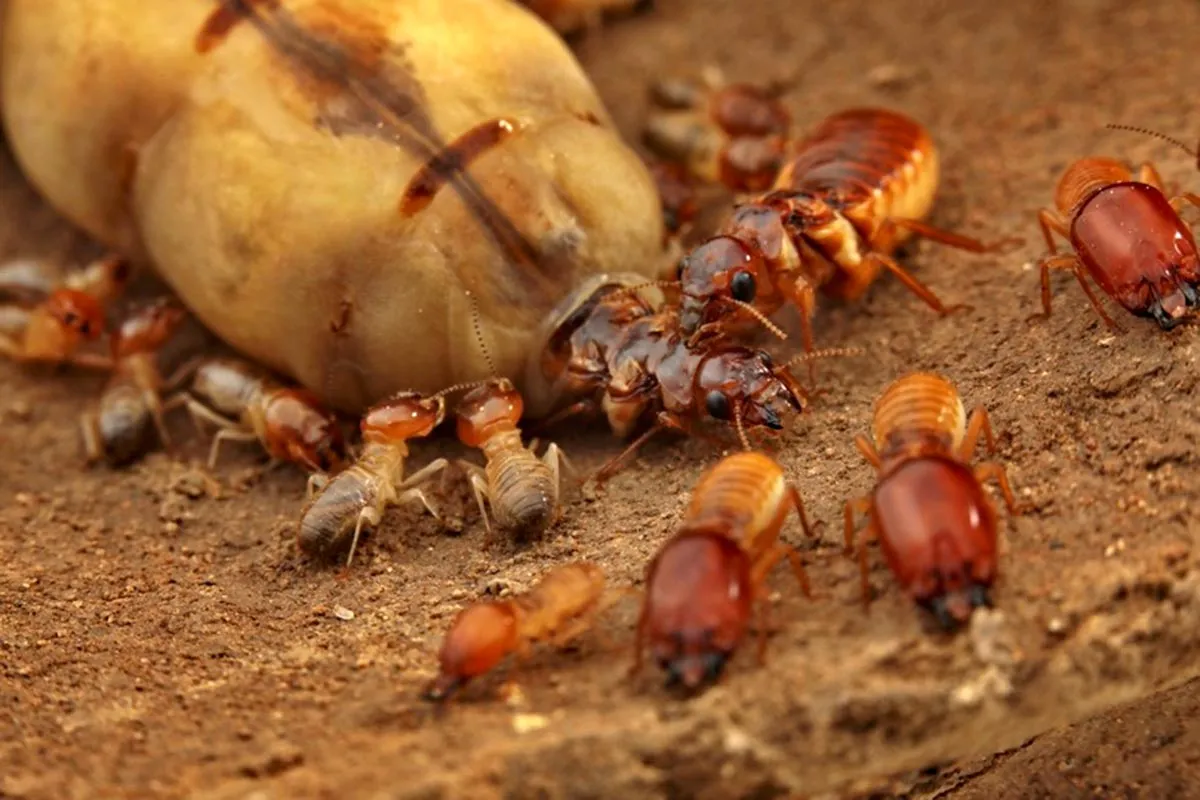
Termites are among Earth's most successful animals. Their colonies reach millions strong, with intricate division of labor and infrastructure that rivals human cities. Yet their ancestors were ordinary cockroaches — solitary insects with no hint of the cooperation that defines modern termite life. A new study from the University of Sydney, published in Science, reveals how this transformation happened through an counterintuitive mechanism: genetic loss, not gain.
The research traced termite evolution across genomes from cockroaches, woodroaches, and multiple termite species at different stages of social complexity. The pattern that emerged was striking. As termites specialized in eating wood and developed their social systems, their genomes actually became smaller and less complex than their cockroach cousins. They shed genes tied to metabolism, digestion, and reproduction — the molecular equivalent of stripping away what no longer served them.
"Termites increased their social complexity by losing genetic complexity," says Professor Nathan Lo, who led the research. "That goes against a common assumption that more complex animal societies require more complex genomes."
We're a new kind of news feed.
Regular news is designed to drain you. We're a non-profit built to restore you. Every story we publish is scored for impact, progress, and hope.
Start Your News DetoxThe Sperm That Never Swam
One discovery pointed to the heart of termite social life: the loss of genes that build sperm tails. Unlike cockroaches and most other animals, termite sperm cannot swim. This wasn't random genetic drift — it was a signal.
In species where females mate with multiple males, sperm competition drives evolution toward faster, better-equipped swimmers. But termite ancestors had already shifted to strict monogamy. With only one mate, sperm competition disappeared. The genes maintaining sperm tails became unnecessary, and evolution simply let them go.
"This loss doesn't cause monogamy," Lo clarifies. "It's a strong indicator that monogamy had already evolved." The tailless sperm are less a cause than a consequence — a genetic signature of a social system already in place.
This matters because monogamy and the genetic relatedness it creates appear to have been crucial for termite social evolution. When colony members share more DNA, cooperation becomes mathematically advantageous. A worker termite helping its siblings reproduce passes on more of its genes than it would by breeding alone. This relatedness, locked in by monogamy, gave cooperation an evolutionary edge.
How Colonies Choose Their Workers
The research also illuminated how termite colonies organize themselves. A young termite's fate — whether it becomes a worker or a future king or queen — hinges largely on nutrition during early development. Larvae fed generously by older siblings develop high-energy metabolism and become sterile workers. Those receiving less food grow slowly and retain the ability to reproduce later.
This creates a feedback loop. Workers share food with developing larvae, essentially deciding the colony's workforce composition through their own generosity. It's a distributed system of social regulation, where individual feeding choices aggregate into colony-wide organization.
When a termite king or queen dies, succession often passes to their offspring, creating widespread inbreeding. From an evolutionary perspective, this further reinforces genetic relatedness within the colony — a self-reinforcing cycle that strengthens the bonds holding these societies together.
What Evolution Chose to Abandon
The broader implication reshapes how we think about social evolution. Complex societies don't necessarily require accumulating new genes and capabilities. Sometimes they emerge through subtraction — organisms shedding the genetic machinery for independence and competition, making cooperation the only viable path forward.
Termites began eating wood because their ancestors found it available. That dietary shift triggered a cascade of genetic changes, eventually producing insects so specialized for group living that they've become nearly incapable of surviving alone. What started as an ecological opportunity became, over millions of years, a locked-in social system.
As Lo reflects on the findings: "Understanding social evolution isn't just about adding new traits. Sometimes, it's about what evolution chooses to let go."