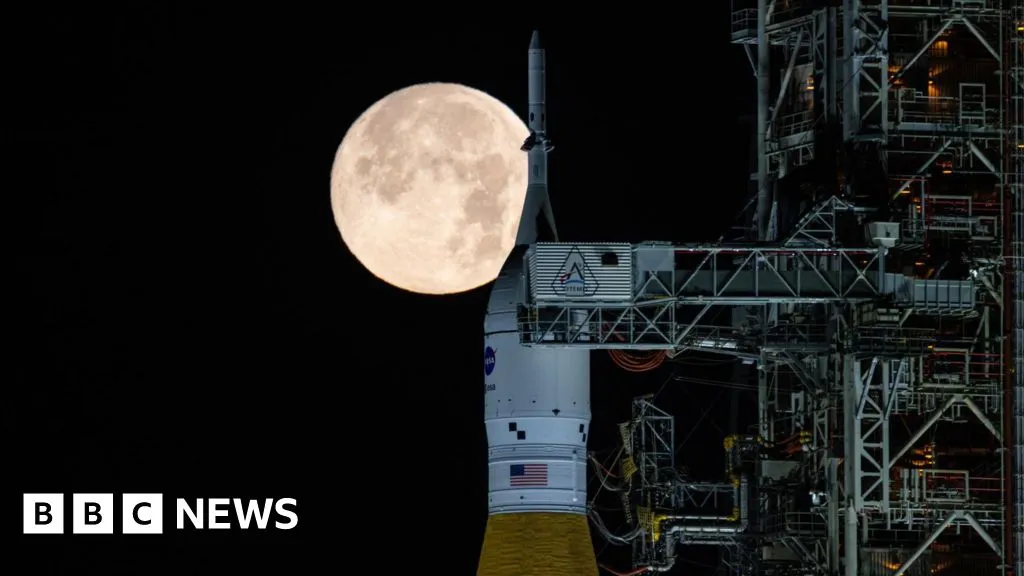
NASA is taking a deliberate step back before taking the big leap. Instead of launching straight for a lunar landing, the space agency is adding an extra crewed mission in low-Earth orbit first — a practice run that will test the hardware where failure is survivable before astronauts strap in for the Moon.
The shift reshapes the Artemis timeline. Artemis II will still fly four astronauts around the Moon's far side (launch now targeted for April, delayed by a helium leak on the rocket). But Artemis III, originally planned as the landing attempt in 2028, will instead send a crew to low-Earth orbit in 2027 to practice docking with a lunar lander. The actual Moon landings will follow with Artemis IV and V, still aiming for 2028.
"I would certainly much rather have the astronauts testing out the integrated systems of the lander and Orion in low-Earth orbit than on the Moon," NASA administrator Jared Isaacman said at a media briefing. It's a simple statement that captures the whole logic: test everything when you can still abort safely.
We're a new kind of news feed.
Regular news is designed to drain you. We're a non-profit built to restore you. Every story we publish is scored for impact, progress, and hope.
Start Your News Detox
Why the Detour

Isaacman called the original plan "not a pathway to success." Waiting three years between launches before attempting a Moon landing meant any problems discovered in the gap would be caught too late. The new structure collapses that risk window. The low-Earth orbit mission also gives NASA a chance to test spacesuits before astronauts wear them on the lunar surface — another critical validation that costs nothing if something goes wrong.
The United States isn't making this choice in isolation. China is targeting a lunar landing by 2030 and has demonstrated steady progress toward that goal. Both nations are competing for landing sites at the Moon's south pole, where water ice and protected craters make establishing long-term bases feasible. The pressure to return is real, but so is the pressure to return safely.
One major piece still isn't locked in: the lunar lander itself. SpaceX holds a contract to build one, but delays to the Starship programme have prompted NASA to ask for an accelerated plan. The agency has also asked Blue Origin to develop a competing design. Both landers could potentially dock with Orion in low-Earth orbit, giving NASA options and SpaceX a deadline.
The restructure signals something often lost in the Moon-race narrative: sometimes the fastest path forward is the one that checks your work first. Artemis II is already on its way to the launchpad. The real race starts after it comes home.