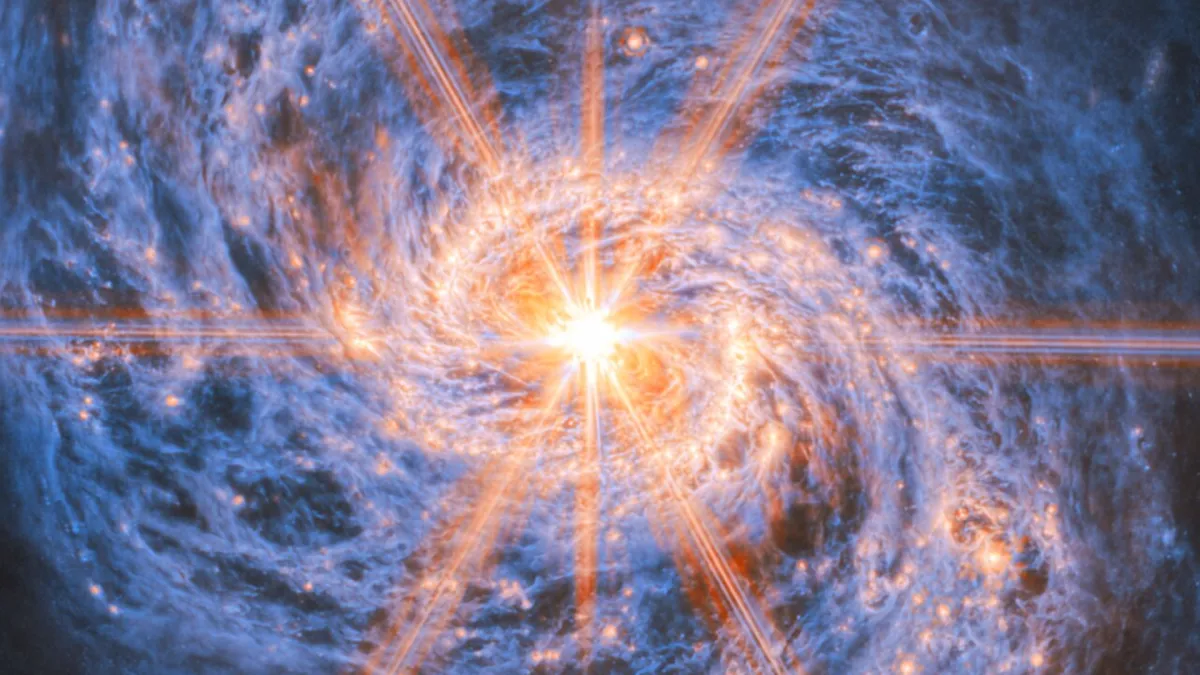
Turns out, some galaxies have a core so ridiculously bright it nearly blinds the James Webb Space Telescope. Messier 77, affectionately known as the "Squid Galaxy," just gave us a cosmic eye-full, and it's quite the spectacle.
At the very center of Messier 77, there's an active galactic nucleus (AGN) — basically, a supermassive black hole around eight million times the mass of our Sun. This cosmic vacuum cleaner is hoovering up gas, which then spirals inward at ludicrous speeds, heating up and blasting out so much radiation it makes our star look like a dim nightlight. This core shines so intensely, it almost maxed out Webb's sensors. Talk about showing off.
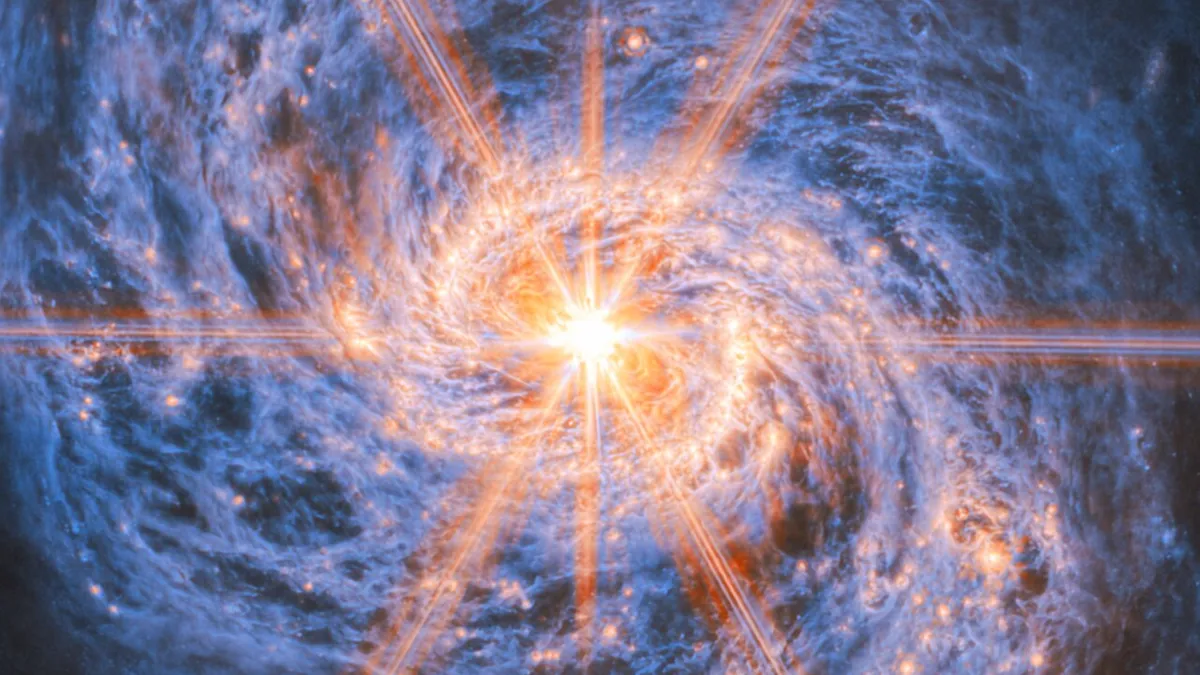
Those bright orange rays shooting out from the center? Not actually part of the galaxy's décor. Those are "diffraction spikes," an optical quirk of Webb's hexagonal mirrors interacting with intensely bright, concentrated light sources. So, yes, the galaxy is so bright it's literally creating lens flare.
We're a new kind of news feed.
Regular news is designed to drain you. We're a non-profit built to restore you. Every story we publish is scored for impact, progress, and hope.
Start Your News DetoxStar Factories and Cosmic Tentacles
Beyond its blinding heart, Messier 77 is a bustling star factory. Webb's near-infrared vision revealed a bar-like structure across the galaxy's middle, a feature usually hidden from optical telescopes. Around this bar, the inner spiral arms converge into a "starburst" region, where new stars are popping into existence at an astonishing rate. It's like a cosmic baby boom.
The galaxy's disk is thick with gas and dust, both fueling this star-making frenzy and being shaped by it. Webb's Mid-Infrared Instrument (MIRI) even picked up cooler dust glowing blue, giving scientists a clearer map of the galaxy's hidden architecture.
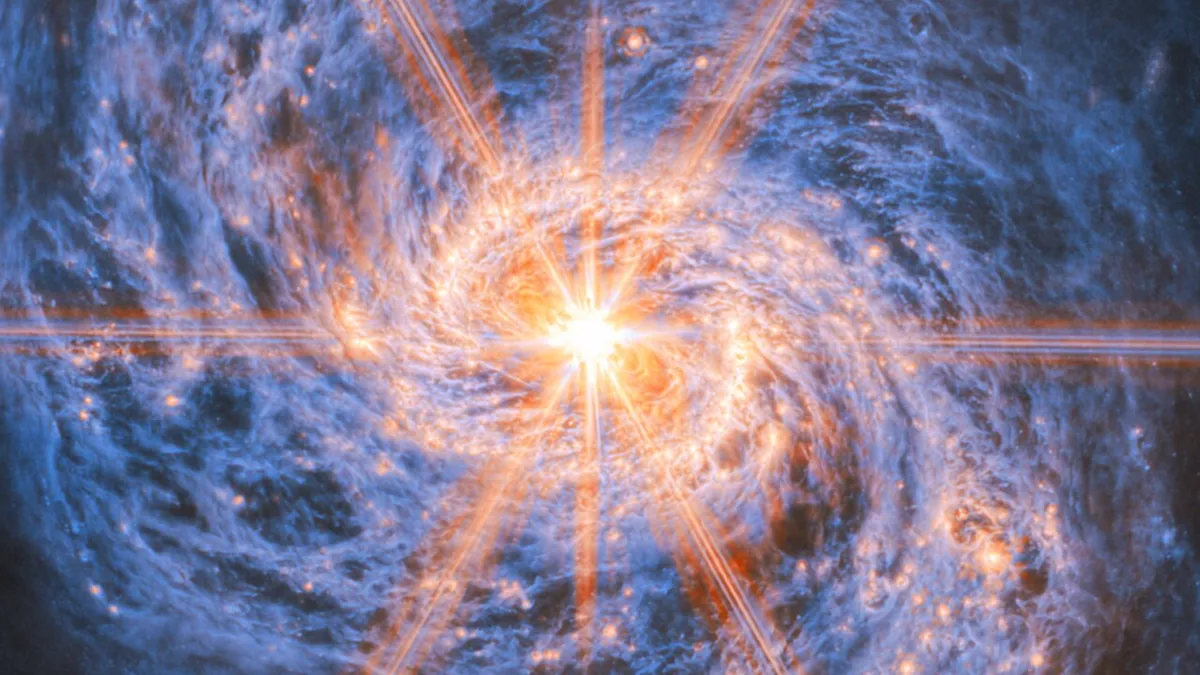
And then there's the "Squid Galaxy" nickname. Messier 77's spiral arms stretch into a faint, wide ring of hydrogen gas, thousands of light-years across, still forming stars. Even further out, delicate streams of hydrogen gas reach into space, like long, ethereal tentacles. Which, if you think about it, is both impressive and slightly terrifying. Imagine an actual squid that size.
This stunning new image is part of a research program (number 3707, if you're keeping score) aimed at building a comprehensive dataset of massive, star-forming galaxies. Webb's high-resolution instruments are meticulously detailing dense star clusters and vast gas clouds, helping astronomers piece together the dramatic life cycles of stars in Messier 77 and its galactic cousins. Because apparently, even galaxies have a dramatic side.