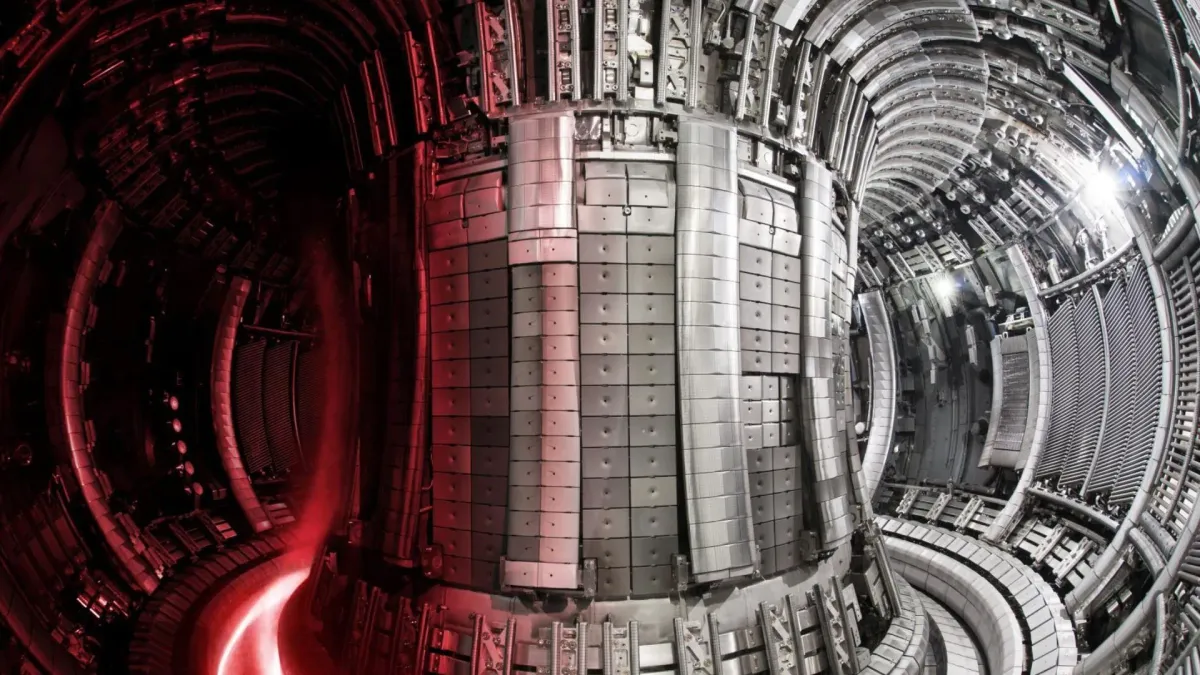
The biggest unsolved problem in fusion energy isn't the physics anymore—it's the plumbing. You can create a reaction hot enough to power a city, but if a magnet breaks, you're pulling apart a structure the size of a house with welding torches. That's about to change.
Engineers at the UK's STEP program have successfully tested what amounts to a plug-and-socket system for fusion magnets. These Remountable Joints (RMJs) let massive electromagnets be disassembled and reassembled like industrial connectors, rather than being welded into permanent structures. It sounds like a small thing. It's not.
Traditional fusion reactor magnets are built solid. If something fails inside—a wire, a coolant line, a structural component—you're looking at months of work, enormous costs, and the kind of downtime that kills the economics of a power plant. With these new joints, you can swap out sections in days instead. For a technology trying to prove it can compete with coal and natural gas, that's the difference between theoretical and viable.
We're a new kind of news feed.
Regular news is designed to drain you. We're a non-profit built to restore you. Every story we publish is scored for impact, progress, and hope.
Start Your News DetoxThe cooling trick that makes it work
The real innovation is how they keep these joints stable under the most brutal conditions imaginable. Fusion magnets operate at temperatures colder than outer space, holding fields strong enough to contain plasma hotter than the sun's core. The electrical connections have to be perfect—any gap means resistance, heat, and failure.
The STEP team, working with the UK Atomic Energy Authority, developed a bladder-based clamping system. Imagine a precision clamp filled with liquid that expands as it freezes. When the magnet cools down to cryogenic temperatures, that expansion creates even pressure across every electrical connection, keeping everything stable and efficient. It's the kind of elegant engineering that only matters if it actually works—and they've now proven it does.
The system is being prepared for patenting, which suggests the researchers think this will become standard across multiple fusion projects, not just STEP.
Why this matters now
The UK's STEP program is building a prototype fusion plant in Nottinghamshire with a target of feeding electricity into the grid by the 2040s. That's not far away in energy infrastructure terms. To hit that timeline, fusion has to stop being a laboratory achievement and start being an industrial reality. Reliable, maintainable magnets are one of the few remaining pieces that actually determines whether that happens.
Right now, the team is testing how multiple joints perform together in realistic magnetic environments, simulating the extreme conditions they'll face during actual fusion reactions. Early results suggest the approach scales. What started as a single joint working in isolation is now being proven as a system.
This won't make headlines like a new fusion record does. But records are easy—they're one-off moments in a lab. Building something that runs reliably for decades, that you can maintain without shutting down for months, that actually makes economic sense: that's the work that turns fusion from an experiment into an energy source.