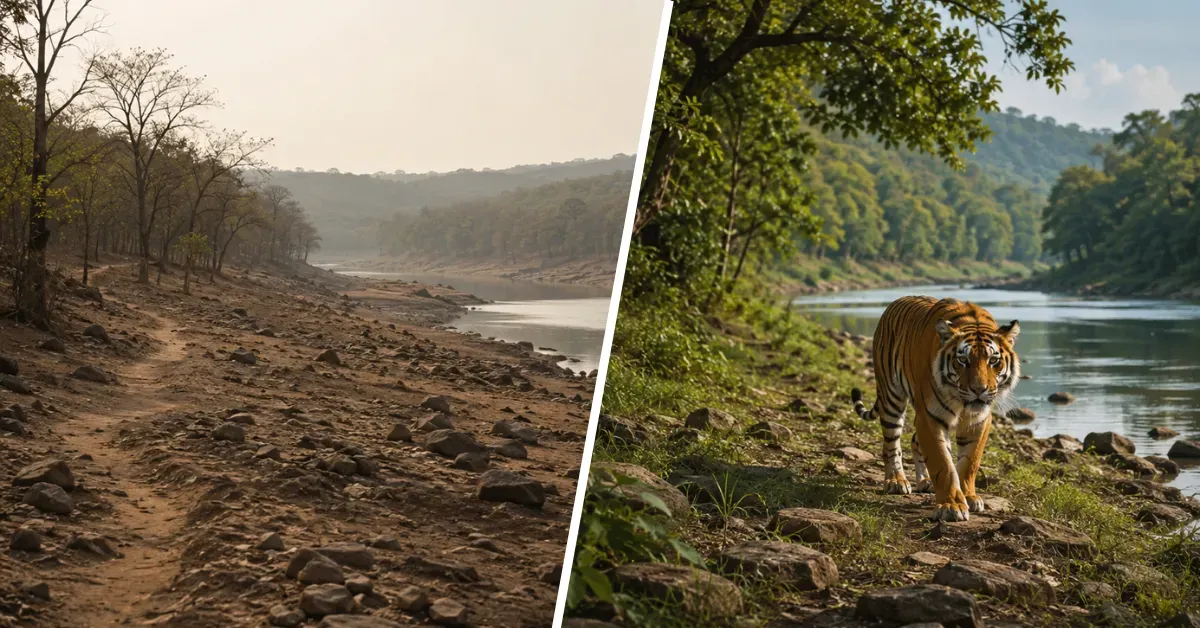
Imagine a tiger reserve. Now imagine it without any tigers. That was Panna, a national park in India, just 15 years ago. Today, it's home to roughly 80. It's a comeback story so wild, it almost sounds like fiction.
But here's the kicker: this hard-won victory is now hanging by a thread, thanks to a proposed river-linking project. The Daudhan Dam, part of the Ken-Betwa River Link, threatens to flood thousands of hectares within the reserve, potentially undoing years of meticulous, science-backed restoration.
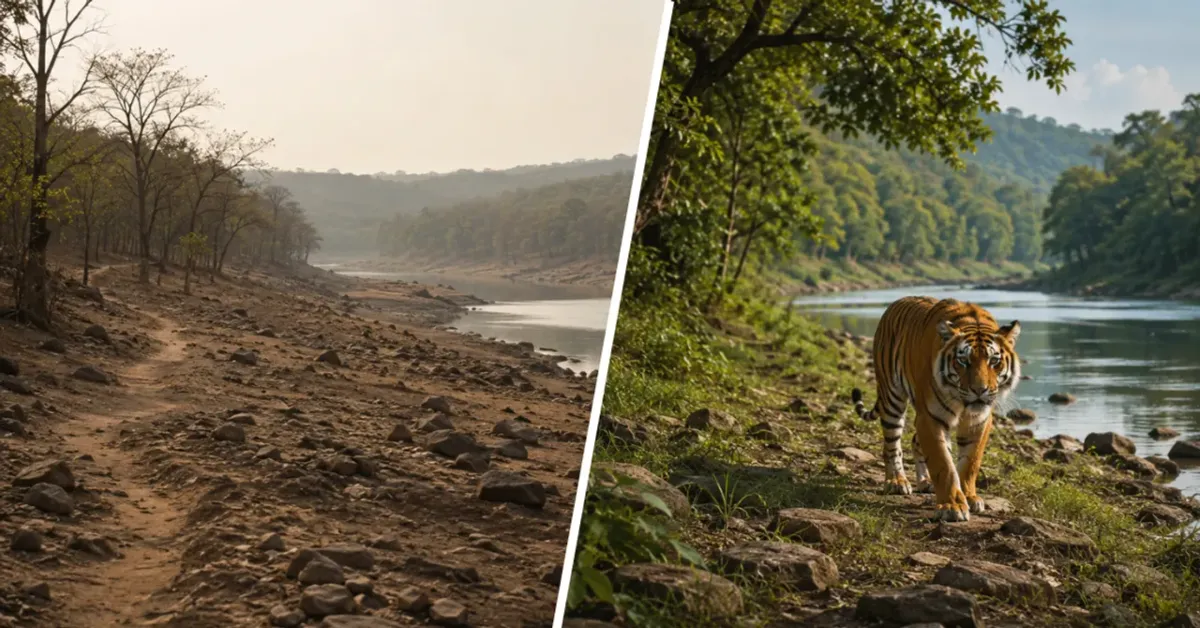
Because, as it turns out, bringing back tigers isn't just about moving big cats. It's about healthy forests, abundant prey, interconnected habitats, and, critically, reliable water. Mess with any one of those, and the whole delicate ecosystem starts to wobble.
We're a new kind of news feed.
Regular news is designed to drain you. We're a non-profit built to restore you. Every story we publish is scored for impact, progress, and hope.
Start Your News DetoxThe Great Disappearing Act
Panna was supposed to be perfect tiger territory. It became a national park in 1981, a tiger reserve in '94, expanding to nearly 1,600 square kilometers. The ideal setup, right?
Wrong. Poaching, quiet and relentless, chipped away at the population. In the early 2000s, Panna had 24 to 40 tigers. By 2009? Just one male remained. The very animals the reserve was created to protect were gone. It was, in ecological terms, a total collapse.
The Unlikely Return of the King
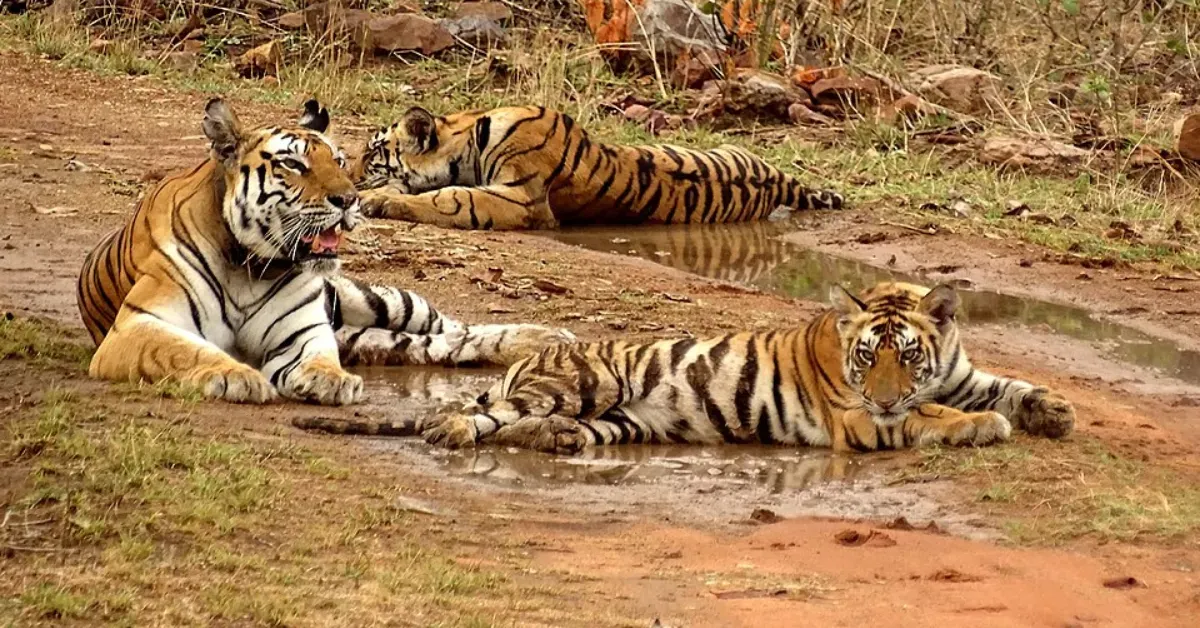
Facing an empty forest, the Madhya Pradesh Forest Department, with the WWF's help, launched an audacious reintroduction program in June 2009. First up: two brave female tigers, T1 and T2. Then came T3, a male from another reserve.
T3, apparently not a fan of his new digs, initially decided to walk back home. He trekked through villages for over a month, miraculously without incident, before officials tracked him down and brought him back to Panna in December 2009. This time, he stayed. He set up shop, found mates, and became the patriarch of a new dynasty.
And what a dynasty it was. In April 2010, T1 popped out four cubs. T2 followed suit a few months later with four of her own. Two more tigresses, T4 and T5, joined in 2011. While T4 later died, the momentum was undeniable.
Over the years, those seven translocated tigers — five females, two males — produced more than 80 cubs. By 2019, Panna's tiger count hit 54, a staggering success. UNESCO took notice, adding the reserve to its World Network of Biosphere Reserves in 2020. Today, the number hovers around 80. Let that satisfying number sink in.
More Than Just Moving Magnificence
As the documentary Return of the King shows, moving tigers was just the opening act. Every breeding tiger wore a radio collar, allowing teams to track their every move, ensuring they adapted safely. Because, apparently, even apex predators need a little GPS guidance.
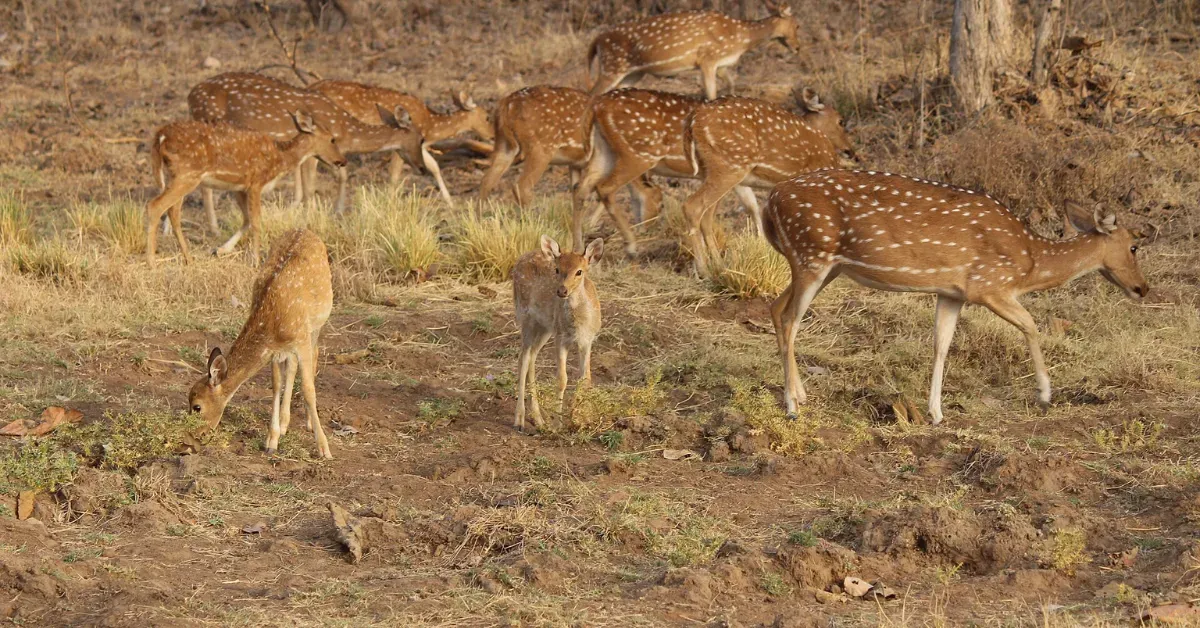
Conservation biologist Dr. Raghu Chundawat, who's been studying Panna for decades, points out that dry forests, which make up almost half of India's tiger habitat, have seen the fastest decline. Tigers in these areas need territories three to four times larger because prey is more spread out. Roads and settlements breaking up these vital corridors? Not ideal.
Wildlife filmmaker Joanna Van Gruisen adds another layer: lasting conservation hinges on local communities. When protecting wildlife also means supporting the well-being of the farming families around Panna, it becomes a shared mission, not a conflict.
The River's Critical Role
Panna's recovery wasn't just about tigers; it was about the whole interconnected web. Researchers found water to be the absolute linchpin. Mammals clustered closer to water sources, because of course they did. It's hot out there.
WII researcher Supratim Dutta calls the Ken River the "ecological backbone" of the entire area. Panna's comeback was a symphony of healthy prey, connected forests, smart management, and crucially, reliable water. You can't just drop tigers into a desert and expect them to thrive.
Which brings us back to the present predicament. A 2021 study in Current Science estimated the Ken-Betwa project could directly flood about 10% of the reserve's critical tiger habitat — roughly 58 square kilometers. Indirectly, habitat fragmentation could gobble up another 105 square kilometers.
These studies scream one lesson: Panna's tigers returned because their landscape was whole. Forests connected, prey recovered, water flowed through brutal summers, and the tigers had space to live and breed. The future of the tiger in Panna is inextricably tied to the future of its home. And that home is currently staring down a dam.