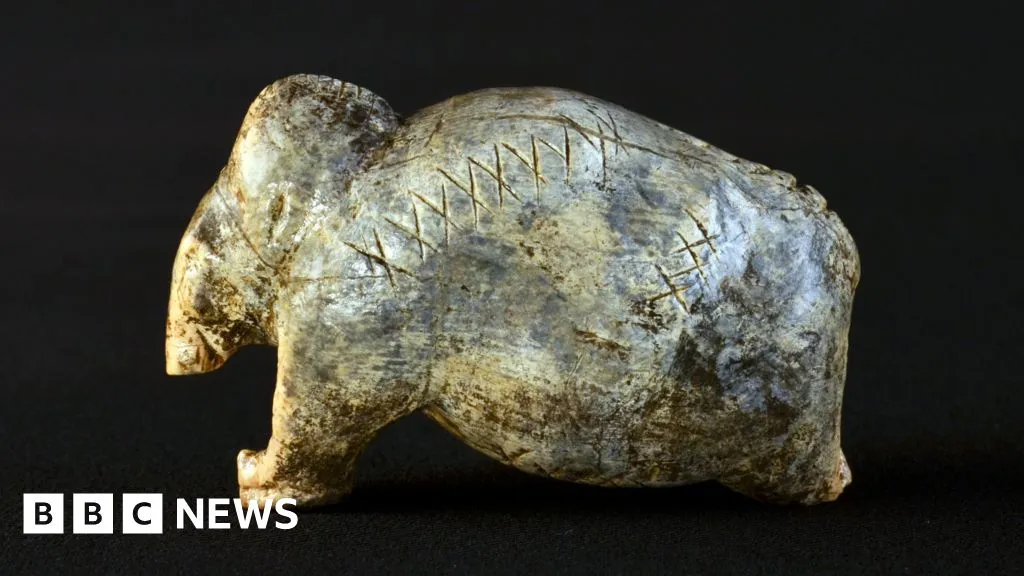
Archaeologists have found something that rewrites—quite literally—when humans first learned to write. Carved into mammoth tusks and ivory plaques discovered in German caves are patterns of dots, notches, crosses, and lines dating back 45,000 years. These aren't random scratches. Researchers analyzing over 3,000 characters across 260 objects believe they represent an organized symbol system used to communicate meaning.
This discovery pushes back the origins of writing by roughly 40,000 years. The conventional story placed the first written words with proto-cuneiform scripts in ancient Iraq around 5,000 years ago, followed by Egyptian hieroglyphics and later systems in China and Mesoamerica. But these Stone Age engravings suggest that long before anyone wrote down laws or inventory lists in Mesopotamia, Paleolithic hunter-gatherers were already developing ways to encode and share information.
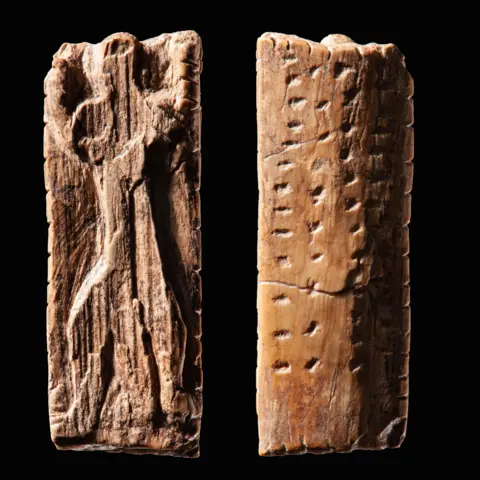
The artifacts come from the Lonetal, a 37-kilometer cave system in Baden-Württemberg, southern Germany. Among the most striking pieces is a small mammoth figurine carved from tusk with carefully engraved rows of crosses and dots. Another, called the "adorant," shows a lion-human creature on an ivory plaque with rows of dots and notches covering its back. What makes these objects significant isn't just their age—it's the deliberate arrangement of the marks.
We're a new kind of news feed.
Regular news is designed to drain you. We're a non-profit built to restore you. Every story we publish is scored for impact, progress, and hope.
Start Your News DetoxThe research team, led by Prof Christian Bentz from Saarland University, discovered something remarkable: the density and predictability of these Stone Age symbols matched the information density of proto-cuneiform tablets from Mesopotamia, despite being separated by 40 millennia. "The Stone Age sign sequences are an early alternative to writing," Bentz explains. "Hunter-gatherers of the Paleolithic era developed a symbol system with statistically comparable information density to the earliest proto-cuneiform tablets—a full 40,000 years later."
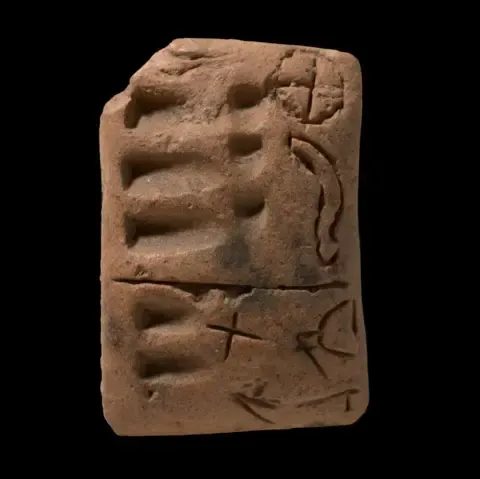
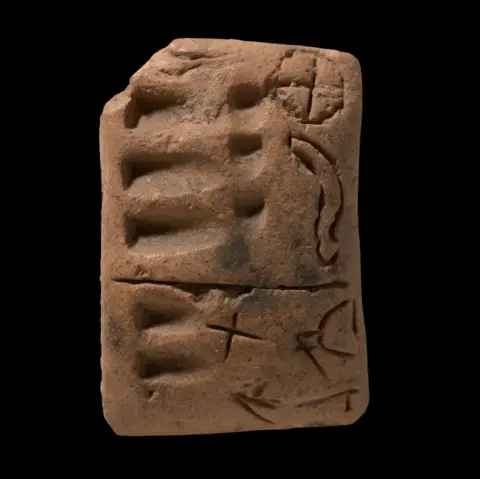
The researchers noticed something else: denser symbol patterns appeared on figurines and portable objects rather than on tools. This suggests that Stone Age people prioritized these items for communication—they were meant to be carried, shared, discussed. Ewa Dutkiewicz from Berlin's Museum of Prehistory and Early History observed the craftsmanship closely. "They were skilled craftspeople," she says. "Many of them fit very well in the hand, just the right size to fit in the palm." These weren't crude marks. They were deliberate, portable messages.
This research fundamentally challenges assumptions about human cognitive development. Stone Age people possessed the same intellectual capacity as modern humans. They didn't need to wait for civilization to invent writing—they were already thinking systematically about how to encode thoughts and transmit them across time and distance. The work, published in PNAS, has only begun to reveal what's hidden in these ancient symbols. As Dutkiewicz notes, "We've only scratched the surface of what can be found in terms of symbol sequences on a wide variety of artifacts." The deeper story of human communication may still be waiting in caves across Europe.