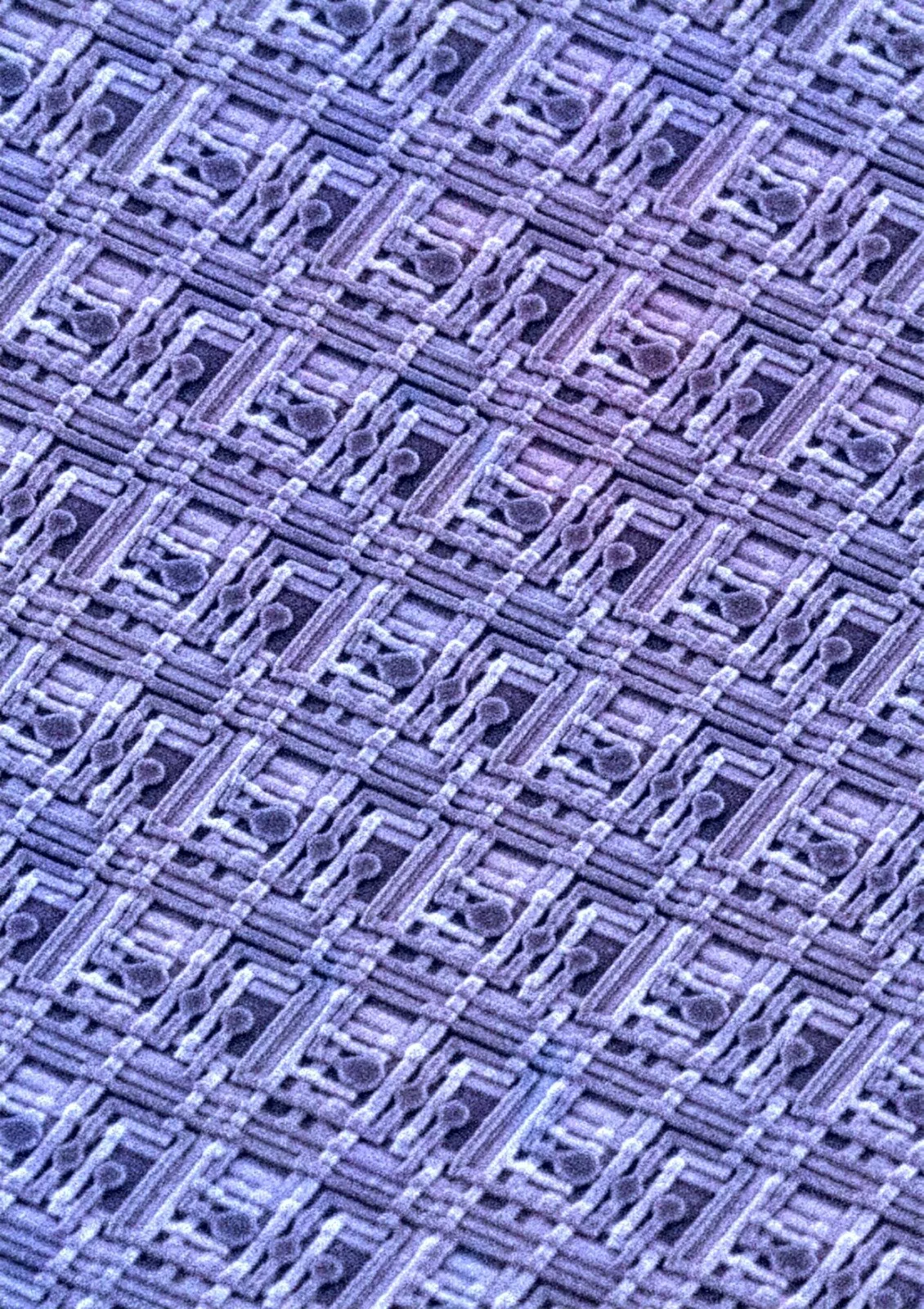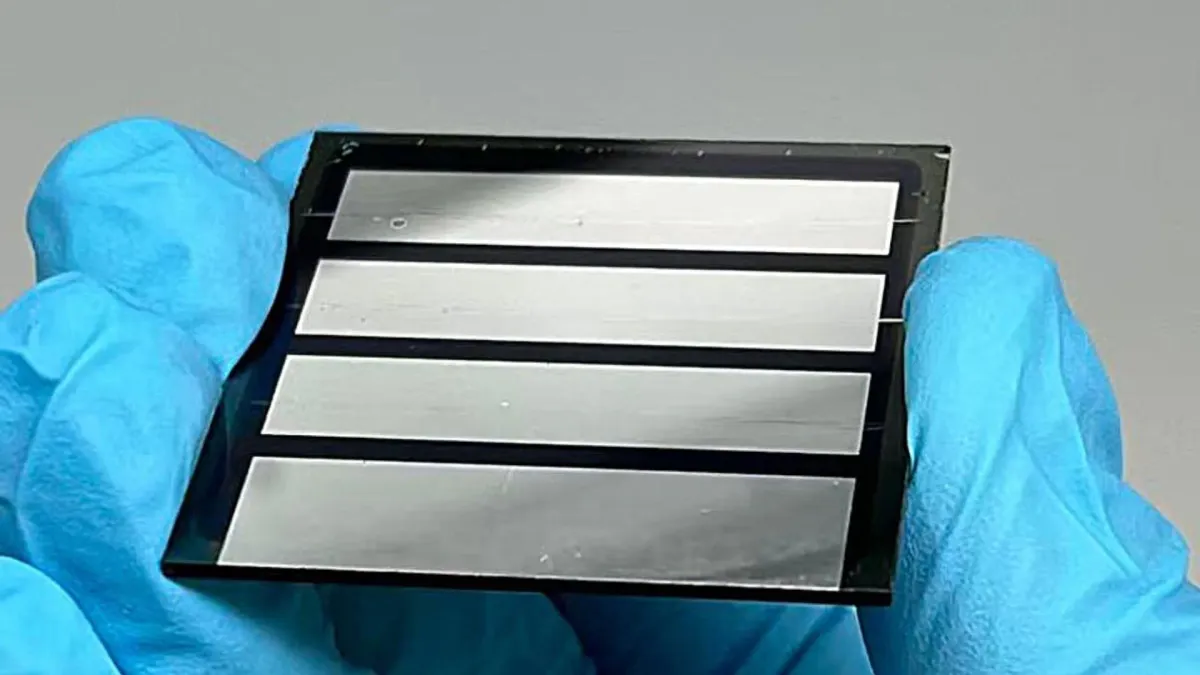
For years, perovskite solar cells promised everything silicon couldn't: cheap, flexible, light enough to print onto fabric. But they fell apart within days. Researchers at the University of Manchester just changed that.
Professor Thomas Anthopoulos's team developed a molecular coating—essentially a "glue" made of tiny amidinium molecules—that seals the perovskite surface and eliminates the microscopic defects that were causing degradation. The result: cells that retained over 95% of their power output after 1,100 hours of continuous operation, even at 85°C (185°F), temperatures that would have destroyed earlier versions.
The cells hit 25.4% power conversion efficiency in testing, which matters because it proves the coating doesn't sacrifice performance for durability. It does the opposite.
We're a new kind of news feed.
Regular news is designed to drain you. We're a non-profit built to restore you. Every story we publish is scored for impact, progress, and hope.
Start Your News DetoxWhy this actually changes things
Silicon dominates solar right now, but it's heavy, rigid, and expensive to manufacture. Perovskite looked like the answer—thinner, flexible, potentially a fraction of the cost. The catch was that it degraded almost immediately, making it impossible to deploy at scale. You can't sell solar panels that fail in a week.
That stability problem was the last real barrier between perovskite and mass production. Everything else—the manufacturing process, the efficiency, the flexibility—was already there. This breakthrough removes that barrier.
The molecular glue works by organizing the perovskite into highly stable, low-dimensional layers that act as a structural shield. It's a simple idea executed precisely: smooth the surface, eliminate the defects, let the material hold together.
What comes next
Once perovskite hits the market at scale, the applications expand quickly. Curved windows. Lightweight camping gear. Solar-powered clothing. Flexible sheets that conform to any surface. These aren't science fiction—they're just waiting for a material that lasts long enough to be useful.
Research teams in China are already working parallel approaches, using 3D electrical imaging to map and eliminate internal defects. The race to commercialize perovskite has accelerated over the past few years, and this stability breakthrough removes what was arguably the final technical hurdle.
The study was published in Science on January 8. What happens next depends on whether manufacturers can scale the process without losing the stability gains—but the hard part, proving it could work, is done.