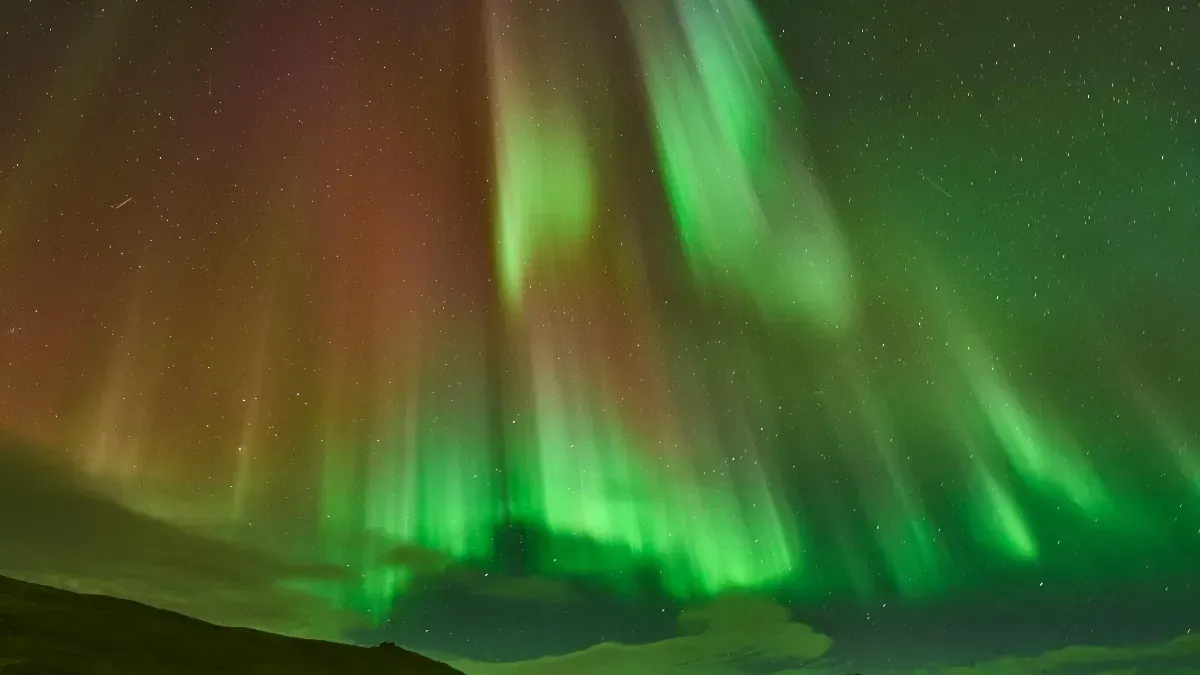
Kristoffer Vangen had been chasing the northern lights for years, waiting for the moment when the aurora would form something recognizable. A bird, maybe. A tornado. Something with a clear shape instead of the usual green swirl across the sky.
Last Friday, it finally happened. The lights arranged themselves into a heart.
"I always wanted to capture the northern lights shaped as something," Vangen wrote on Instagram after posting the image. "It's been close a few times, but I never felt the shape was clear enough; it just looked messy. Last Friday, I finally got something. Perhaps a heart is a bit cliché, but I'm not complaining."
The timing was almost too perfect—a few days before Valentine's Day, a Norwegian photographer manages to catch one of nature's rarest visual coincidences. But what made this moment possible wasn't luck alone. It was patience, technical skill, and an understanding of where and when the aurora is most likely to perform.
We're a new kind of news feed.
Regular news is designed to drain you. We're a non-profit built to restore you. Every story we publish is scored for impact, progress, and hope.
Start Your News DetoxThe long game
The northern lights appear most reliably in a band around the Arctic Circle—Alaska, Iceland, Norway, Finland, and Sweden see the most consistent displays. But even in these places, the aurora is unpredictable. Solar activity drives the show. Cloud cover can erase it in seconds. And catching a recognizable shape within that chaos? That's the kind of thing photographers talk about for years.
Vangen's followers understood the rarity. "It is super rare to catch a Northern light," one commenter wrote. "I saw your picture at an article yesterday and couldn't hesitate but to make a screenshot and put it in my phone, such a lucky and beautiful work."
What's striking about Vangen's image isn't just the shape—it's that it arrived after years of attempts that "just looked messy." Most people never see the northern lights at all. Those who do rarely catch them doing anything but their usual luminous dance. To witness them form something your brain immediately recognizes, something that means something to you on a particular day—that's the kind of moment that reminds you why people put the northern lights on their bucket lists in the first place.
For those who can't travel to the Arctic, photographers like Vangen offer something valuable: proof that the sky is still capable of surprising us, even when we think we've seen everything.