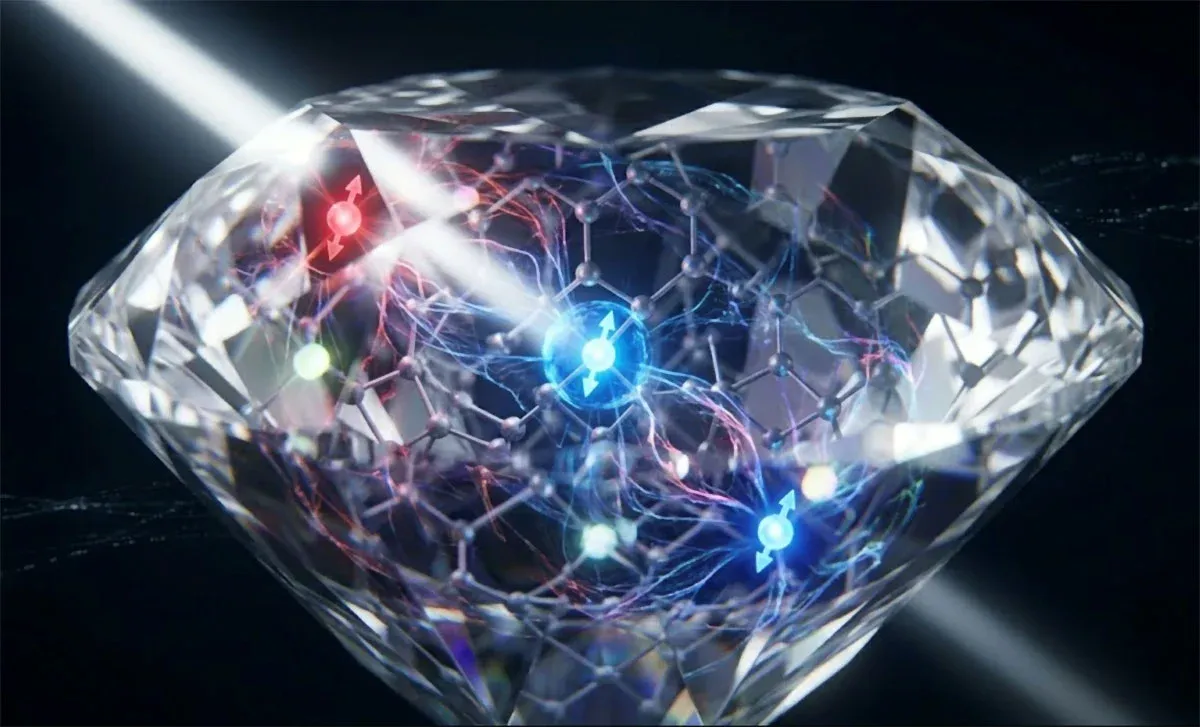
Quantum mechanics describes particles acting in strange ways. They can exist in many states at once, a concept called superposition. This is different from our everyday world, where objects have one definite state.
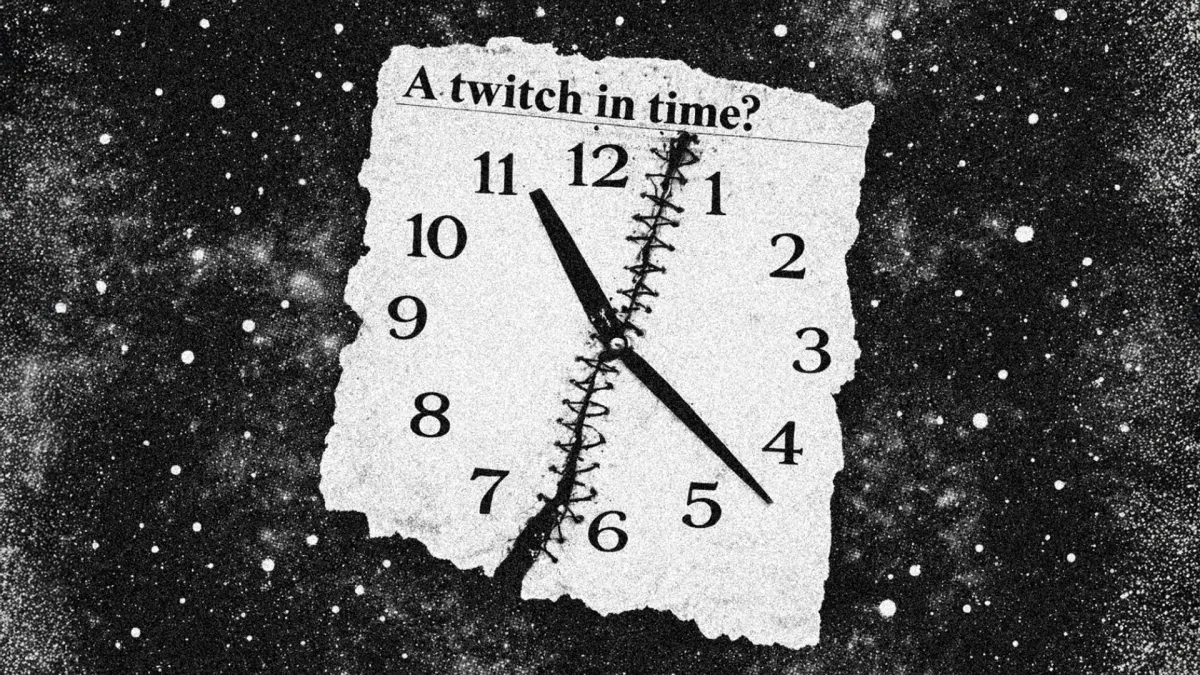
Scientists usually explain this by saying a quantum system "collapses" into a single outcome when observed. However, a new study explores other ideas called quantum collapse models. These models suggest that time itself might be slightly blurry. This could set a limit on how precisely time can ever be measured.
The research was supported by the Foundational Questions Institute (FQxI). It was published in Physical Review Research. The findings offer a way to test these models against standard quantum theory.
We're a new kind of news feed.
Regular news is designed to drain you. We're a non-profit built to restore you. Every story we publish is scored for impact, progress, and hope.
Start Your News DetoxSpontaneous Collapse and Testable Models
In the 1980s, researchers started developing theories where wavefunction collapse happens on its own. It doesn't need an observer. Unlike traditional quantum mechanics, these collapse models make predictions that can be tested.
Nicola Bortolotti, a PhD student, led the study. He said the team took seriously the idea that collapse models might be linked to gravity. Then they asked what this would mean for time.
Bortolotti and his colleagues looked at two main models. One is the Diósi-Penrose model, which connects gravity to wavefunction collapse. The other is Continuous Spontaneous Localization. The team found a link between this second model and tiny changes in spacetime caused by gravity.
Tiny Time Uncertainty and Clock Limits
Their analysis shows that if these collapse models are correct, time cannot be perfectly exact. It would have a very small, built-in uncertainty. This would create a fundamental limit on how precise any clock could be.
Bortolotti noted that the answer was "clear and surprisingly reassuring."
This effect is too small for current technology to detect. Even the best atomic clocks would not notice it. Catalina Curceanu explained that the uncertainty is many orders of magnitude below what we can measure. This means it has no practical effect on daily timekeeping. Kristian Piscicchia added that modern timekeeping is "entirely unaffected."
Quantum Mechanics, Gravity, and Time
For decades, physicists have tried to combine quantum mechanics with gravity. Both theories work well in their own areas. Quantum mechanics describes tiny particles. General relativity explains gravity and the universe's large structures. But they treat time very differently.
Curceanu explained that in standard quantum mechanics, time is an outside factor. It is not affected by the quantum system. General relativity, however, says time can stretch and bend due to mass and energy.
This new research builds on earlier ideas. It suggests possible connections between quantum behavior, gravity, and the nature of time.
Curceanu stressed the importance of exploring new ideas in physics. She said that few foundations support research into these fundamental questions. She added that their work shows even radical ideas about quantum mechanics can be tested. It also confirms that timekeeping remains a stable part of modern physics.
Deep Dive & References
- Fundamental limits on clock precision from spacetime uncertainty in quantum collapse models - Physical Review Research, 2025