Sixty-six million years ago, a really bad day wiped out about 75% of life on Earth. Most famously, the dinosaurs. But some plucky survivors hung on, setting the stage for everything that came next.
Turns out, a key player in that survival story was a tiny, rodent-like creature from the genus Cimolodon. These little guys, part of a group called multituberculates, first popped up during the Jurassic Period and managed to stick around for over 100 million years. Talk about resilience.
Now, scientists are digging into these ancient mammals to figure out exactly how they dodged the apocalypse and eventually evolved into the incredible diversity we see today. Because, apparently, we owe a lot to something roughly the size of a golden hamster.
We're a new kind of news feed.
Regular news is designed to drain you. We're a non-profit built to restore you. Every story we publish is scored for impact, progress, and hope.
Start Your News DetoxMeet the New Kid on the (Ancient) Block
Researchers at the University of Washington recently unearthed a brand new species within the Cimolodon genus. The fossil, found in Baja California, clocks in at a respectable 75 million years old.
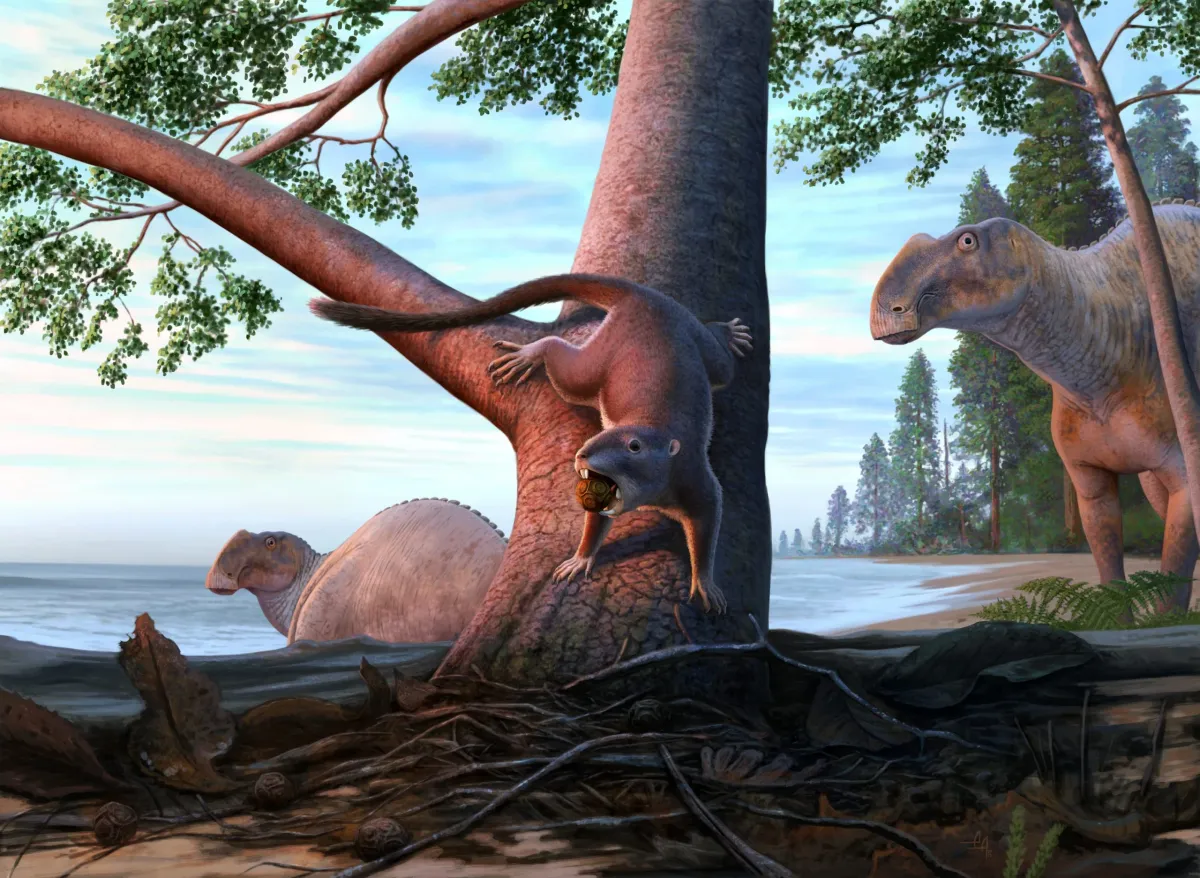
They've christened it Cimolodon desosai, and yes, it was indeed about the size of a golden hamster. Scientists figure it scampered around both on the ground and in trees, munching on fruits and insects. Which, if you think about it, is a pretty solid survival strategy when the world is literally ending around you. The findings were published in the Journal of Vertebrate Paleontology.
Gregory Wilson Mantilla, a UW professor and curator at the Burke Museum, notes that Cimolodon was a common sight during the Late Cretaceous period — the grand finale of the Age of Dinosaurs. Their fossils have been scattered across western North America, from Canada all the way down to Mexico.
Cimolodon desosai was an ancestor to the species that actually survived the extinction event. Their winning combo? Small size and a flexible diet (plants and insects). Turns out, not being picky about your dinner and being able to hide in small places can really pay off when a giant asteroid decides to redecorate the planet.
The Unusually Complete Snapshot
Wilson Mantilla and his team first stumbled upon the fossil in 2009. Unlike most ancient mammal discoveries, which often amount to a few lonely teeth, this specimen was practically a full portrait. They found teeth, a skull, jaws, and even bits of the skeleton, including a femur and an ulna. Imagine the paleontologist equivalent of hitting the jackpot.
Finding anything at this particular site is notoriously tricky. Wilson Mantilla's field assistant, Michael de Sosa VI, initially spotted a tiny tooth, which is impressive enough. But then, inside a crack in the rock, they saw more bone. That's when things got exciting.
Because they had more than just teeth, the team could actually estimate the animal's size, how it was built, and even how it moved. This gave them a much clearer picture of its ancient environment and deepened their understanding of the entire multituberculate group. It's like going from a blurry ID photo to a full-blown documentary.
To analyze the fossil, researchers used advanced digital imaging and micro-computed tomography (micro-CT) to create incredibly detailed, high-resolution images. They then compared C. desosai's teeth to its relatives, confirming it was indeed a new species. Which is how, apparently, you name ancient creatures — by their dental records. The new species was named after Michael de Sosa VI, the field assistant who first found the fossil, who sadly passed away during the analysis.
So, next time you see a hamster, just remember: you're looking at the distant, much fluffier cousin of a creature that stared down the dinosaurs and lived to tell (or rather, fossilize) the tale.