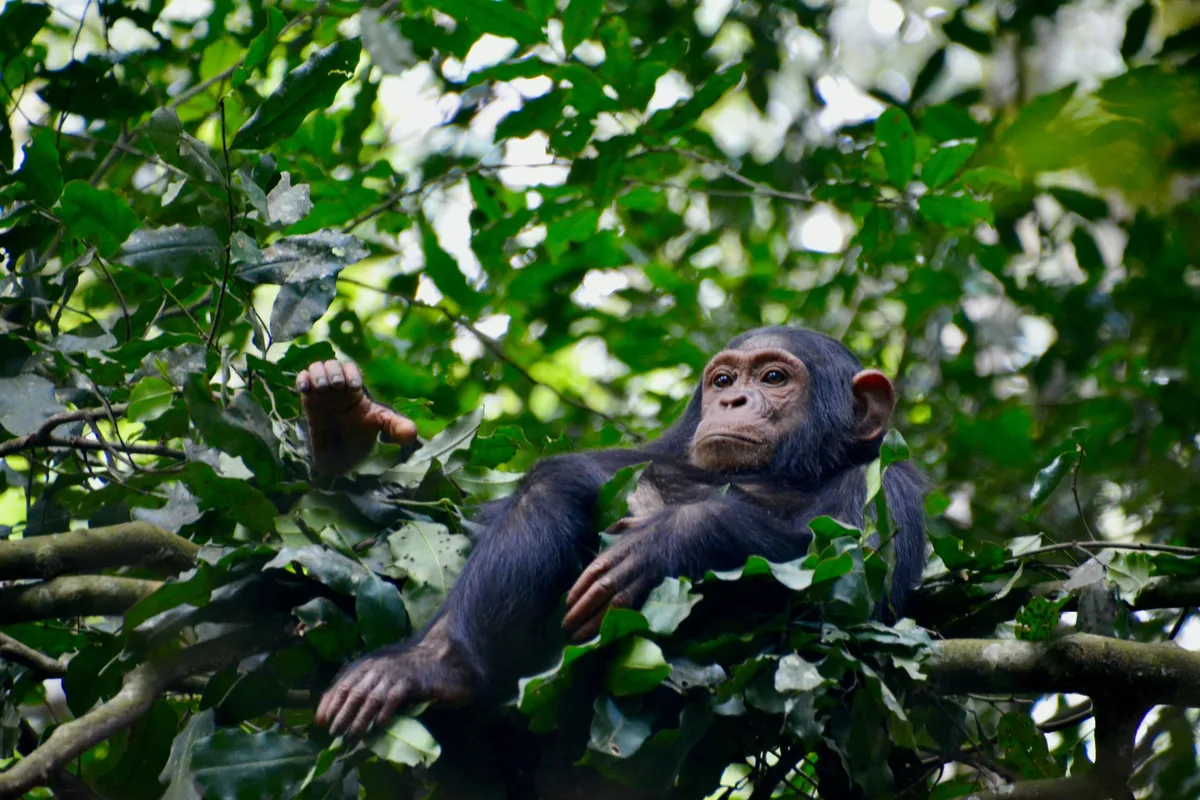
Every evening, as the sun dips below the horizon, chimpanzees turn into arboreal architects. They meticulously weave together branches, leaves, and twigs to construct the perfect sleeping spot, usually high up in a tree. Think of it as their nightly luxury hotel, custom-built for comfort and — as it turns out — surprisingly prescient weather protection.
For a long time, we knew chimps adjusted their nests based on the current weather. Chilly? Thicker nest. But new research suggests these primates are playing chess, not checkers. They appear to be building their overnight accommodations with tomorrow's forecast in mind.
The Rwandan Chimp Census
A team of dedicated researchers spent a year in Rwanda's Nyungwe National Park, a cool, humid mountain forest, basically living with eastern chimpanzees. They became the world's most detail-oriented nest inspectors, logging everything from insulation levels to preferred tree types and specific nest architecture. Simultaneously, they tracked local weather conditions during nest construction and throughout the entire night. This allowed them to see if the chimps were reacting to the immediate drizzle or the impending overnight downpour.
We're a new kind of news feed.
Regular news is designed to drain you. We're a non-profit built to restore you. Every story we publish is scored for impact, progress, and hope.
Start Your News DetoxAnd what they found was, well, pretty clever.
Chimpanzees consistently tweaked their nesting game. They gravitated towards spots that were naturally warmer, more humid, and less windy – because who doesn't want that? But the real kicker was how they changed the structure of their nests. When it was cooler and wetter, either during construction or, crucially, overnight, their nests became thicker and deeper. More insulation, more effort. They also built higher up in taller trees with denser leaves, creating a more stable, sheltered hideaway from the rain.
The Chimp Weather Report
Here's where it gets interesting: the chimps' nesting decisions aligned much better with the overnight weather conditions than with the conditions at the moment they were building. When researchers factored in the coming night's forecast (metaphorically speaking), the changes in nesting behavior made significantly more sense.
Does this mean chimps are watching the chimp news for the 5-day outlook? Not quite. The theory is they're picking up on subtle environmental cues – a shift in temperature, humidity, or air pressure – that are reliably linked to what the weather will do hours later. It's less about predicting and more about reacting to signals that precede future conditions. Either way, it's a testament to an intuitive understanding of their environment that puts most of us, fumbling with our weather apps, to shame. Perhaps we should all just watch the chimps.