The European Space Agency's Proba-3 mission—two spacecraft flying in perfect formation—has just recorded something scientists rarely see: three solar prominence eruptions in five hours.
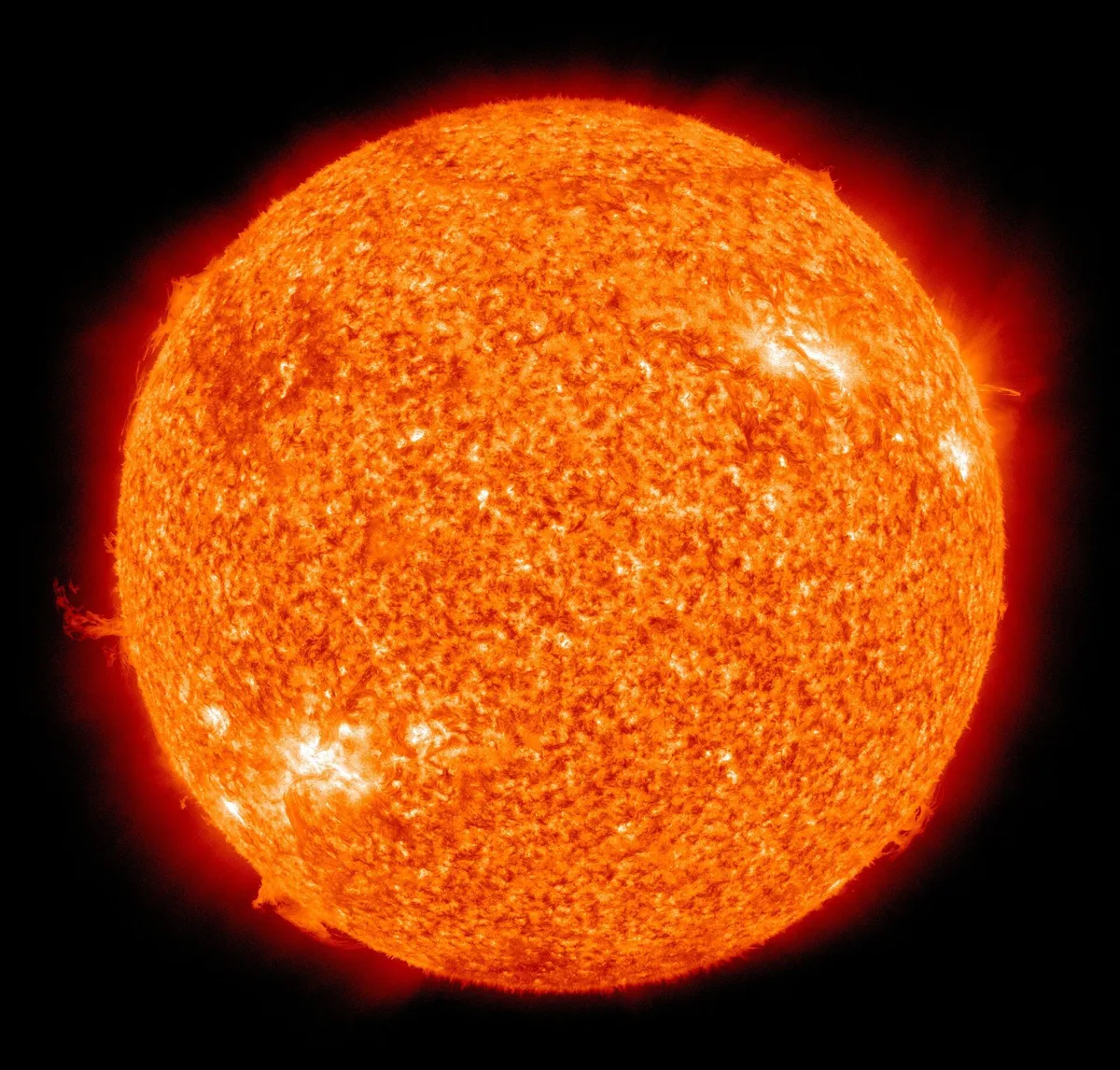
The sun's inner corona, that ghostly yellow halo you glimpse during a total eclipse, is normally hidden behind the sun's blinding surface. It's also weirdly hot. The surface sits at around 5,500 degrees Celsius. Move into the corona, and temperatures jump to roughly a million degrees. "The corona is extremely hot, about 200 times hotter than the sun's surface," says Andrei Zhukov from the Royal Observatory of Belgium, who leads the ASPIICS instrument on Proba-3.
Within that scorching halo, cooler structures sometimes appear—still around 10,000 degrees, mind you, but positively frigid by corona standards. These are prominences: dense knots of charged gas that can suddenly erupt outward into space. Catching three of them in a single observation window is rare enough that Zhukov was visibly pleased. "Seeing so many prominence eruptions in such a short timeframe is rare, so I'm very happy we managed to capture them so clearly," he notes.
We're a new kind of news feed.
Regular news is designed to drain you. We're a non-profit built to restore you. Every story we publish is scored for impact, progress, and hope.
Start Your News DetoxWhy This Matters
Proba-3 solves a decades-old problem in solar science. Ground-based telescopes and most space missions struggle to observe the inner corona because the sun's bright disk gets in the way. It's like trying to see a candle flame when a searchlight is pointed at you.
Proba-3's trick: the two spacecraft position themselves so one blocks the sun's disk while the other observes the corona beyond it. It's an artificial total solar eclipse, happening continuously in orbit. This lets scientists watch the corona's structure and behavior with clarity that's been missing from consistent observations.
The mission combines its own data with images from NASA's Solar Dynamics Observatory, creating animations that show the solar disk in dark orange and the corona in yellow—roughly how it would look if you were standing in the moon's shadow during an eclipse.
Understanding prominence eruptions matters because these events can trigger solar storms that affect Earth's magnetic field and power grids. The more clearly we can see them happening, the better we can predict and prepare for them.
Proba-3 has only been observing for a few months. As the mission continues, scientists expect to build a clearer picture of how the corona works—and why it's so paradoxically hot.