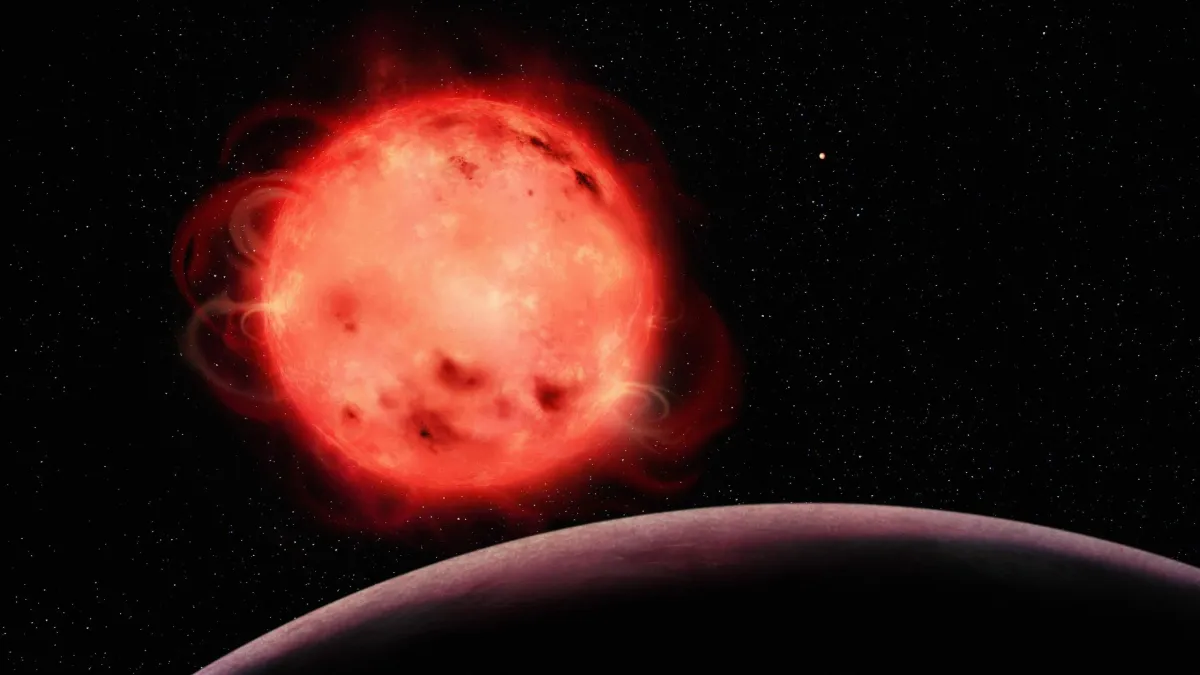
Astronomers are looking for life beyond Earth. They have narrowed down the most promising places to search.
Out of over 6,000 known exoplanets, researchers found just under 50 rocky worlds that might support life. These findings were published in Monthly Notices of the Royal Astronomical Society.
The study's premise is similar to the movie Project Hail Mary. In the film, Ryan Gosling's character travels to another star system to save Earth. He meets an alien named Rocky and fictional microbes.
We're a new kind of news feed.
Regular news is designed to drain you. We're a non-profit built to restore you. Every story we publish is scored for impact, progress, and hope.
Start Your News DetoxFinding Habitable Worlds
Professor Lisa Kaltenegger, director of the Carl Sagan Institute at Cornell University, led the study. Her team used data from the European Space Agency’s Gaia mission and NASA’s Exoplanet Archive. They identified planets in the "habitable zone."
This zone is the right distance from a star. It's not too hot or too cold. Planets here are more likely to have liquid water on their surfaces, which is essential for life. The study also looked for planets that get similar amounts of stellar energy as Earth gets from the Sun.
Professor Kaltenegger noted that life might be more adaptable than we think. She said their paper shows where to look for life if we ever build a "Hail Mary" spacecraft.
The team found 45 rocky planets in the habitable zone that could support life. They also picked 24 more candidates within a stricter habitable zone. This stricter zone assumes tighter limits on how much heat a planet can handle.
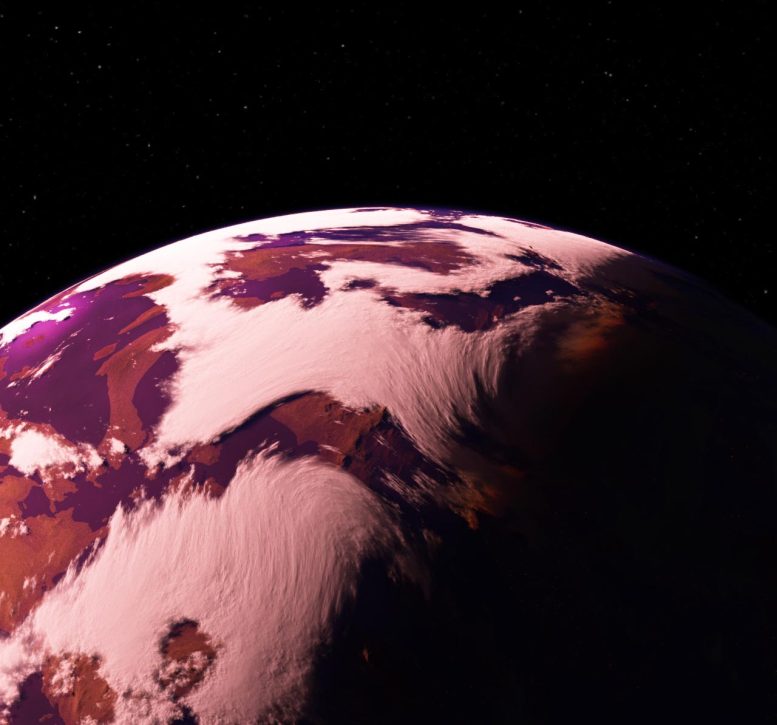
The list includes well-known planets like Proxima Centauri b, TRAPPIST-1f, and Kepler 186f. It also features less familiar ones like TOI-715 b.
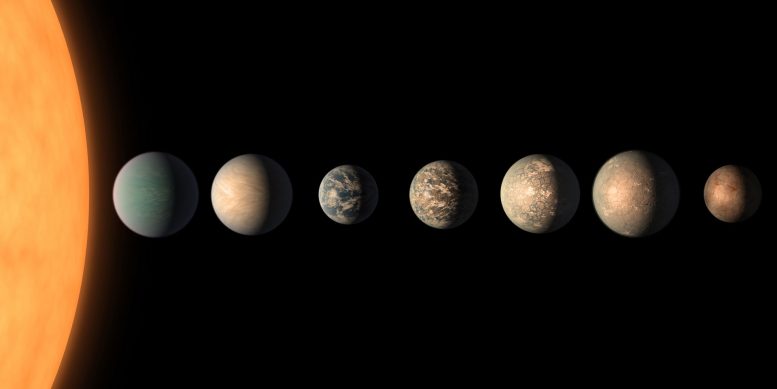
TRAPPIST-1 d, e, f, and g are among the most interesting targets. They are about 40 light-years from Earth. LHS 1140 b is about 48 light-years away. These worlds are important because they are rocky, might have mild temperatures, and could hold an atmosphere. An atmosphere is crucial, even for planets in the habitable zone.
The study also points to planets that receive nearly Earth-like radiation from their stars. These include TRAPPIST-1 e, TOI-715 b, Kepler-1652 b, Kepler-442 b, and Kepler-1544 b. Other planets, like Proxima Centauri b, GJ 1061 d, GJ 1002 b, and Wolf 1069 b, were found by observing the slight wobble they cause in their host stars.
This mix of planets is important for study. Transiting planets pass in front of their stars, letting telescopes analyze starlight through their atmospheres. Wobble-detected planets are harder to study this way, but they still help scientists find nearby rocky worlds that need more attention.
Guiding Future Research
Researchers also looked at planets near the inner and outer edges of the habitable zone. This helps them understand where habitability starts and ends. Professor Kaltenegger said new observations are needed to confirm or improve existing models.
Planets with very elliptical orbits could also offer clues. These worlds experience changing heat levels as they move closer to and farther from their stars. This helps determine if a planet must always stay in the habitable zone to support life.
Inner edge candidates include K2-239 d, TOI-700e, and K2-3d. Wolf 1061c and GJ 1061c were found through stellar wobble. TRAPPIST-1g, Kepler-441b, and GJ 102 could help study the colder outer boundary of the habitable zone.
Gillis Lowry, now a graduate student at San Francisco State University, said that finding where to look is the first key step. The project's goal was to identify the best targets for observation.
Lucas Lawrence, a graduate student at the University of Padua, said they wanted to create something that helps other scientists search effectively. They kept discovering new things about these worlds.
Abigail Bohl of Cornell University explained that our Solar System is a good reference. Earth is habitable, but Venus and Mars are not. We can use this to search for exoplanets that receive stellar energy between what Venus and Mars get.
Observing these planets helps us understand when habitability is lost. It also shows how much energy is too much, and which planets remain habitable. The same idea applies to eccentric planets: how much orbital eccentricity can a planet have and still keep its surface water and habitable conditions?
The researchers identified planets at the inner and outer edges of the habitable zone. They also found those with the highest eccentricities. This helps test our understanding of what makes a planet habitable. They also identified targets best observed with the James Webb Space Telescope (JWST) and other telescopes.
The catalog will guide observations with current and future telescopes. These include the James Webb Space Telescope, the Nancy Grace Roman Space Telescope (launching in 2027), the Extremely Large Telescope (first light in 2029), the Habitable Worlds Observatory (2040s), and the proposed Large Interferometer For Exoplanets project.
Lowry noted that studying these small exoplanets is the only way to see if they have atmospheres. It also helps refine our understanding of the habitable zone.
The team has already started examining 10 planets with Earth-like radiation levels. Two of them, TRAPPIST-1 e and TOI-715 b, are close enough for detailed study with current or upcoming telescopes.
The TRAPPIST-1 system is a major focus for the James Webb Space Telescope. Both TRAPPIST-1 and TOI-715 are small red stars. This makes it easier to detect and study the Earth-sized planets orbiting them.
Deep Dive & References
Probing the limits of habitability: a catalogue of rocky exoplanets in the habitable zone - Monthly Notices of the Royal Astronomical Society, 2026