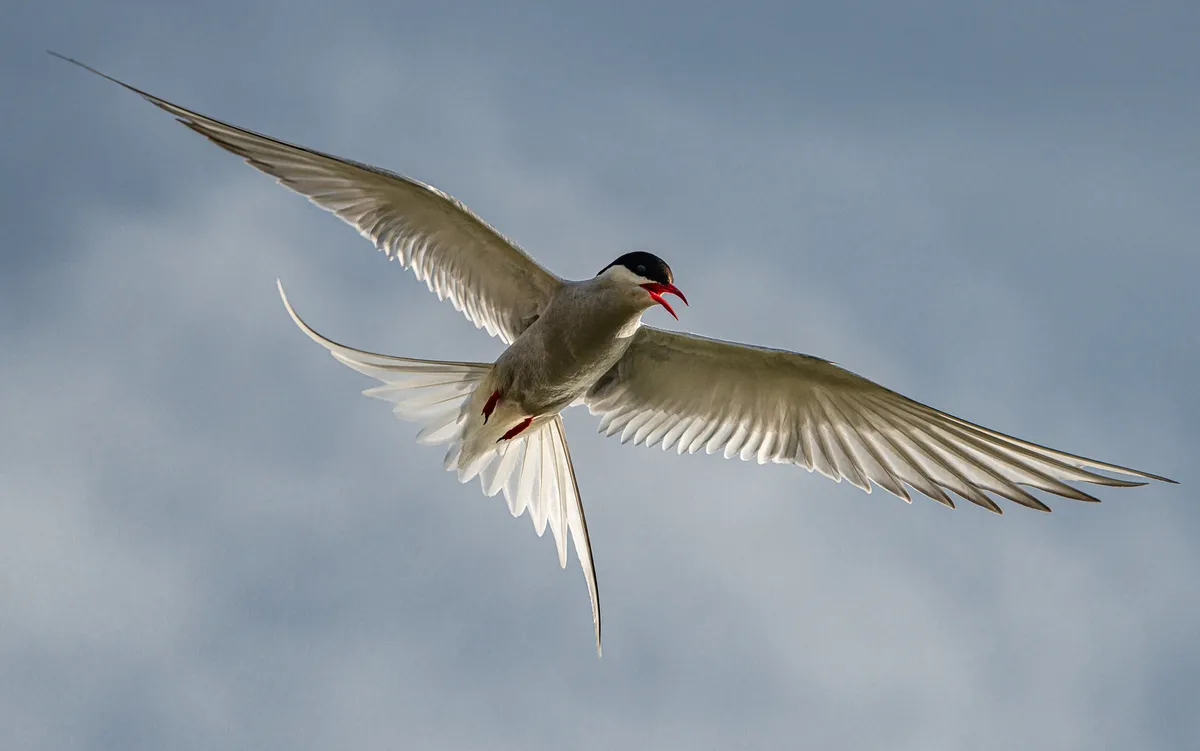
Arctic terns are smaller than your phone, but they put your annual mileage to shame. These tiny titans fly a casual 50,000 miles a year, give or take, from the Southern Ocean to the Arctic and back again. Just because they feel like it. Other seabirds are equally ridiculous overachievers, like the South polar skua, which traces a figure-eight across the Atlantic, or the grey-headed albatross, which clocks 13,000 miles in 46 days. All for a good time, apparently.
For a long time, these epic migrations were mostly a mystery, happening out of sight and out of mind. But thanks to some very patient scientists and some seriously upgraded tracking tech, we now know these birds aren't just winging it. They're following invisible, superhighways across the ocean.

The Grand Unified Theory of Seabird Travel
Last year, a team of nearly 100 researchers, spearheaded by BirdLife International, finally mapped out six major marine flyways. These aren't just little detours; they crisscross the Atlantic, Pacific, Indian, and Southern oceans, touching the territorial waters of 56 countries. It's like discovering an entire hidden interstate system, but for birds, and wet.
We're a new kind of news feed.
Regular news is designed to drain you. We're a non-profit built to restore you. Every story we publish is scored for impact, progress, and hope.
Start Your News DetoxTheir findings, published in Global Ecology and Biogeography, are a huge deal because seabirds are, unfortunately, the most endangered group of birds on the planet. Over 30% of them are facing extinction. And when you're flying 50,000 miles, you encounter a lot of potential problems — from national waters to the open seas, from breeding colonies to quick stopover points. Knowing their exact routes is the first step toward making those routes a little less perilous.
So, next time you see a bird, imagine it's just popped over from Antarctica for a quick snack. Because apparently, that's where we are now.