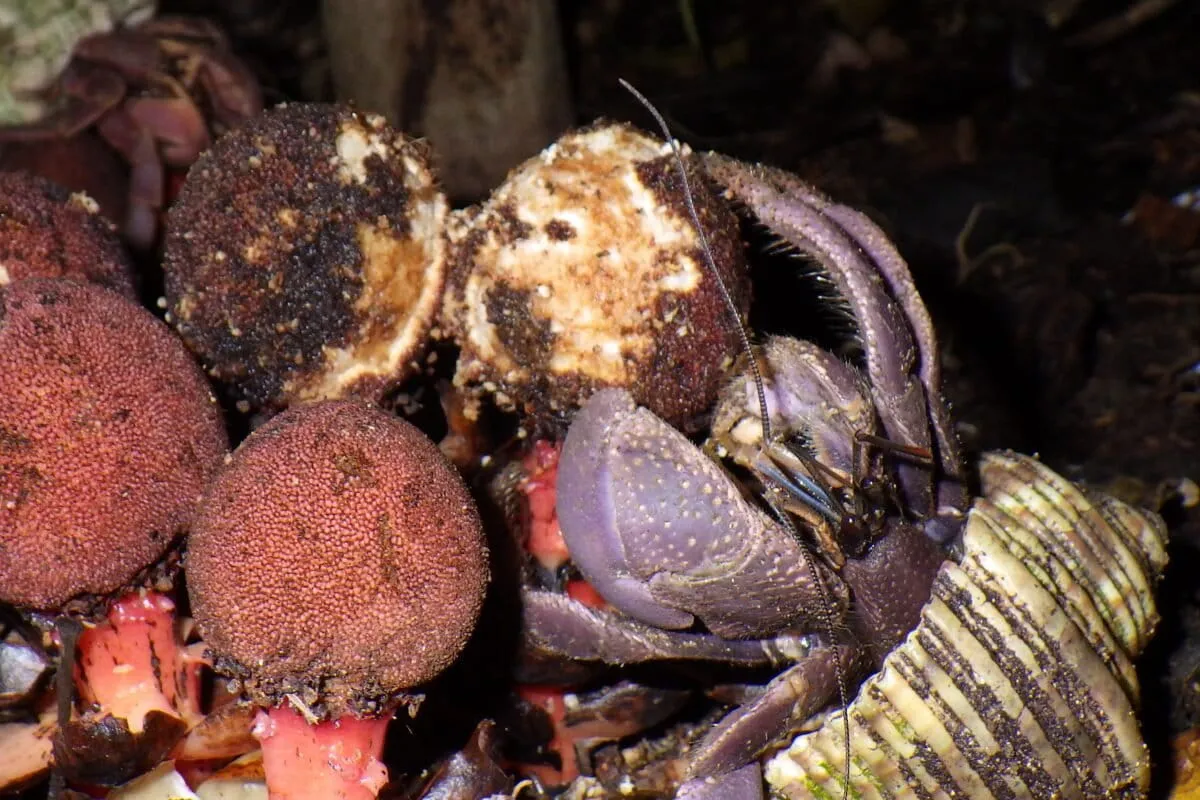
On Japan's Ishigaki Island, an unassuming parasitic plant called fungus root (which, let's be honest, sounds like something from a horror movie) has a secret weapon for spreading its millions of seeds: land hermit crabs and cockroaches. Because apparently, when it comes to botanical reproduction, you take what you can get.
This Balanophora fungosa doesn't bother with photosynthesis, opting instead to freeload off tree roots across Asia, Australia, and the Pacific. It sports dull, mushroom-like fruits absolutely bursting with seeds. For ages, scientists figured gravity did the heavy lifting, just dropping those seeds wherever they may fall. A new study, however, has pulled back the curtain on a far more interesting, and frankly, slightly grosser, truth.
Enter the land hermit crab (Coenobita brevimanus) and the Australian cockroach (Periplaneta australasiae). Yes, those cockroaches. They're the unsung heroes of fungus root proliferation on Ishigaki.
We're a new kind of news feed.
Regular news is designed to drain you. We're a non-profit built to restore you. Every story we publish is scored for impact, progress, and hope.
Start Your News DetoxThe Big Reveal: Who's Eating the Fruit?
Kenji Suetsugu, a professor at Kobe University, initially put his money on ants. The plant's fruit layer peels off so easily, it just screamed ant buffet. To test this theory, he set up mesh nets that would welcome tiny ants but firmly exclude any larger, more ambitious critters. The result? Crickets. Just kidding. The fruits inside the nets remained untouched. Not a single nibble. The ants, it seems, were busy elsewhere.
So, Suetsugu turned to the eye of Sauron — a waterproof digital camera. Over nearly 89 hours, it snapped a photo every 50 seconds, racking up 6,427 images. The time-lapse footage was less a nature documentary and more a late-night diner scene: land hermit crabs and cockroaches, congregating under the cloak of darkness, feasting on the fruits. A revelation that likely sent a shiver down the spine of every entomologist who thought they knew everything about seed dispersal. Because sometimes, the most important work is done by those you'd least expect.