Why bother with sexual reproduction? If you're an evolutionary biologist, this isn't some philosophical musing over a pint; it's a deeply complex, slightly absurd puzzle. After all, sex means finding a mate (which, let's be honest, is a whole thing), and only half the population actually gets to reproduce. Meanwhile, asexual organisms just... divide. Every single one is a potential parent, no awkward first dates required.
So, why did nature choose such an inefficient, drama-filled path? Harvard biologists decided to ask a bunch of yeast. Because apparently that's where we are now.

The Yeast of Our Worries (and Answers)
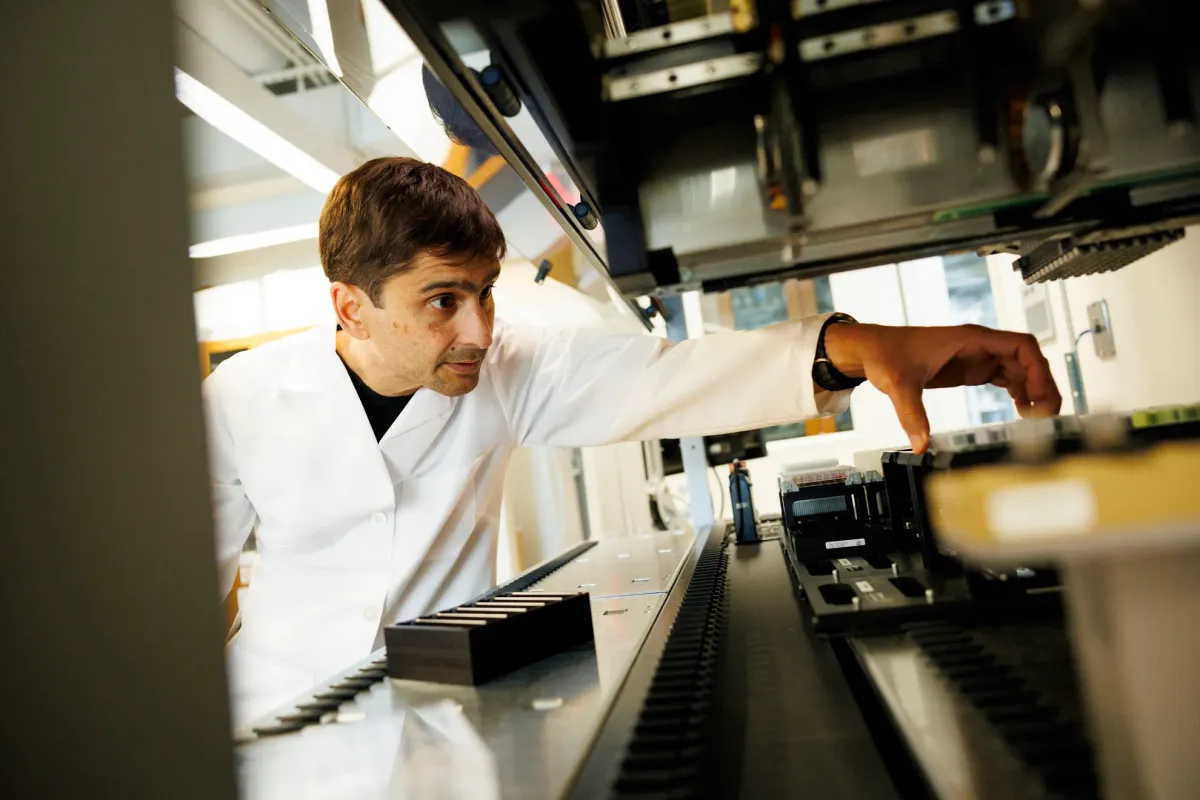
Professor Michael Desai's lab, with Ph.D. student Shreyas Pai and former postdoc Parris Humphrey at the helm, took a strain of yeast – the same stuff that makes your bread rise and your beer bubbly – and put it to work. This particular yeast is a marvel of biological multitasking; it can reproduce both asexually and sexually. Plus, it churns out a new generation every 90 minutes, allowing the team to observe 960 generations in just four months. In larger mammals, that's a study that would make your great-great-great-grandchildren tired.
We're a new kind of news feed.
Regular news is designed to drain you. We're a non-profit built to restore you. Every story we publish is scored for impact, progress, and hope.
Start Your News DetoxThey started by confirming what we already suspected: in a perfectly stable world, the sexually reproducing yeast populations were fitter. Over nearly 1,000 generations, they saw an 8% increase in fitness compared to the original population, while their asexual counterparts only managed a 5.7% bump. So, even when things are good, a little genetic mixing seems to help.
When the Environment Gets Spicy
The real magic happened when the researchers started messing with the environment. They cranked up the salt, turned up the heat, fiddled with the acidity, and dropped the phosphate levels. Basically, they made life a little less comfortable for the yeast. And that's when sex really showed its evolutionary muscle.

In these tougher conditions, sexually reproducing populations gained a 2% to 5.6% fitness advantage over the asexual ones. Now, 2% might not sound like much, but as Desai, the paper's senior author, points out, even a fraction of a percent can lead to total domination over time. "A several percent effect in a microbe is large. It might take 50 to 100 generations to take over," he explained. Let that satisfying number sink in.
So, what's happening here? It comes down to something called "pleiotropic" genes. These are genes that affect multiple traits. Some traits are good, some are bad, and some are just... there. The bad ones get weeded out. But the neutral or mildly harmful ones can stick around, like unwanted luggage on a road trip, especially if other traits from that same gene are beneficial. Scientists call this "hitchhiking load."
When the environment suddenly goes south, those previously harmless hitchhikers can become a serious threat. Asexual populations are stuck, because their offspring are exact genetic clones – same baggage, new generation. But sexual reproduction? That's where the genetic lottery comes in. Offspring get a mix of genes, meaning some might escape the harmful hitchhikers entirely. Over time, this purges the population of those latent threats.

Desai's takeaway is that sex speeds up adaptation and cleans house, getting rid of all that genetic clutter that might be fine now but could doom you later. And he believes this mechanism applies across the board, from our humble yeast to all the other organisms that enjoy a little genetic mingling. Even some lizards, which can self-fertilize, are basically doing a solo version of this genetic shuffle. Which, if you think about it, is both impressive and slightly terrifying.
It's a reminder that even the most fundamental biological processes have a deep, strategic logic behind them. And sometimes, that logic is best understood by watching tiny organisms get a little frisky under a microscope.