A new monkey species, Colobus congoensis, has been identified in the Democratic Republic of Congo (DRC). This discovery comes 18 years after the monkey was first spotted in a blurry photograph.
Local communities call this monkey "Likweli." It is only the fifth new monkey species found in Africa in the last 75 years. This makes its discovery a rare event in primatology.
Uncovering a Hidden Species
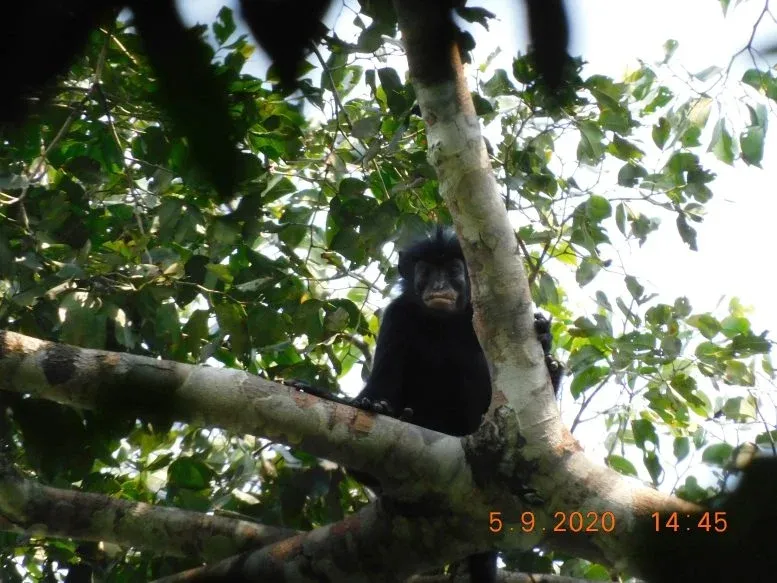
The first hint of the monkey came from a blurry photo in 2008. A clearer image in 2018 led researchers to investigate further. They used genetic, anatomical, and acoustic evidence to confirm it was a new species.
We're a new kind of news feed.
Regular news is designed to drain you. We're a non-profit built to restore you. Every story we publish is scored for impact, progress, and hope.
Start Your News DetoxThe monkey lives in a remote part of the Congo Basin, between the Lomami and Congo (Lualaba) rivers. This isolated area helped the population remain hidden for decades.
Junior Amboko, a Ph.D. student at Florida Atlantic University and co-corresponding author, expressed his excitement. He noted the discovery highlights the rich biodiversity of his homeland. He was honored to name the species Colobus congoensis, recognizing the Congo Basin's natural heritage.
The research, published in PLOS One, shows that C. congoensis belongs to an ancient evolutionary line. It split from its closest known relative about 4 to 5 million years ago.
Unique Features and Ancient Roots
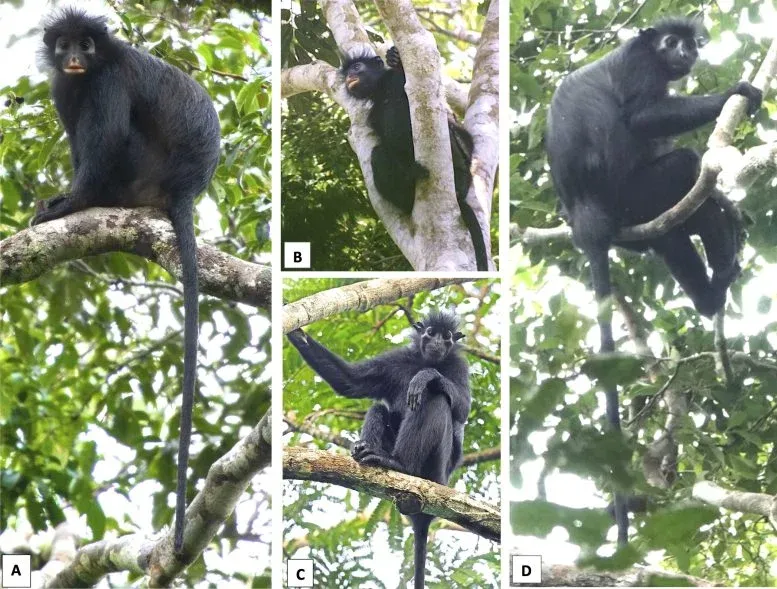
C. congoensis weighs about 15 pounds, making it smaller than other colobus monkeys. It has a glossy black coat, cape-shaped shoulders, and a long tail. Its face is striking, with an orange-cream patch around its mouth and nose, long black facial hairs, and large folded ears. White markings on its rear also set it apart.
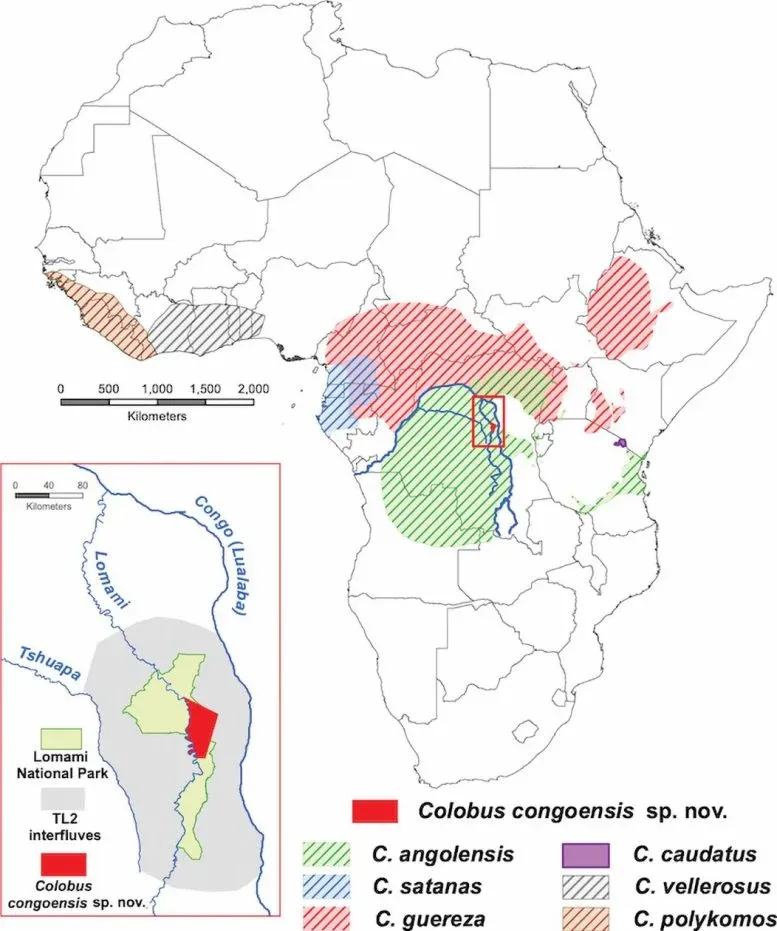
DNA evidence confirmed C. congoensis is part of the Colobus genus. Surprisingly, its closest relative, Colobus satanas, lives over 1,200 kilometers away in west-central Africa. This ancient split, 4 to 5 million years ago, is one of the oldest in the Colobus lineage.
Kate Detwiler, a professor at Florida Atlantic University and senior author, explained that this discovery changes our understanding of African monkey evolution.
Researchers also compared the monkey's skull, teeth, face, and pelt to other African colobine monkeys. These physical comparisons, along with DNA results, confirmed it as a distinct species.
The monkey's calls also provided evidence. While it makes deep roaring sounds like other Colobus species, recordings showed its calls have a unique acoustic structure.
Conservation Concerns
Local villagers, who call the monkey "Likweli" or "kasaba nkoni" (meaning "the branch shaker"), described it as elusive. Fieldwork from 2018 to 2022 recorded 114 sightings within a small area of about 1,700 square kilometers. This is a very limited range for a colobus monkey.
The species seems to be confined by major rivers, forest barriers, and its reliance on specific upland forest patches. These natural boundaries likely helped it evolve separately.
The discovery also highlights the monkey's vulnerability. Its small population lives in an area facing forest loss and increased hunting. Researchers suggest listing C. congoensis as Endangered on the IUCN Red List. Most confirmed sightings are within Lomami National Park, making its protection crucial.
Detwiler noted that this discovery is a scientific success but also a reminder. Some of Earth's rarest creatures might disappear before we even know they exist.
Deep Dive & References
Likweli: A remarkable new species of Colobus monkey from the Lomami National Park, Democratic Republic of Congo - PLOS ONE, 2026