You know birds sing. For mating, for territory, for generally showing off. That's old news. But what about all that other chirping? The constant background chatter of an entire flock? Turns out, that's where the real gossip is.
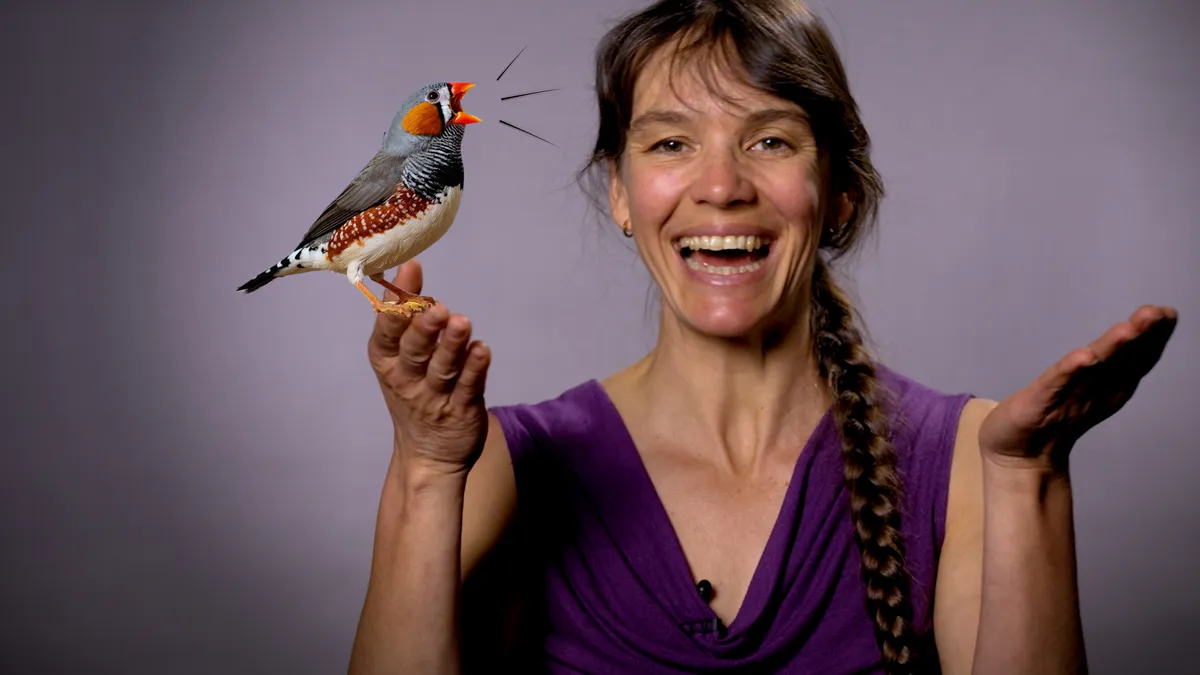
Thanks to Julie Elie, a neuroscientist at UC Berkeley, we're finally getting a peek behind the feathery curtain. She's been listening in, and what she's found is less random noise and more… well, a full-blown avian dictionary.
The Secret Lives of Zebra Finches
Elie spent years with the zebra finch, a small, incredibly social songbird. Her dedication to eavesdropping on their tiny conversations just won her the 2026 Coller-Dolittle prize, which, fittingly, celebrates breakthroughs in interspecies communication. "Every day I’m coming to work and I’m trying to find out, okay, what is this animal telling me?" Elie said, which is a pretty great job description if you ask us.
We're a new kind of news feed.
Regular news is designed to drain you. We're a non-profit built to restore you. Every story we publish is scored for impact, progress, and hope.
Start Your News DetoxHer journey started in the Australian outback, recording wild finch chats. But trying to decode a language when your subjects won't sit still? "Mostly impossible," she noted. Back on campus, in controlled aviaries, she could finally link specific chirps to specific bird behaviors.
She built an audio dictionary of their "words" – distinct call-types that mean things like "I'm hungry!" or "Danger!" or "Where is everyone?!" To test it, she basically asked the birds themselves. She set up tasks where finches were rewarded for correctly classifying their own vocalizations.
And here's the kicker: when comparing how the birds performed to an AI, the finches understood the meaning, not just the sound. The AI just heard noise. The birds, however, had a mental concept of what their chirps actually represented. Which, if you think about it, is both impressive and slightly terrifying for our robot overlords.
"Now, I can come into a colony, and I listen to the chat, and I can hear what’s going on," Elie said, smiling. Finally, someone knows what the birds are really saying about us.