Imagine your body's cellular machinery, the ribosomes, are tiny factories churning out proteins. Now imagine those factories are stuck in rush-hour traffic. That's essentially what happens with current mRNA tech, like the stuff in your COVID shot. But scientists at Johns Hopkins Medicine just found a workaround that could make those factories run almost twice as fast.
They've developed an experimental mRNA platform called N4-acetylcytidine (ac4C). The current standard, N1-Methylpseudouridine (m1Ψ) – the one in those COVID vaccines – is safe and effective, but it turns out it’s a bit of a slowpoke. The ac4C platform, on the other hand, is like giving your cellular protein production a serious espresso shot.
This isn't just a lab curiosity; it could mean future mRNA therapies, from cancer treatments to autoimmune condition solutions, work faster, better, and potentially with smaller doses. Because apparently, even your cells appreciate efficiency.
We're a new kind of news feed.
Regular news is designed to drain you. We're a non-profit built to restore you. Every story we publish is scored for impact, progress, and hope.
Start Your News DetoxThe Cellular Autobahn
Bin Wu, a professor at Johns Hopkins, explained that ac4C helps cells crank out more therapeutic proteins. Think of it as a supercharger for your body's microscopic protein assembly lines. The goal? More effective drugs that don't require you to mainline a ton of the stuff.
There are over 170 known RNA modifications floating around, but only a handful have ever been seriously looked at for medical uses. Previous work by the NIH hinted that ac4C, which occurs naturally in our bodies anyway, might be a secret weapon for speeding up protein production. So, a collaboration between Wu's lab and NIH senior investigator Shalini Oberdoerffer was born, because sometimes, you just need to put smart people in a room together.
What they found was pretty stark: while m1Ψ is doing its job, the ribosomes moving along that mRNA can slow down, causing literal "traffic jams." Fewer proteins get made, and sometimes, those proteins are a bit wonky. Not ideal when you're trying to fight off a virus or a disease.
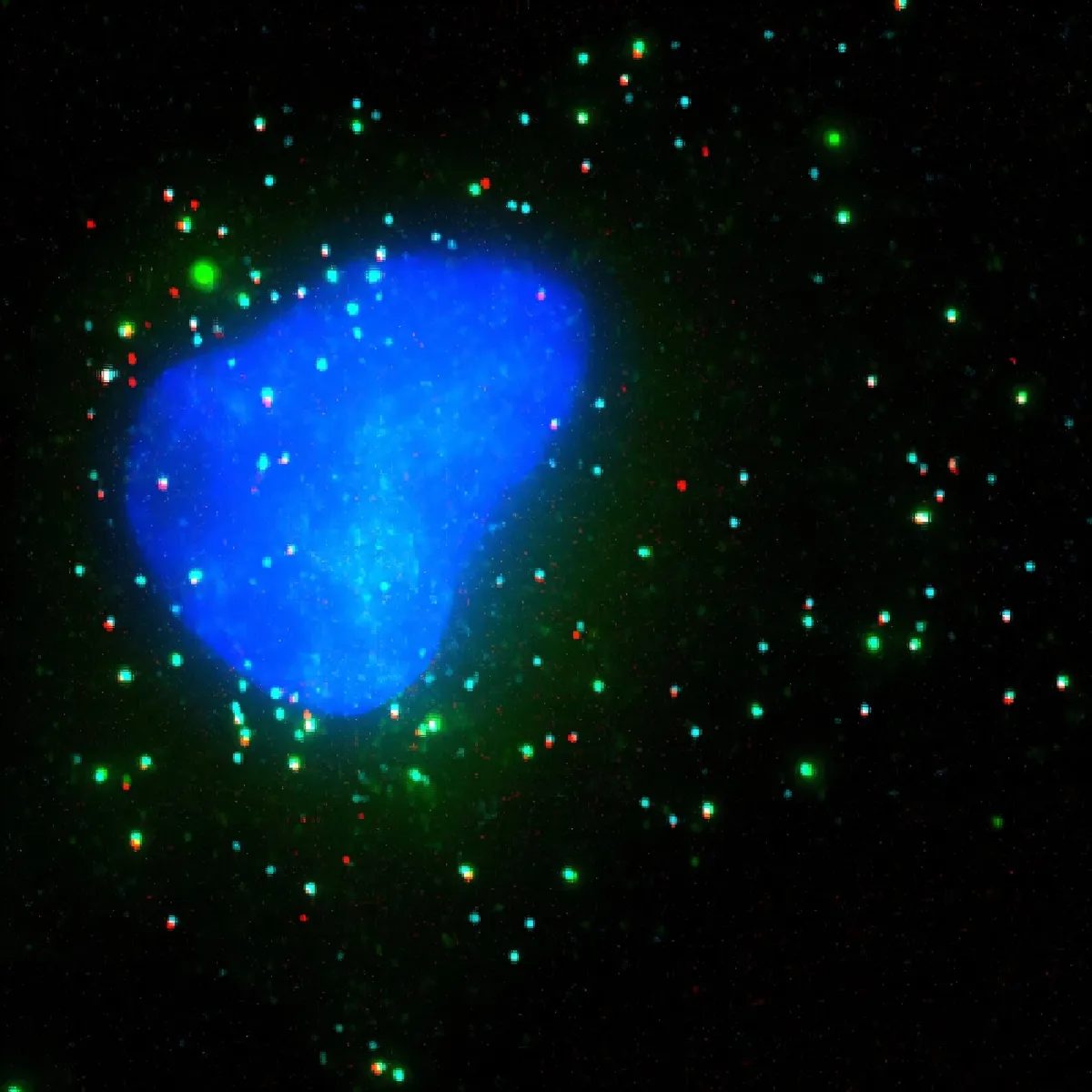
Using lipid nanoparticles (the same delivery system used in vaccines), they loaded up human immune cells and mouse liver cells with mRNA modified with either ac4C or m1Ψ. Then, Wu's lab used a specialized imaging technique to watch individual mRNAs in action, like tiny, cellular traffic cameras.
And the results? Ribosomes moved almost twice as fast on the ac4C-modified mRNA. No traffic jams. No early stops. Just smooth, efficient protein production. This could mean a serious boost to the effects of therapies, delivering more bang for your cellular buck.
Wu suspects these ribosome collisions are the reason the standard platform produces fewer proteins. So, by clearing the cellular highway, scientists might just develop treatments that give you a stronger immune response with less medicine. Which, if you think about it, is both impressive and slightly terrifying in its elegance.